Content Marketing
WeChat Advertising and Customer Operations: Leads and Measurement
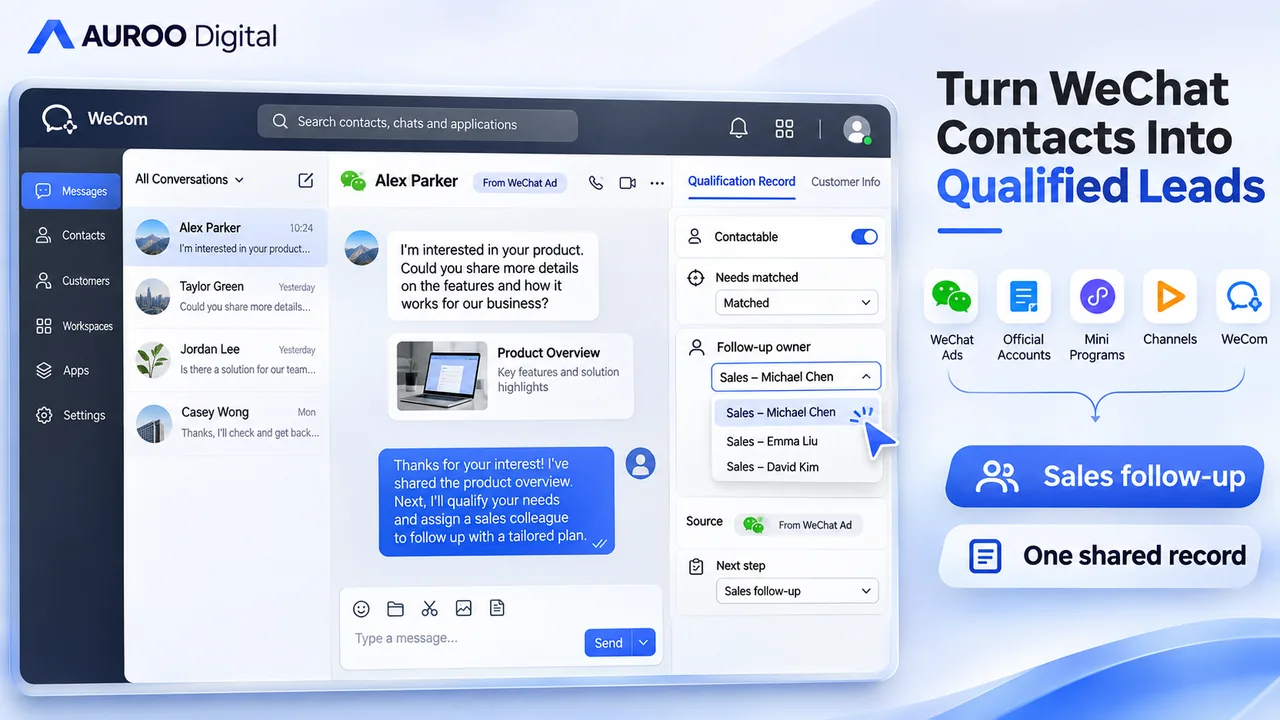
Connect WeChat advertising with content, enquiries, sales follow-up and ongoing service. Define the role and response owner for each Official Account, Mini Program or WeCom touchpoint. Validate the journey from ad to enquiry and evaluate qualified leads and subsequent sales rather than new contacts alone.
To apply this approach to your website or marketing project, explore AUROO Digital’s social media advertising and creative services, with scope, deliverables and review methods agreed around your needs.
This article covers objectives, account preparation, content design, conversion journeys, data evaluation, and agency selection. Eligibility requirements vary by entity, industry, and advertising product and can change. Before implementation, verify permissions and review requirements through Tencent Ads and the relevant products’ official channels.[1]
1. Choose the Business Objective Before Planning WeChat Touchpoints
Awareness, lead generation, online sales, and retention need different journeys. Awareness requires assessing whether the intended audience understands the product’s value. Lead generation requires genuine needs and follow-up contact. Sales require verified payment and fulfillment. Retention requires consent, quality service, and ongoing content.
WeChat Official Accounts suit information and ongoing content. Mini Programs support product or service processes. Channels can demonstrate products and use cases through video and livestreaming. WeCom supports certain customer communication and operating activities. Connections, entry points, and permissions depend on current account capabilities; do not assume every ad can lead to every touchpoint.
Do not build every channel at once. Define the shortest usable journey first—for example, ad to product explanation to inquiry registration, followed by customer service confirming the need. Once this journey is stable, added content, livestreams, and automation are more likely to help.
2. Prepare the Entity, Accounts, and Assets
Create an asset inventory recording owners and administrators for advertising accounts, Official Accounts, Mini Programs, Channels, WeCom, domains, payments, and analytics permissions. For accounts opened with an agency’s help, clarify the company’s own permissions and the handover process when the relationship ends.
Before opening an account, verify industry eligibility, authorization documents, consistency of the entity identified on pages, and creative requirements. For special goods or services, confirm what may be promoted before arranging shoots, landing pages, and budgets. Approval does not replace ongoing checks of products, claims, and business credentials.
Quote advertising spend, service fees, content production, technical development, creator partnerships, and customer operations separately. Specify top-ups, actual spend, balances, and refund conditions clearly. A contract covering everything under one “WeChat marketing package” often makes it difficult to determine where resources actually went.
3. Build Content Around Purchase Questions Rather Than Brand Narratives
People usually first want to know whether a product suits them, why it is credible, how to buy, and what happens if something goes wrong. Address these questions in sequence, supporting claims with actual specifications, usage processes, eligibility conditions, and service scope rather than repeated brand slogans.
For mainland Chinese consumers, Simplified Chinese is only the starting point. Local expression, pricing conventions, delivery, after-sales service, and contact methods also influence trust. High-ticket services should explain processes, timelines, and intended customers. Standard products can emphasize use cases, differences, and purchasing steps.
Video creative must consider comprehension without sound, readable subtitles, and mobile pacing. Livestreams require clear product information, stock, offer conditions, customer support, and handling of exceptional orders. Content plans must match fulfillment capacity to avoid short-term promises that produce later complaints.
4. Validate Different Acquisition Methods Differently
Paid ads suit testing audiences, messages, and pages within a controlled budget. Organic content builds explanations and trust over time. Creator partnerships add expression and experience suited to particular audiences. The three can work together, but account for costs and results separately.
Assess creators’ audience fit, content quality, genuine engagement, partnership disclosures, and past messaging rather than follower counts alone. Contracts should define creation scope, review, publication dates, usage rights, and data collection. Unverifiable exposure promises should not serve directly as procurement criteria.
Owned-channel operations must give customers reasons to stay. Order notifications, guidance, support, and relevant replenishment reminders are usually more valuable than frequent mass promotions. Joining a contact list does not mean consenting to unlimited marketing. Provide clear choices and an opt-out mechanism.
5. Use the Funnel to Distinguish Cheap Leads from Real Customers
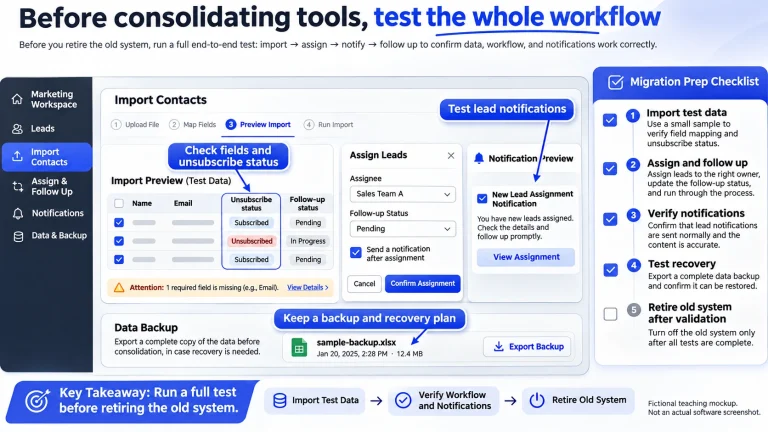
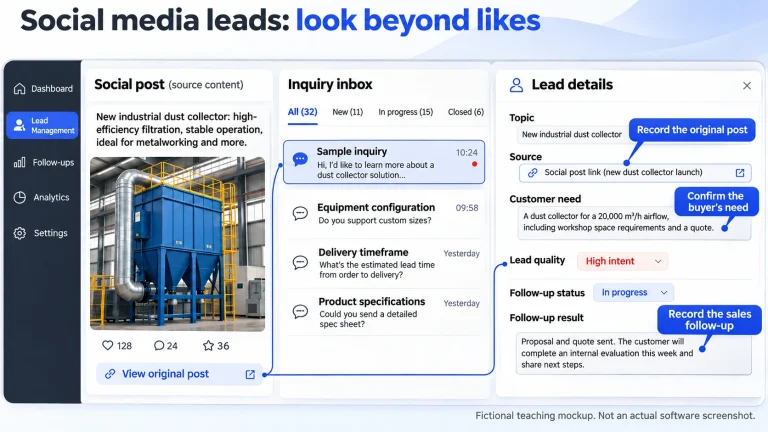
First define whether a conversion means a click, follow, form, qualified inquiry, or payment. These actions have different business values and cannot be compared directly. Lead businesses can use statuses such as submitted → contactable → needs matched → sales accepted → closed. Ecommerce should also track refunds and repeat purchases.
| Stage | Main Question | Evidence to Monitor |
|---|---|---|
| Reach | Are we reaching the intended audience? | Locations, audiences, and meaningful views |
| Reception | Do people understand and want to continue? | Page visits, inquiries, and completed forms |
| Sales | Is real business being generated? | Qualified needs, opportunities, and payments |
| Operations | Are customers creating lasting value? | Refunds, gross margin, repeat purchases, and complaints |
Suppose two ad groups each spend 10000 yuan. Group A produces 100 leads, of which 20 qualify. Group B produces 60 leads, of which 30 qualify. A appears cheaper per lead, but costs 500 yuan per qualified lead versus approximately 333 yuan for B. This is an example; ultimately compare close rates, customer value, and operating costs as well.
Platform reports, website analytics, and CRM may use different attribution and deduplication rules. Fix the reporting windows and definitions, and explain any portions that cannot be matched accurately. Do not simply add together all sales separately claimed by ads, creators, and owned channels.
6. Start with a Controlled Pilot Instead of Launching Everywhere
Limit the pilot to one primary audience, one core conversion journey, and a few content hypotheses. First validate technology and customer-service handling, then compare messages and creative, and only then scale effective combinations. Keep changes interpretable in each test.
Budget for both acquisition and follow-through. If ads generate steady inquiries but customer service lacks staffing schedules, scripts, and recordkeeping, increasing spend can worsen experience. Set internal alerts for response times, inquiry backlogs, and quality anomalies, with thresholds based on actual capacity.
Weekly reviews should record each version’s creative, audience, page, costs, qualified inquiries, and sales feedback. Translate findings into actions, such as removing unnecessary fields or answering common questions, rather than merely changing images and continuing to advertise.
7. Agency Deliverables Should Cover the Conversion Journey
Ask prospective teams to explain how touchpoints connect, what needs development, what depends on permissions, and how data enters the company’s systems. Content samples, account structures, tracking plans, optimization records, and handover checklists provide more useful evidence than service promises alone.
Monthly acceptance reviews should include spending breakdowns, content output, qualified inquiries, sales quality, technical anomalies, and upcoming experiments. Retain appropriate company control over assets, data, and core accounts, preventing owned customer relationships from accumulating in personal or external accounts that cannot be handed over.
Frequently Asked Questions
Select a question to view the answer and make a better-informed decision.
Does having an Official Account let us run every WeChat ad immediately?
No. Verify the entity, industry, product, entry points, and permissions against current rules.
Does an owned audience mean free traffic?
No. Content, customer service, systems, and relationship management require investment, and customer choice must be respected.
Can follower counts demonstrate success?
They show only one stage’s outcome. Business assessment should also cover qualified inquiries, sales, retention, and customer experience.
References
[1] Tencent Ads: Official Products and Advertising Portal
[2] Tencent Ads: WeCom Owned-Customer Operations White Paper
[3] WeChat Official Accounts Platform: Official Account Portal