Content Marketing
Customer Personas: Turn Buyer Research into Better Content
The persona has a name, photograph, job title and interests. Yet at the next content meeting, nobody knows what to write. The profile may describe who the person is without explaining why they buy or where they get stuck.
Customer personas should help the team make a decision. Start with a question you cannot currently answer—such as why buyers hesitate to submit specifications—then organize research around it.
Define the decision before filling in a template
Content teams need recurring questions. Sales may need qualification criteria. Product teams may need to understand an obstacle in use. Choose a decision first, then identify the information that could support it. A field is not valuable merely because a tool can collect it.
Our view is that an attractive persona poster is not evidence of customer understanding. If it cannot help decide what to publish, what to add to a page or what sales should ask, its practical value is limited.
Include people who did not buy
Interview new customers, repeat customers, former customers and prospects who did not proceed. Ask what triggered the requirement, what alternatives they considered, which risks concerned them and what influenced the final choice. Avoid questions designed to secure agreement with your preferred selling point.
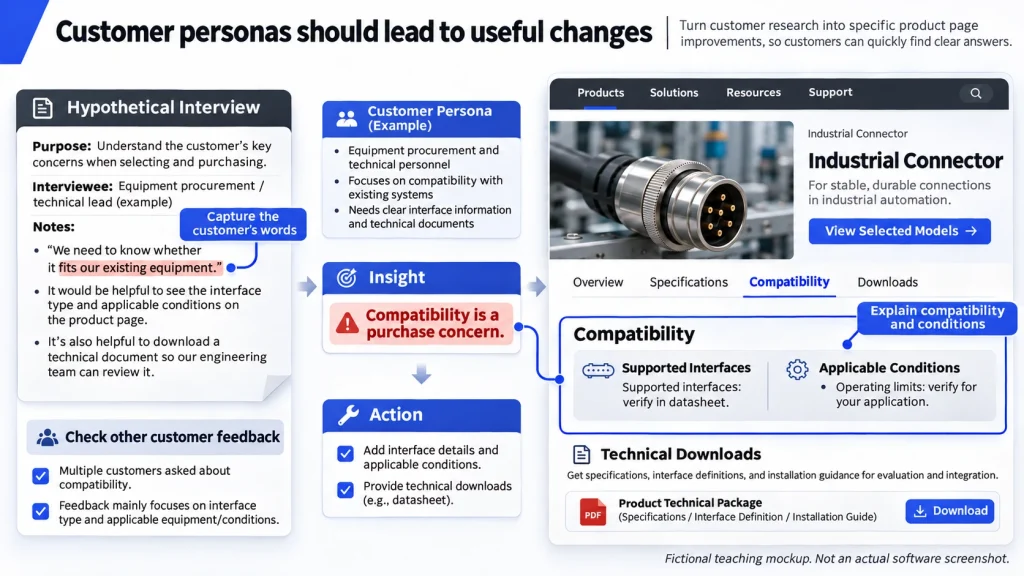
Keep the person’s original wording, relevant context and interview date. People who seriously considered your offer and declined can reveal concerns your successful customers no longer mention.
Use business data to check the pattern
Compare product combinations, repeat-purchase intervals, contract cycles and support effort across customer groups. Interviews can explain possible reasons; data can help assess whether a pattern extends beyond an individual account. Neither a small sample nor a correlation establishes a universal explanation.
Finish the research with a page or process to improve
If compatibility is a recurring concern, provide interface details, limitations and verification steps. A general “quality” claim does little to answer that question. Each finding should connect to a specific page, channel decision or process change.
Google’s helpful content guidance encourages useful content for an intended audience. Personas help a team apply that principle when their conclusions are based on evidence rather than invented character descriptions.
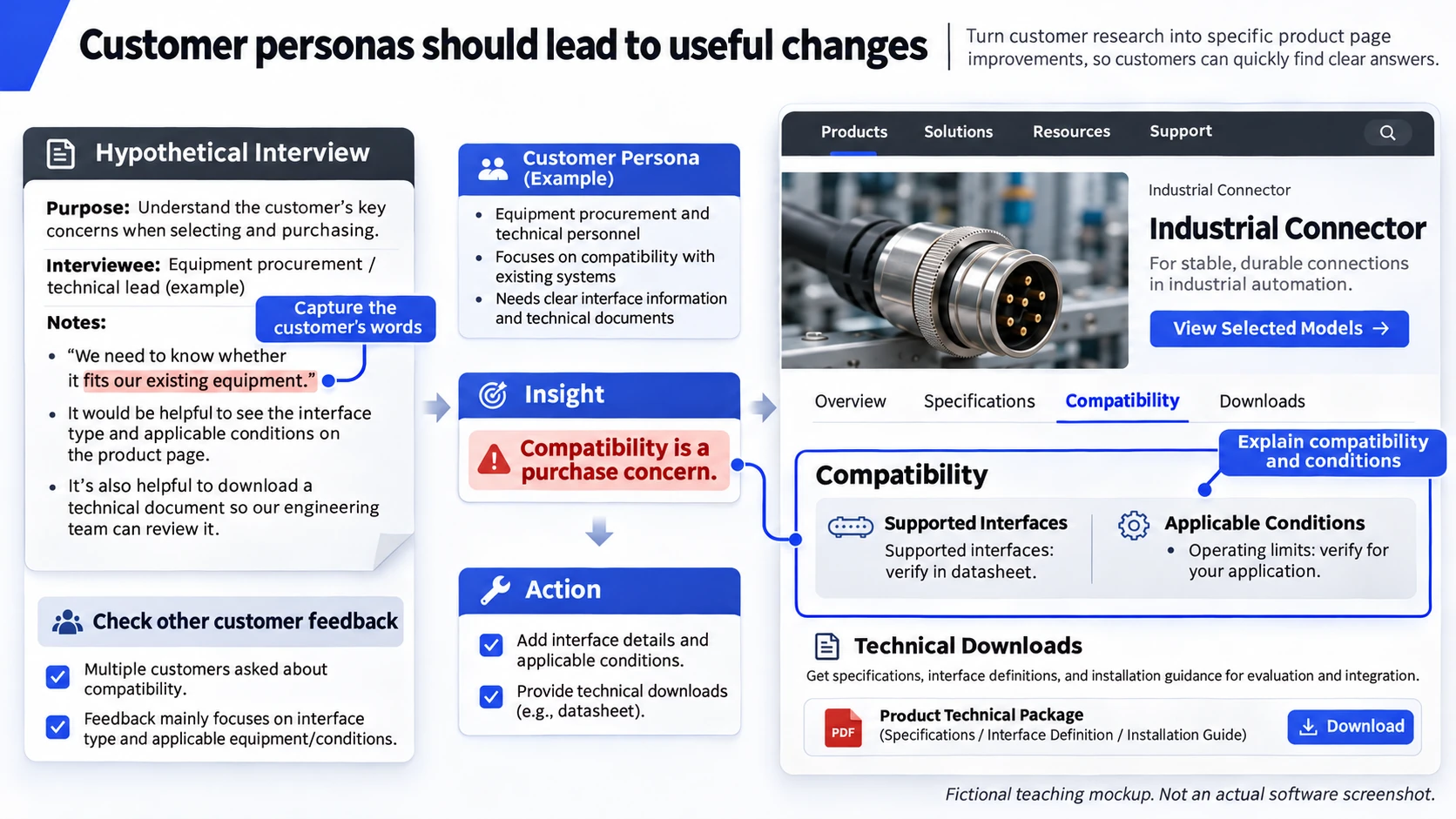
Document the evidence, sample scope, untested assumptions and conditions for revisiting a persona. Review it when markets, products or buying patterns change. AI can help summarize interviews; its generated profile is not a substitute for research. Use customer information only in tools approved for that purpose.
Example: turn a delivery concern into clearer information
Suppose several buyers describe lead times as unclear. Treat that as a finding to verify, then check lost-opportunity records and support inquiries. Explain what information is needed to confirm timing, when updates normally occur and how exceptions are communicated.
If buyers still hesitate to submit specifications, investigate the remaining reason. This hypothetical example moves beyond “purchasing managers value efficiency” to a change the team can implement and assess.
Before your next planning meeting, ask which specific decisions your persona helps people make. For support turning research into content and website improvements, contact AUROO Digital.