Content Marketing
Social Media Marketing: A Small-Team Guide to Qualified Leads
Find an image, edit the copy, publish, answer messages—and repeat. At the end of the week, someone asks how many qualified inquiries social media generated. If one person runs the accounts, that question can be harder than the publishing work itself.
Start with one platform, one customer problem and one relevant website page. Connect the content, the visit and the follow-up before expanding your channel list.
Decide who this week’s content should help
Find out where customers research products, discuss professional questions and assess suppliers. A popular platform is not automatically the right place for your business. Record the main reader, recurring question, suitable content format and next step for each channel.
Build a series around one topic: why the problem occurs, how to compare options, what the process looks like and which mistakes to avoid. An equipment supplier might explain a troubleshooting sequence, demonstrate a maintenance process and link to a complete guide. Keep examples within the product’s actual capabilities.
Our view is that a narrowly focused B2B account does not need to become a large general-interest account. Reaching a smaller group of relevant buyers repeatedly can be a more useful goal than collecting unrelated followers.
Check the post and landing page together
The first screen of the destination page should answer the question raised by the post. Sending every link to the homepage makes readers do the work of finding the promised information. Explain who the page is for, show relevant evidence and offer an appropriate route to inquire, buy or keep reading.
Google’s people-first content guidance emphasizes helping readers achieve their goal. That principle also provides a useful check for the page a social visitor lands on; it does not promise a particular campaign result.
Three habits that create work without a useful outcome
- Launch every platform at once. Build a manageable publishing and response process on a channel customers use before adding more.
- Paste identical copy everywhere. Keep the core question, but adapt the opening, length and presentation to the platform.
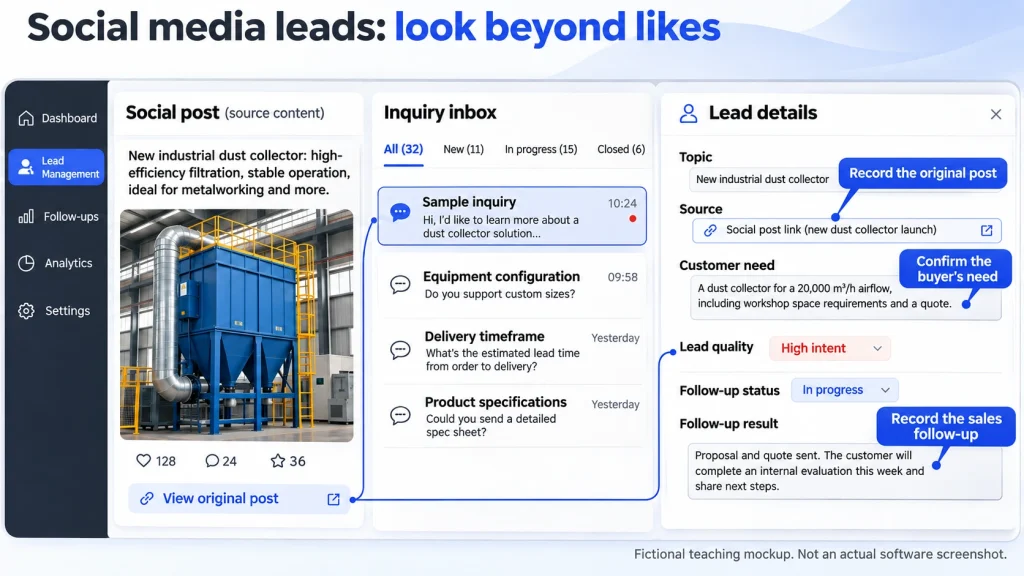
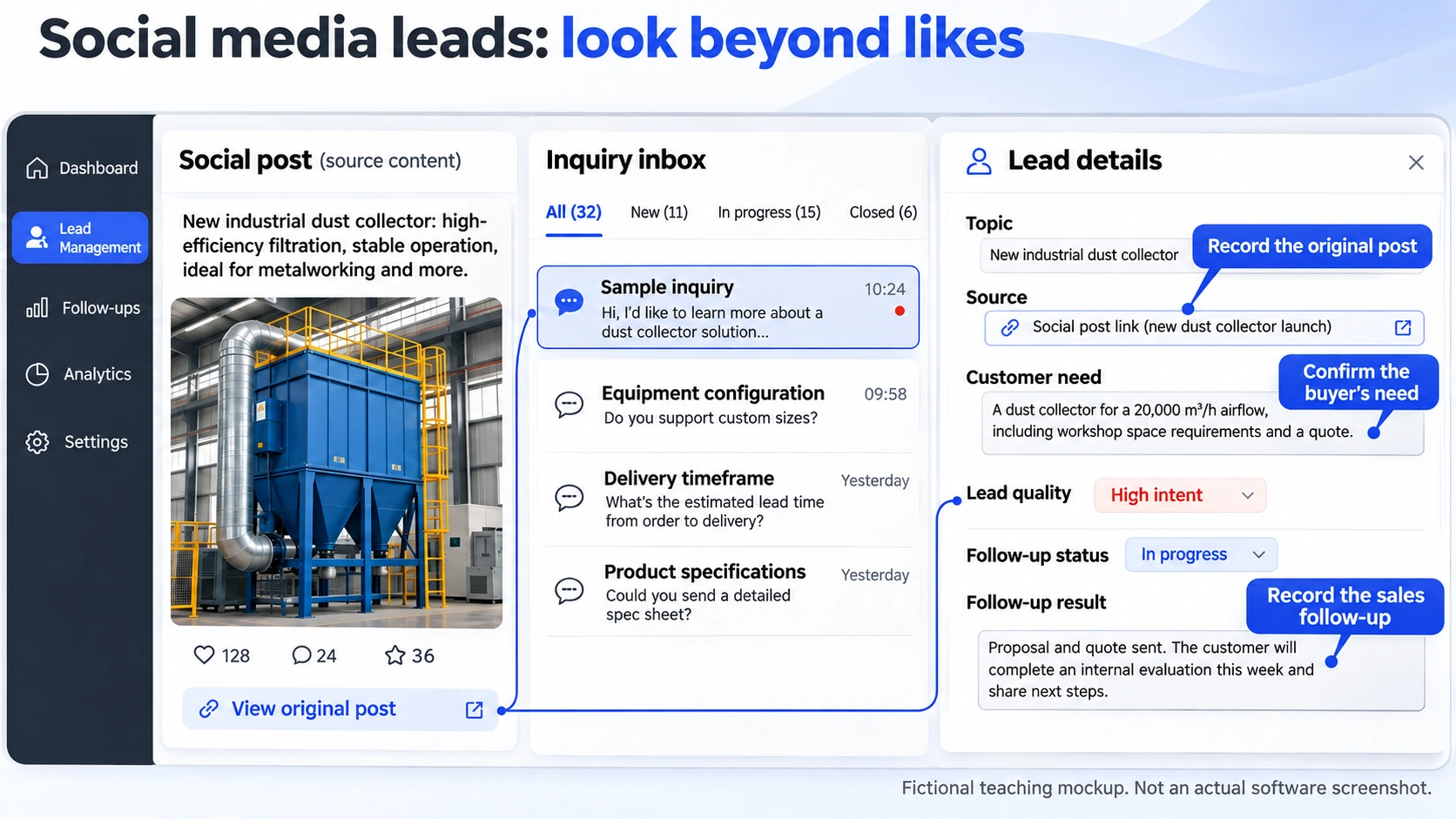
- Leave comments and messages without an owner. Agree who replies, when sales takes over and where the requirement is recorded.
Track the inquiry, then ask sales what happened
Use consistent link labels across channels, campaigns and creative materials. Capture available source information with the inquiry and let sales add whether the person fits your target customer criteria. Review qualified-lead cost and opportunity progress alongside visits and engagement.
If tracking cannot connect devices or offline contact, asking the buyer how they found you can add context. Keep its limitations visible: people may remember only part of their journey.
Use the weekly review to choose the next change
Choose a channel and a repeatable content series. Record the topic, publishing time, reach and qualified inquiries over an agreed period. High engagement with few opportunities may mean the audience is mostly peers rather than buyers. A small sample or a single successful post is not enough to justify moving the entire budget.
Suppose maintenance posts get clicks but no suitable inquiries. Check whether readers use the equipment and whether the page states which models the advice applies to. In the next round, change one important part of the topic or destination page and ask sales whether new inquiries relate to that content. This is a hypothetical diagnostic example.
A popular post deserves investigation before a bigger budget. Find out who responded and what they needed. Next week’s plan can begin with one buyer question, a short series of posts and a clear handover to sales. For help connecting those steps, contact AUROO Digital.