Content Marketing
Brand Strategy and Positioning: Make Your Business Value Clear
“Professional team. Quality service. Complete solutions.” None of these phrases is necessarily wrong. But if a visitor still cannot tell who you help or why your business is a suitable choice, the page has not done its job.
Brand strategy should help customers understand why they might choose you. Before commissioning a redesign, give a target reader your current page without explaining it. Ask them to describe the audience, the problem you solve and the reason to learn more.
Listen to customers who chose you—and those who did not
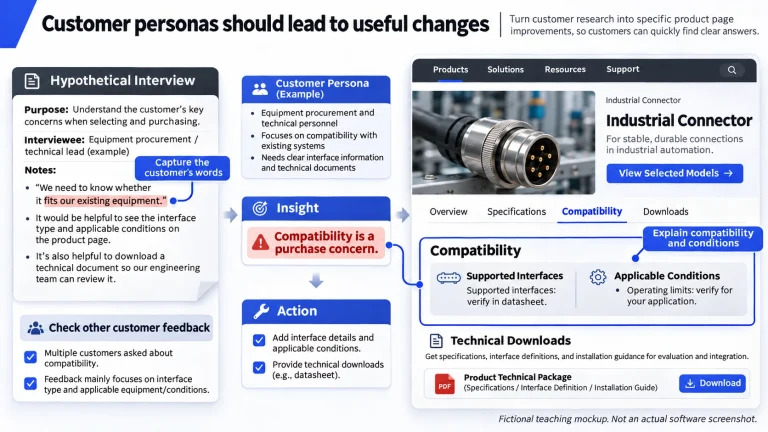
Review recent wins and losses. Separate what buyers initially asked about from what ultimately influenced the decision. Price, delivery, suitability and support matter differently to different customers. Ask sales to record the alternatives considered and the stated reason for the final choice, keeping the interview evidence behind each conclusion.
If readers interpret the page differently from your intended positioning, adjust the order and emphasis of the information. Then observe relevant service-page visits, branded queries and the fit of incoming inquiries. Short-term form counts alone cannot explain brand development, and a redesign should not receive credit for every subsequent business change.
One useful test, in our view, is to cover the company name. Could a competitor use the remaining introduction without changing a word? If so, the message may still be relying on claims that everyone makes.
Write one specific positioning statement
For internal alignment, describe the customer, situation, value and supporting evidence in one sentence. For example: a machining service for equipment teams that need small production runs, with clearly documented tolerance requirements and a sampling process. This is an illustrative positioning exercise, not a claim about any company’s capabilities or results.
Specific positioning helps the team decide which topics to cover, which proof to show and which requests it cannot reasonably accept.
Give each promise something concrete to stand on
If you promise transparency, explain the project stages, responsibilities and acceptance criteria. If you emphasize expertise, provide technical explanations, applicable conditions and genuine author information. If you emphasize reliable service, describe availability and how unresolved issues are escalated.
Google’s helpful content guidance discusses clear sourcing and author background as signals readers can use to assess trust. This supports checking whether a website’s statements have useful evidence; it does not establish that a particular brand claim will improve rankings or sales.
Agree on the core message, usable evidence and promises that staff must not improvise. Your homepage, social posts and sales introduction can vary in length and tone while remaining consistent about the audience and service scope. For international audiences, have someone familiar with the market check terminology and meaning.
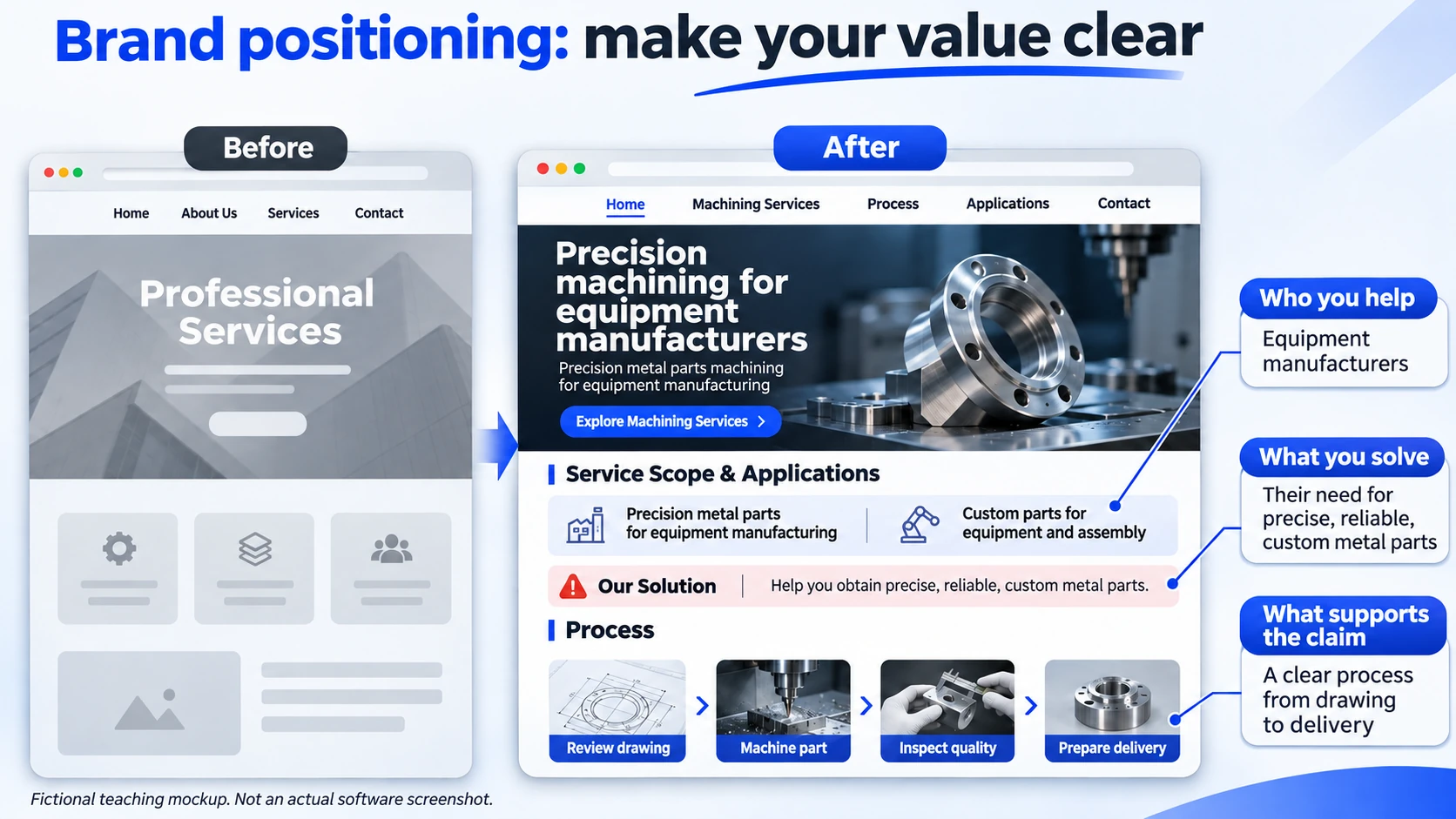
Show how the service works
Imagine that a business promotes “complete service,” while buyers mainly worry about who handles changes in a complex project. A more useful service page would explain project roles, confirmation points and change requests. Sales can use the same explanation, then record which questions still come up.
If responsibility questions decline but pricing questions remain, explain what the quotation includes and what costs extra. This hypothetical example shows how to improve messaging through feedback instead of rewriting every channel at once.
Customers do not need a brand theory lesson before they can make a decision. They need to know what you can help with, what information you require and who will handle a problem. Clear answers give distinctive language something meaningful to express.
Begin with a reader comprehension test. For help connecting positioning with a practical website experience, talk to AUROO Digital.