Content Marketing
B2B Content Planning: Turn Sales Questions into Buyer-Focused Content
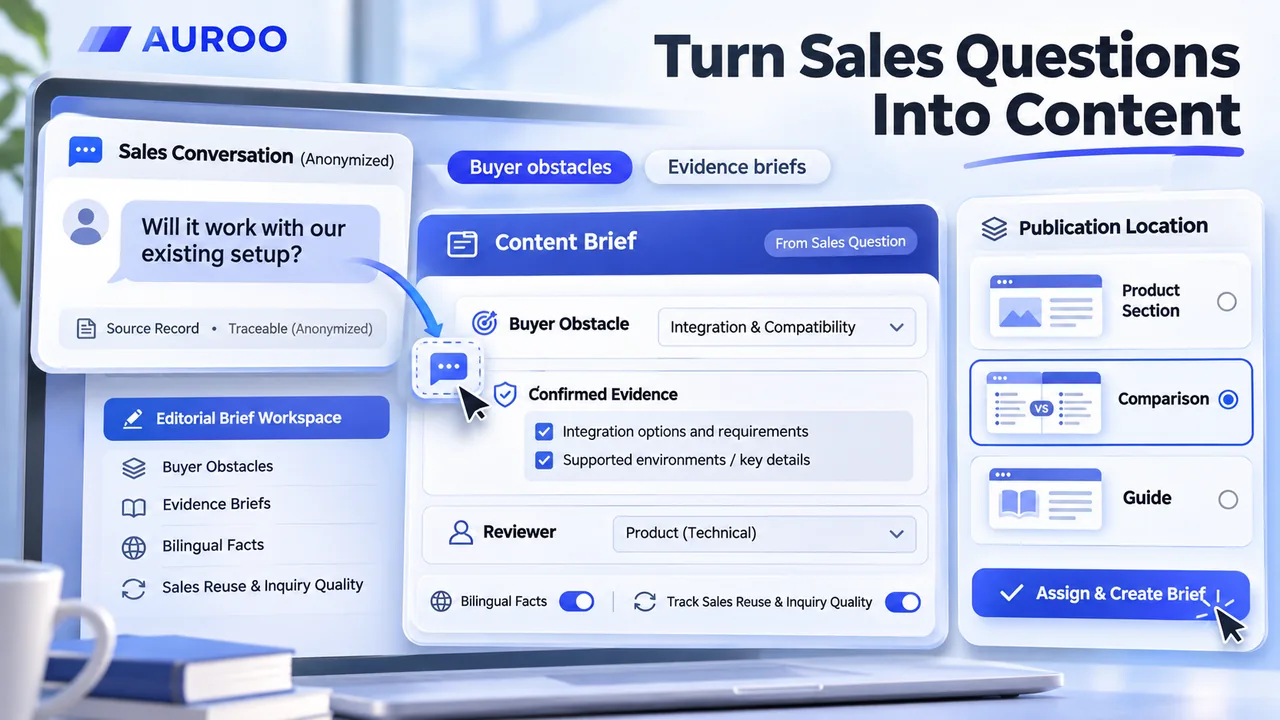
The questions sales repeatedly answers often reveal gaps in the website. Buyers may leave because they cannot understand sample arrangements, order conditions, delivery limits or competing approaches. A useful B2B content plan starts with those decision obstacles and becomes a shared working document for sales and marketing.
1. Collect real questions and remove private details
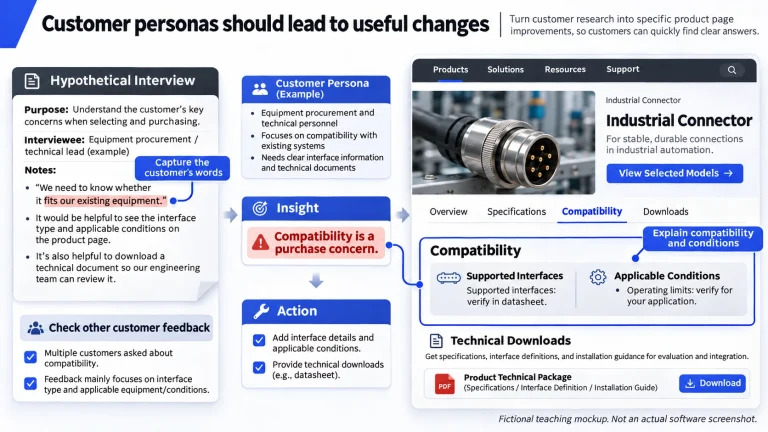
Use inquiries, meeting notes, support and after-sales conversations to collect recurring questions. Remove names, email addresses, contract details and other information that should not be published. Preserve product context and buying stage. Do not invent customer concerns from editorial intuition. Mark small samples as unvalidated, and ask sales whether a question is recurring and its answer can be shared publicly.
2. Group decision obstacles before choosing channels
Useful groups include suitability, costs and conditions, risk and evidence, implementation, delivery, and maintenance. Identify the blocked decision before choosing an article, product section, comparison, downloadable resource or sales email. Order conditions may belong directly on a product page or purchasing-policy page. They do not automatically require a long blog post simply to meet a publishing quota.
3. Give every brief an answer, evidence and next step
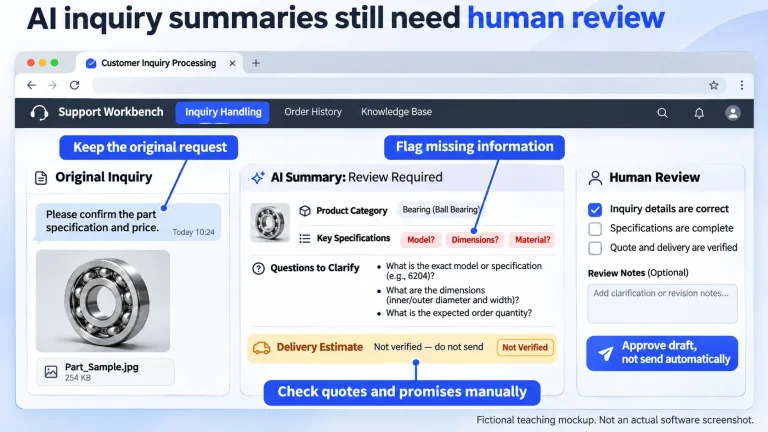
Specify the reader, central question, limitations, facts, supporting documents, reviewer, publication location and next useful action. The action might be checking a specification or preparing project details rather than booking a consultation. Flag unsupported promises for verification or removal. Generated prose cannot replace a missing test result, confirmed service commitment or permission to share a customer example.
4. Build a content set around one purchasing question
This is a planning illustration rather than a research finding. If buyers ask what to prepare for a custom office-chair sample, a guide could explain dimensions, materials, intended environment and confirmation steps. A product page could summarize sample conditions, while sales receives a short reusable explanation. The business must confirm whether samples are available, their cost and timing. Share a factual source across the three touchpoints without mechanically duplicating long passages.
5. Choose a cadence the team can maintain
Prioritize clear obstacles with available evidence and fit publishing volume to review capacity. Product and sales owners confirm facts; editors handle structure, language and sources; website owners check links and usability. Maintain shared Chinese and English terminology, then review units, regional conditions and contact routes in each version. When policies or products change, update related resources together instead of letting language versions drift.
6. Measure whether content helps buyers progress
Alongside organic visits, record sales reuse, more complete inquiries, repeated questions and the resources sent to opportunities. Downloads and reading volume do not prove revenue contribution. When connecting content with CRM, distinguish exposure, sales use and acquisition source. One page view is not evidence that an article caused a deal. Feed new objections and information gaps into the next brief, so the plan improves with actual use.
Implementation checklist
- Use questions traceable to business records.
- Check privacy and permission to publish.
- Match the format to the buying obstacle.
- Assign evidence and a reviewer to every brief.
- Include bilingual updates and sales feedback in one plan.
Frequently asked questions
Must the plan contain many articles every month?
No. Set the cadence around evidence and review capacity, and first close gaps that affect buying decisions.
Can one article support both SEO and sales?
Yes, if it answers a specific question, provides reliable information and makes the relevant explanation easy to find and share.
Sources checked on November 5, 2026. The practical workflow and fictional examples are AUROO Digital editorial guidance.