Content Marketing
Multi-Channel Content Marketing for Small Businesses
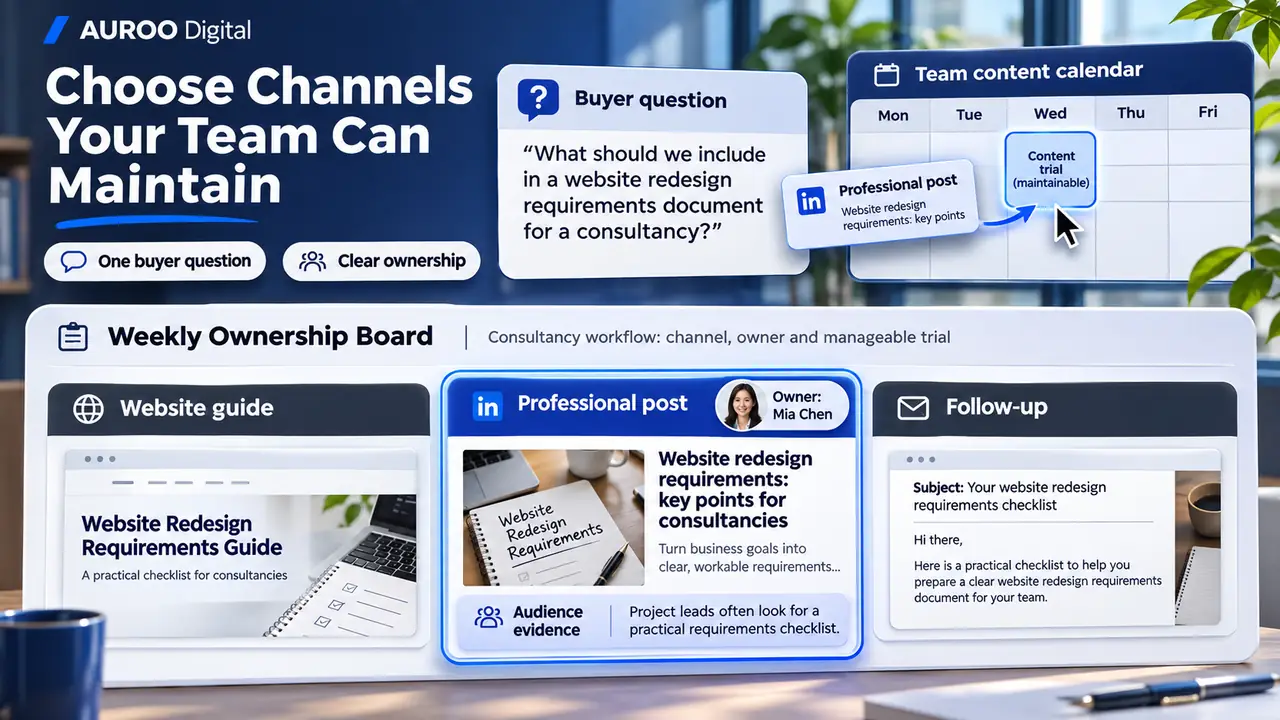
Multi-channel content marketing gives different channels distinct roles around the same customer need. A website can explain a topic in full, social content can help people discover it, and email can continue the conversation. Small businesses should choose channels by audience fit, suitable formats and maintenance capacity before adding more platforms.
Opening several accounts does not create a coordinated strategy. If every platform carries the same company introduction, buyers may still struggle to find useful answers. With limited resources, channel responsibilities matter more than the number of accounts.
Define the problem each channel should solve
Make the current task specific. Do you need to reach buyers who do not know the brand, help people compare approaches, or support readers who have already expressed interest? The answer changes the format, publishing cadence and measures of success.
If important information is missing, improve the website first. If useful resources are rarely discovered, investigate external distribution. If inquiries often stall, develop better follow-up materials. Channel selection should follow an observable business problem.
Use the website and search for complete answers
The website provides a durable home for guides, comparisons, service explanations and cases that can be updated and connected to the business. Search can bring in people actively seeking answers, but relevance, content quality and technical access all matter.
Keep essential explanations in readable text rather than only in images or downloadable files. Define specialist terms and state relevant conditions. For international content marketing, check local wording and audience expectations instead of relying on sentence-by-sentence translation.
Match social and video content to the task
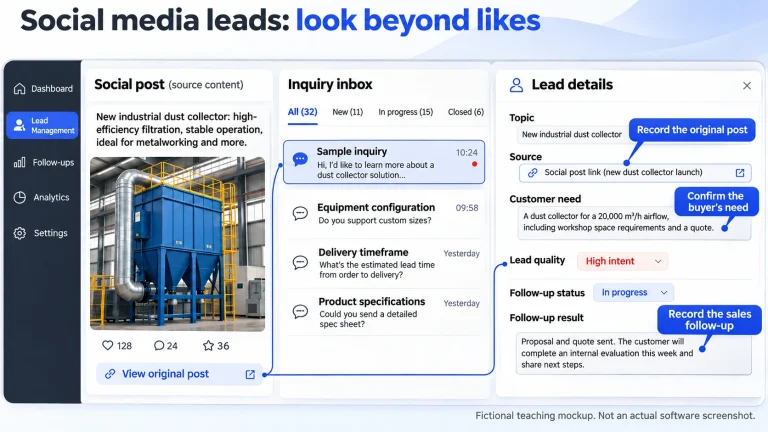
Social posts can introduce a point of view, question or concrete example. Video can demonstrate a process or a visible difference. Evaluate these formats against the target market and customer behavior, not just platform-wide user counts.
A B2B team might investigate whether its buyers participate on LinkedIn or in industry communities. A visually oriented consumer brand might research image and short-video channels. These are directions for investigation, not universal recommendations.
Give email and communities distinct responsibilities
Email can provide continuing help to subscribers and people with an appropriate existing communication relationship. It needs relevant topics, a reasonable frequency and accessible preference controls. A large list of unfamiliar addresses is not automatically a useful content marketing asset.
Communities help teams understand real questions and contribute to discussions. Learn the rules and habits before posting. Repeatedly dropping the same link into groups may fail to reach suitable buyers and can damage the brand's reputation.
Evaluate channels against resources and audience evidence
For each candidate, record evidence that the right customers are present, suitable content formats, the time required for production and interaction, and meaningful actions you can observe. Simple scoring can support decisions, but the scores are internal judgments rather than industry benchmarks.
For example, a B2B team with useful website guides, relevant LinkedIn experience and evidence of buyer activity could test those channels together. If it cannot maintain video production, postponing video is a reasonable resource decision.
Compare channels by task and maintenance requirements
This comparison supports resource planning. It is editorial guidance, not a ranking of platforms or a standard budget. Confirm relevant buyer activity before choosing a channel.
| Channel | Useful role and formats | Ongoing requirement |
|---|---|---|
| Website and search | Complete guides, comparisons and cases for active questions | Research, editing and maintenance; evaluate search over time |
| Professional social networks | Help relevant professionals discover a viewpoint through posts and charts | Professional participation and sustained interaction |
| Continue a conversation through focused updates and checklists | A relevant subscriber base and preference management | |
| Video | Demonstrate operations and visible differences | Scripts, production and updates when conditions change |
| Industry communities | Understand questions and answer them within discussions | Knowledge of rules and continuing participation |
Choose a starting combination for the business
Hypothetical example: an exporter of custom components repeatedly receives material and lead-time questions. If search demand supports those questions, start with complete website explanations and distribution through sales and one relevant professional channel. Add email when there are suitable subscribers. Prioritize video only if process demonstrations help buyers make decisions.
A website consultancy that attracts buyers through referrals and professional discussions could instead begin with an on-site comparison guide, a maintainable professional social account and a requirements checklist. These examples depend on observed customer behavior; neither establishes a universal platform preference.
| Trial record | Illustrative entry |
|---|---|
| Problem | Suitable buyers do not know what to prepare for a redesign |
| Audience evidence | Repeated sales questions and relevant professional discussions |
| Resources | One guide and checklist; assigned editor and channel owner |
| Meaningful actions | Checklist use, relevant questions and suitable requirements |
| Review decision | Set a review date; diagnose content or offer problems before expanding or stopping |
Run a manageable channel trial
Choose one customer question, one core page and one main external channel. Assign production, publishing and interaction responsibilities. Set a review point and examine audience relevance and visit quality instead of judging the channel after a few posts.
The website holds the complete explanation; external content delivers useful information in a format suited to the platform and offers a route to more detail. Separate channel problems from content problems: little relevant response may signal poor targeting, while visits followed by immediate exits may reveal a mismatch between the promise and destination.
Compare channels using appropriate measures
For search, examine relevant queries and subsequent inquiries. For social, review interactions from suitable people and meaningful website visits. For email, consider useful clicks, replies and unsubscribe feedback. Include production and maintenance costs rather than comparing traffic totals alone.
In businesses with long sales cycles, record whether a channel supported the buyer's decision. Explain attribution limits: participation in a journey does not mean that channel caused every sale associated with it.
Frequently asked questions
Does multi-channel content marketing require every platform?
No. Prioritize channels that matter to target customers and that the team can maintain. Expand according to evidence and available resources.
When should a channel trial continue or stop?
Continue when relevant buyer questions or meaningful actions appear at a sustainable cost. If visits arrive without further action, inspect the content and offer first. Pause when audience evidence remains weak and maintenance costs are high. A fixed number of posts is not a decision rule.