Content Marketing
Content Marketing Strategy: Turn Blog Readers into Qualified Leads
You publish every month. Traffic occasionally rises, yet sales still says the right customers are not getting in touch. Before buying more keywords or increasing output, ask a simpler question: which purchasing decision does your content help someone make?
A content marketing strategy defines what to write, who needs it and what they can do next. For a small team, testing one useful topic is a more manageable starting point than committing to a long publishing calendar.
Ask sales which questions keep coming up
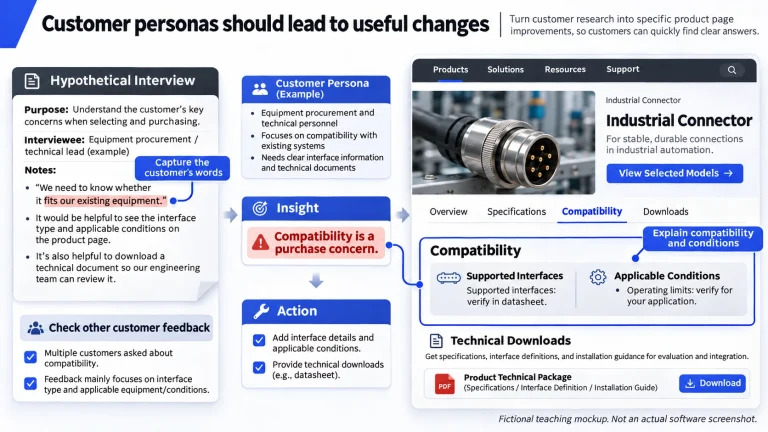
First define a qualified inquiry: the relevant industry, a real requirement and a project within your service scope. Then ask sales and support what buyers ask when they first make contact, compare options and prepare to buy. A list of product names is not yet an editorial plan. Buyers also want to know whether a product fits, what can go wrong and what affects the cost.
Our view is that a company blog does not need a new post every day. A question buyers repeatedly ask, but struggle to answer online, deserves a thorough explanation. One useful selection guide can be worth more than ten posts repeating the same general advice.
Give each article a distinct job
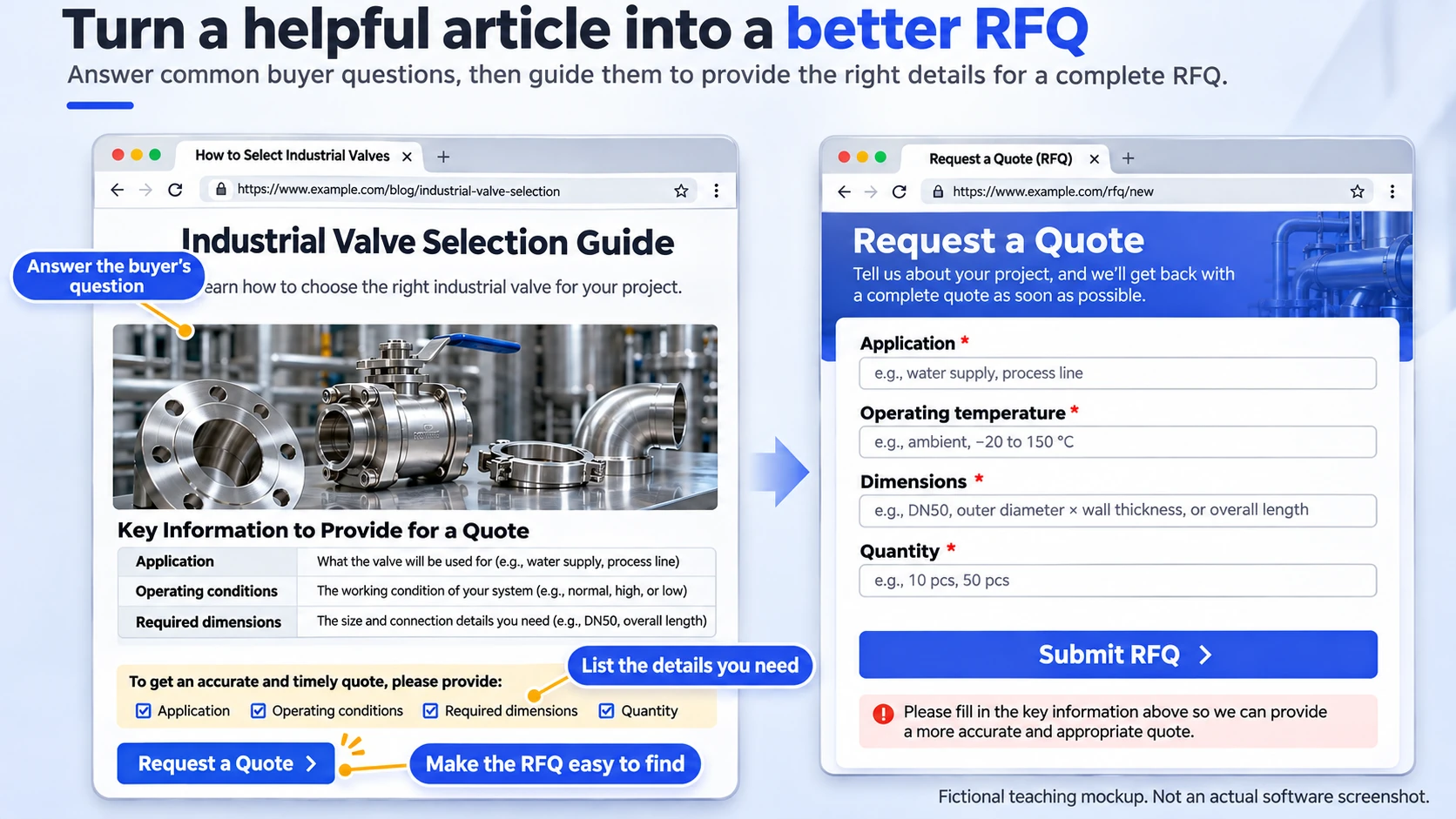
Early readers need to understand their problem. Buyers comparing solutions need differences and selection criteria. Those preparing an order need the process, required information and acceptance checks. An industrial exporter might connect a selection guide, application-specific comparisons and a request-for-quote page. Each page should answer a different question.
Google recommends assessing whether content provides original information or analysis and goes beyond simply rewriting other sources. Google Search Central’s helpful content guidance provides the basis for this quality check. Add a specification checklist, a transparent calculation or a clearly labeled hypothetical example. When you have no documented client results, explain the decision process instead of inventing growth figures.
Connect publishing with sales feedback
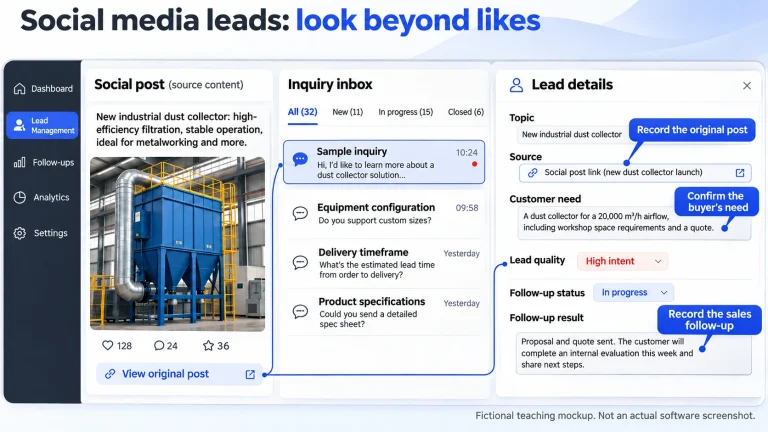
Record the buyer question, owner, evidence, publication date and reasons for future updates. After publishing, review search queries, landing-page visits, form submissions and sales feedback together. A discovery article, a comparison page and an inquiry page serve different purposes; judging all three by the same immediate conversion rate can be misleading.
Start with one product line, one main guide and two supporting articles. Irrelevant visits suggest a topic or title problem. Relevant visitors who do not inquire may need clearer evidence or an easier form. Numerous unsuitable inquiries suggest that your scope and eligibility conditions need explaining.
Three ways to waste a limited content budget
- Buy keywords before defining the buyer’s question. Traffic is of limited use if the topic has little connection with your business.
- Change the title while repeating the same article. Assign one distinct question to each page and merge genuinely overlapping material.
- Publish and wait. Plan how sales, email and social channels will put the article in front of relevant readers.
Content should also help buyers recognize when your offer does not fit. Clear limits may reduce the number of inquiries while saving both sides an unproductive conversation.
A practical example: better information in an RFQ
Suppose a parts exporter builds content around corrosion-related selection questions. A main guide explains which operating conditions matter, supporting pages discuss comparisons and sample preparation, and the RFQ collects the medium, temperature, dimensions and quantity. This is a hypothetical planning example. Evaluate whether inquiries contain more useful information, rather than comparing page views alone.
How often should a guide be updated?
Update when products, policies or processes change. Review long-lasting guidance periodically; changing the date without improving the content does not help the reader.
Does every article need a sales pitch?
No. The next step might be another guide, a downloadable checklist or a project inquiry, depending on what the reader needs.
For your next planning meeting, bring a list of recurring sales questions. To discuss a website or content project, contact AUROO Digital.