Content Marketing
Content Marketing Distribution Strategy and a 90-Day Plan
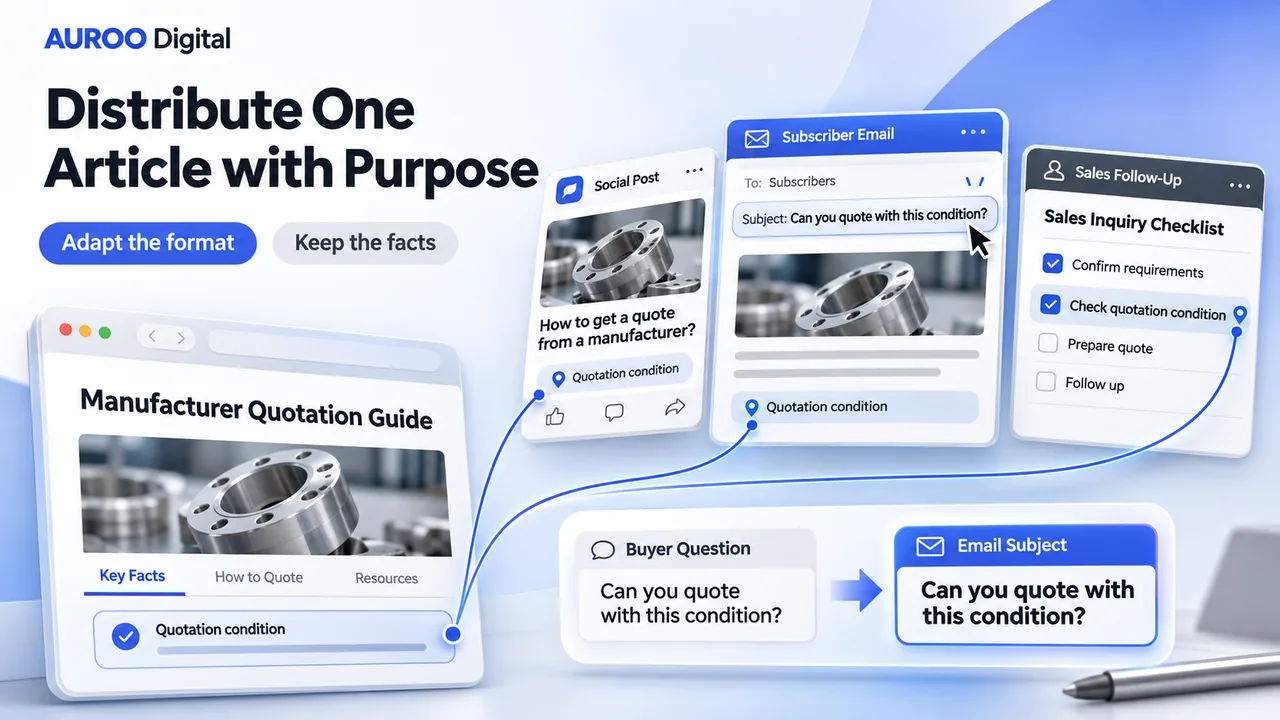
A content marketing distribution strategy defines how useful content reaches the right buyers, across which channels, and what happens after publication. Start with a core article and a specific reader need, adapt it into social posts, emails and sales resources, then review feedback over a manageable period. The 90-day plan below is an adjustable workflow, not a promise of results or a requirement to promote every article for three months.
Publishing is only one part of content marketing. Teams also need to decide who should discover an article, where interested readers should go next, and which explanations deserve another round of promotion. For a small B2B team, a repeatable distribution process can be more practical than increasing publication volume.
Start the distribution plan with a customer question
Give each article a specific job. A guide for manufacturing buyers might explain why supplier quotations differ. That purpose informs both the channels and the supporting materials. A broad goal such as increasing brand awareness still needs to become a concrete reader task.
Identify where buyers encounter that question. Search can reach people actively looking for answers; industry communities support existing discussions; email follows up with subscribers; and sales teams can reuse explanations in conversations. Choose channels according to buyer behavior and team capacity rather than trying to appear everywhere.
Repurpose one article without losing its meaning
Keep the facts consistent while changing the format. A full guide can explain quotation components, a social post can highlight an overlooked cost, an email can answer one recurring question, and a checklist can help buyers prepare an inquiry. Each asset should provide useful information before asking for a click.
Preserve limitations when repurposing content. Advice about small custom orders should not become a claim about every purchase. When specifications, prices or lead times change, update the related materials together so different channels do not contradict one another.
Assign ownership and check the customer journey
Give one person responsibility for the distribution checklist. Record the channel, asset, publishing time, destination and completion status. Editors verify facts, channel owners adapt the presentation, and business colleagues check whether the inquiry route supports the intended customer.
Before launch, test the actual path: does the link open, is the article readable on mobile, can the form be submitted, and does the reader understand the next step? Use consistently named tracking parameters for channels, without putting personal information in URLs.
Follow an adjustable 90-day content promotion plan
Days 1–7: publish the full article on the website, share its key judgment through one main social channel, and send relevant information to subscribers. Give sales colleagues a short summary and an explanation of when to use it.
Days 8–30: turn recurring questions into follow-up posts or short videos and improve unclear parts of the original. In communities, answer the question within the discussion first. Share a link only when it is relevant and the rules allow it.
Days 31–60: examine audience fit and the next step. Exposure without meaningful visits may point to channel or messaging problems. Visits without further action may indicate a mismatch between the article, the reader's needs and the offered action.
Days 61–90: decide whether to continue, update or pause. Reshare a useful topic around a new question, refresh information that has changed, and reduce effort on channels that consistently lack relevant feedback. Adapt the timetable to demand and resources.
Turn the 90-day plan into assigned deliverables
Consider a hypothetical export manufacturer with a guide explaining differences between custom-product quotations. One editor, one channel owner and a sales contact share the work. This is a planning demonstration, not a client case or a forecast.
| Timing | Deliverable | Owner and review |
|---|---|---|
| Before launch | Core guide, inquiry checklist, two posts and one email | Editor verifies facts; sales checks buyer questions; channel owner tests links |
| Day 1 | Publish the guide and email relevant subscribers | Record sources and replies; provide sales with a shareable summary |
| Days 3–7 | One cost-breakdown post and a short demonstration video | Use different entry points; record relevant buyer questions |
| Days 8–30 | FAQ post and improvements to the original guide | Editor records the question; sales checks the answer |
| Days 31–60 | Compare meaningful visits, inquiries and work hours | Adjust the channel or next-step offer |
| Days 61–90 | Refresh useful assets and close unproductive tasks | Document the reason to continue, change or stop |
Add destination URLs, actual completion dates, tracking parameters and outcome notes when using the table. Review outstanding tasks weekly and examine where the journey breaks before commissioning additional material.
Adapt the message rather than duplicating the article
| Asset | Example angle | Next useful step |
|---|---|---|
| Social post | Does the unit price include tooling, sampling and delivery conditions? | Read the complete explanation |
| Four information groups to prepare before requesting a quote | Review the inquiry checklist | |
| Short video | Show two quotations and explain why comparison conditions matter | Open the full guide |
| Sales follow-up | Confirm the specification, volume, use case and timing before comparing offers | Complete a requirements discussion |
Use consistent external-link tracking, such as utm_source=linkedin, utm_medium=social and utm_campaign=quotation_guide. These parameters identify traffic sources; they do not establish independent revenue causation. Avoid adding campaign parameters mechanically to ordinary internal links. Google Analytics campaign parameter guidance
Measure content marketing distribution beyond exposure
Separate channel reach, website engagement and business actions. Impressions and interactions describe distribution; related page visits and resource requests indicate further interest; qualified inquiries and opportunities show business relevance. State the attribution window and avoid assigning an entire sale to one article.
To support AI search discovery, keep a complete, accessible version on the website with clear context, sources where needed and accurate update information. Social summaries help distribution; the original page carries the full explanation. More channels do not guarantee AI citations.
Frequently asked questions
How many channels should a small team start with?
Start with the website and one external channel that regularly reaches the right audience. Add email when there is a relevant subscriber base. Expand after the team can distribute and review each article consistently.
When should an article be shared again?
New evidence, a relevant example, a customer question or a different business context can justify another share. Check the original for accuracy first and make the fresh angle clear.
Begin with one article closely connected to the business, complete the distribution and review cycle, and carry the useful steps into the next content assignment.