GEO
Technical GEO: Can AI Read Your Website Accurately?
Key takeaways
- Distinguish fetching, indexing, retrieval, and citation as separate stages.
- Check whether key body text is accessible and information relationships survive.
- After repairs, reassess the original URL using the same method.
Determining whether AI reads website content accurately requires two steps: confirm the target service can fetch key body text, then check whether that text retains the original structure and conditions. Normal browser display or AI repeating a few sentences does not independently prove accurate reading.
Technical SEO access and indexing checks provide a foundation for investigating these issues; GEO for AI generative search also requires confirming that the relevant service can fetch body text.
If content requires additional loading or access rules block the target service, further changes to titles and wording may not help. Content teams should first confirm actual retrieval with technical staff, then decide whether the content itself needs adjustment.
Distinguish content fetching from answer citation
Technical investigations must distinguish different services’ mechanisms, purposes, and access rules. Configure access according to the relevant service’s official guidance and website objectives rather than applying a universal crawler allowlist.
Even when crawling is permitted, crawling, indexing, retrieval, and citation remain separate stages and should not be treated as one outcome.
Give technical staff a clear problem description
Content teams need not change configurations themselves, but should describe issues clearly. Instead of merely saying “AI cannot find this article,” provide the page URL, intended body text, observation time, and observed anomaly.
With the URL, target text, and incident time, technical staff can determine whether the issue concerns access, rendering, or subsequent retrieval.
For example, Google’s documentation for AI features in Search requires supporting linked pages to be indexed and eligible for a search snippet. These are that service’s conditions and cannot simply be applied to other AI products. Eligibility does not guarantee display.
Check access, body text, and information structure in sequence
Start GEO technical checks with three core business pages and identify the search service to assess. Verify each URL in this order:
- Normal access: check login requirements, abnormal redirects, and restrictions affecting the target service.
- Body text retrieval: confirm key text can be fetched, whether extra loading is required, and whether the result is complete.
- Preserved information relationships: verify model-to-specification relationships, table units, operating steps, and prerequisites remain clear.
Record the page, responsible owner, and review time for each issue. Pages without detected problems need not be rebuilt solely for GEO; decide specific technical changes after confirming obstacles.
Record content and technical issues separately. Address restricted access as access, missing body text as rendering, and insufficient information through additional writing.
Identifying the affected stage avoids blaming every lack of citation on copy quality and reduces unsupported page rebuilds.
Check complete retrieval of key facts against the original
For example, a comparison page describes two models. Even if all specifications are retrieved, losing their association with each model can cause later errors. Check models, values, units, and limitations individually rather than merely confirming that body text characters appear.
If key instructions exist only in images or appear only after a click, inspect what the target service actually receives. Where necessary, add accurate text to the body and ensure headings, captions, and table labels refer to the same subject.
A technical tool fetching body text proves only the result under that inspection method. If AI answers remain wrong, save the question, answer, and visible sources and compare them with the original to distinguish outdated sources, omitted information, and interpretation errors. A wrong answer alone does not establish incorrect crawling.
Reassess the original URL after repairs
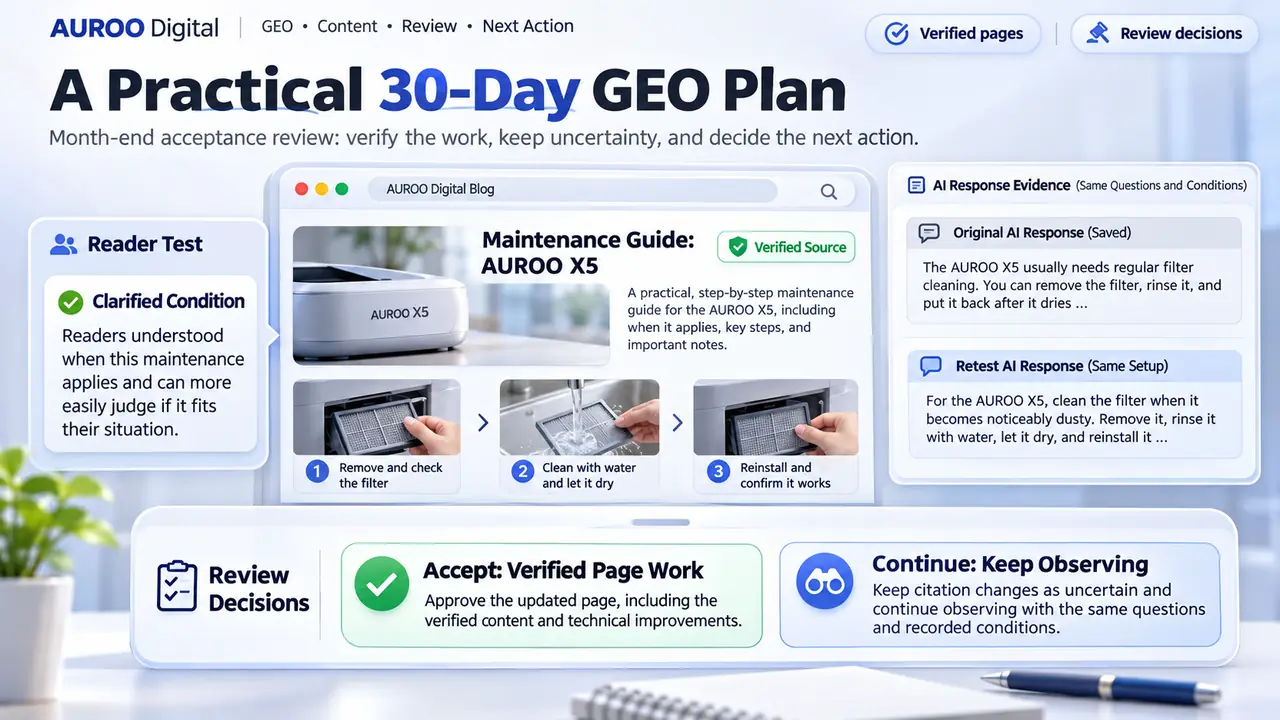
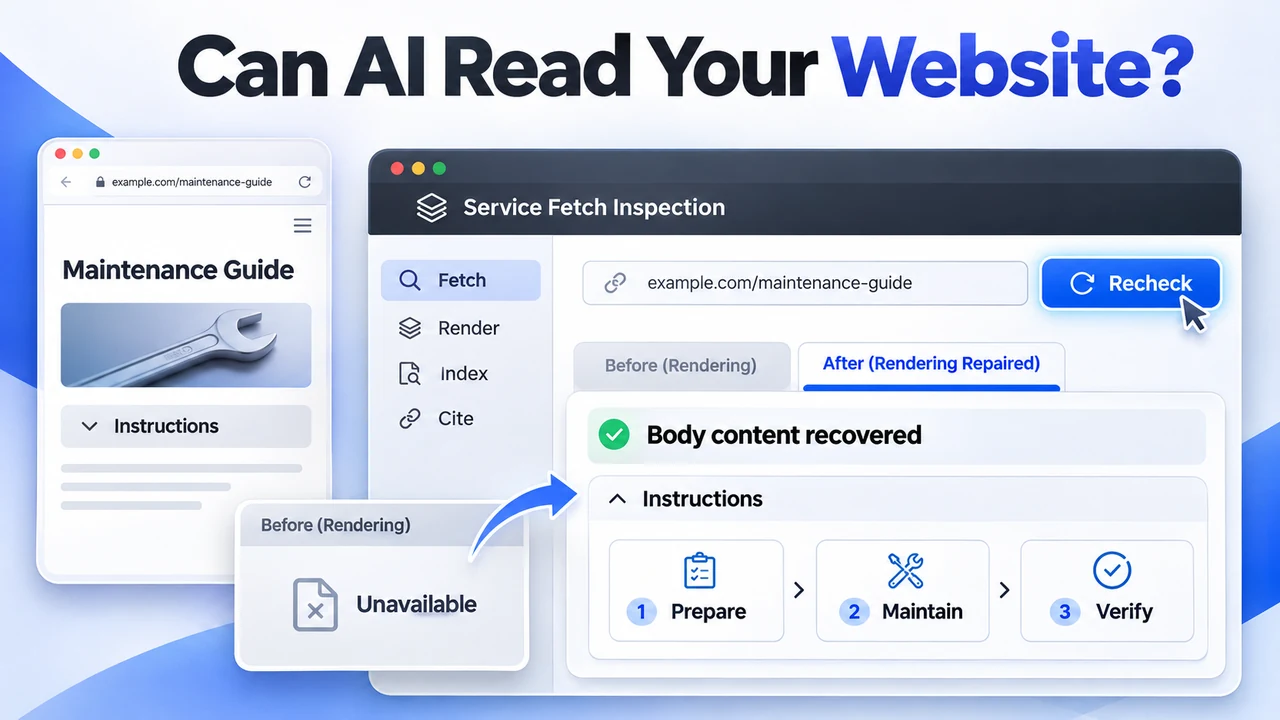
Suppose maintenance steps appear in a browser, but inspection shows the target fetching method misses key text. Fix rendering or access first, then recheck the same URL for completeness rather than adding more GEO keywords.
- Save evidence before repair: record the URL, inspection tool, target service, problematic text, and inspection time.
- Confirm repair scope: technical staff should describe changed access or rendering settings and check normal visitor access.
- Recheck retrieval: use an inspection method supported by the relevant service to confirm that headings, body text, and necessary links are accessible.
Record technical acceptance separately for key body text retrieval, subject-to-value relationships, and retained conditions. These results do not promise AI citations or consistently correct answers. If citations remain absent after retrieval is restored, separately check indexing, question relevance, and content quality.
Independent records at every stage help determine whether the next task belongs to technical staff or content editors.
Google official explanation of technical requirements for AI features