GEO
GEO Measurement: AI Mentions, Citations and Business Metrics
Key takeaways
- Record brand mentions, page citations, and business results separately.
- Compare changes using fixed questions and consistent measurement definitions.
- Preserve uncertainty in attribution and turn reviews into specific tasks.
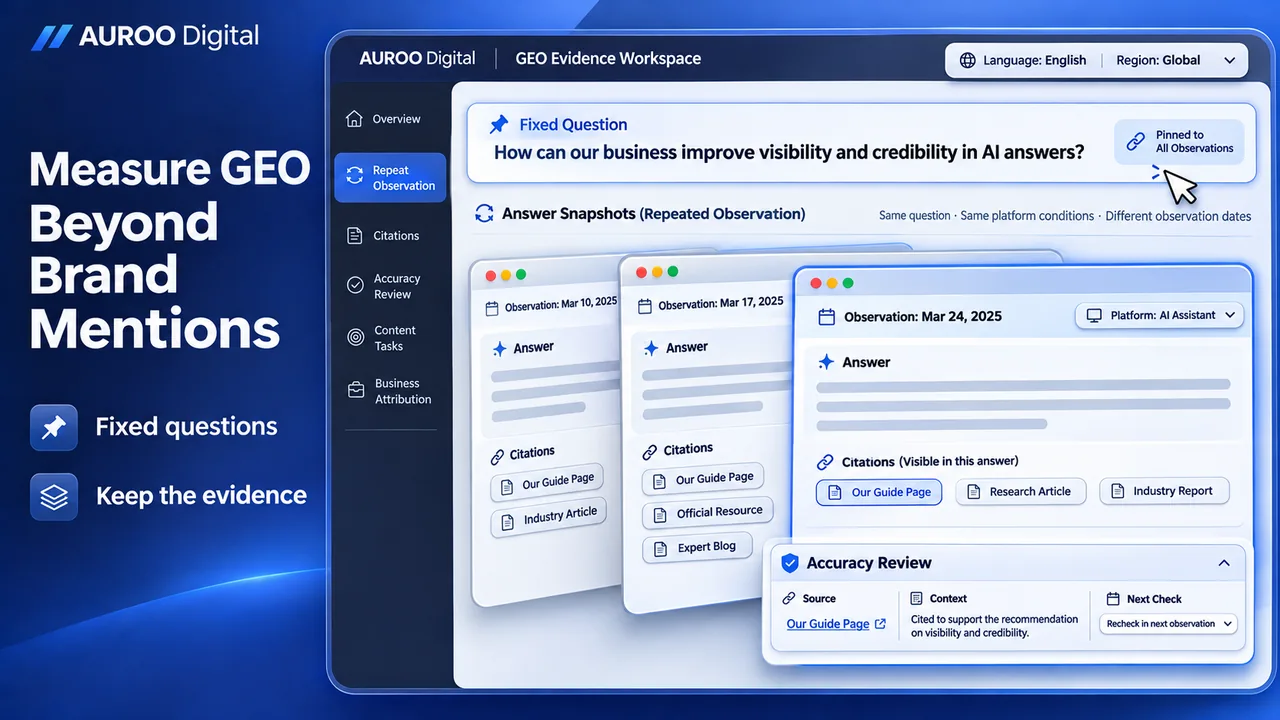
GEO measurement separates brand mentions, source citations, information accuracy and business outcomes. Use a fixed question set, language, region and documented platform conditions, repeat observations and retain answer records. Review identifiable visits and qualified enquiries separately; mention rates are not revenue metrics.
To apply the approach to your website or marketing project, explore AUROO Digital’s generative engine optimization services, with scope, deliverables and review methods agreed around your needs.
Distinguish three types of evaluation signals
When evaluating GEO, consider these three signal types separately:
- Brand mentions: whether the brand appears, why it is introduced, and whether the information is accurate.
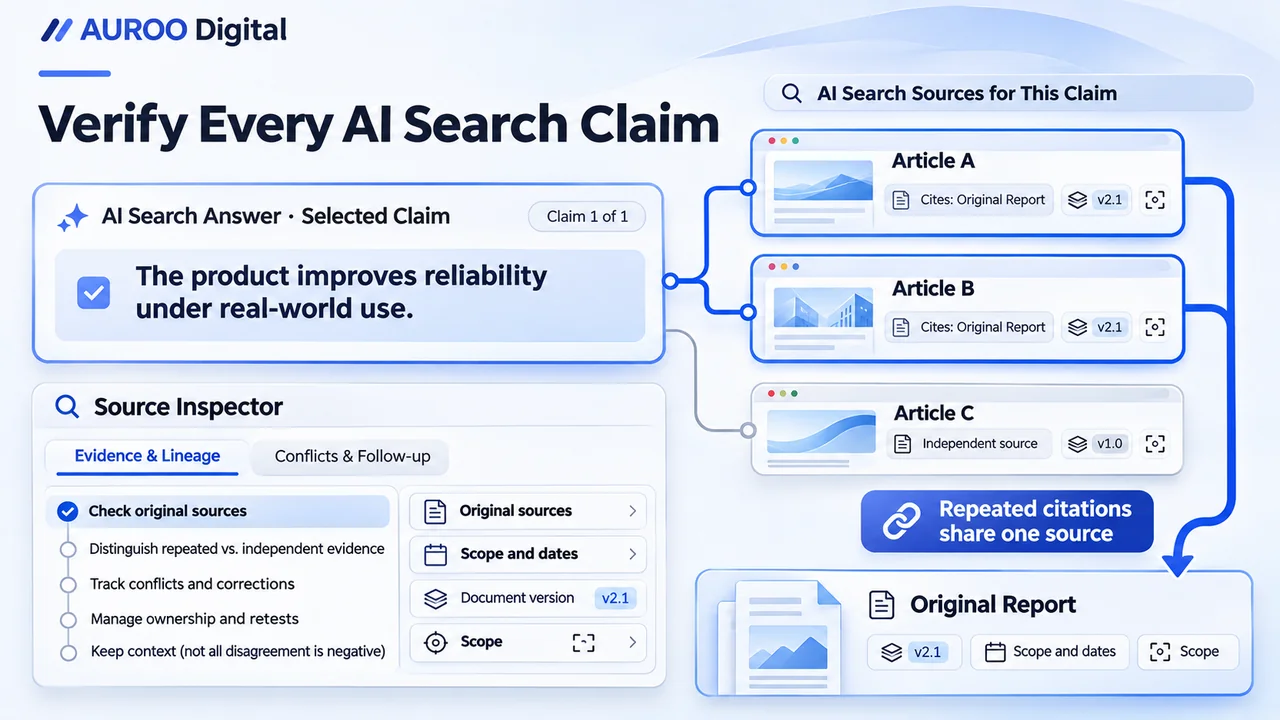
- Page citations: whether a specific page appears as a source and which information is cited.
- Business results: whether qualified inquiries, suitable sales leads, or closed sales change.
Brand mentions, page citations, and business results may be related but are not equivalent. A citation without the brand name may spread knowledge without building brand awareness; a recommendation based on a misunderstanding may attract unsuitable customers. Analyze mentions and citations in the context of the answer, and track business outcomes separately.
Existing SEO traffic and conversion data can remain a comparison baseline, but should not be applied directly as evaluation criteria for exposure in AI answers.
Generative search monitoring should retain full answers and context. Beyond counts, examine accuracy, the needs addressed, the information cited, and whether recommendation reasons match product facts. A single aggregate score can discard details that actually guide revisions.
Compare changes using fixed questions
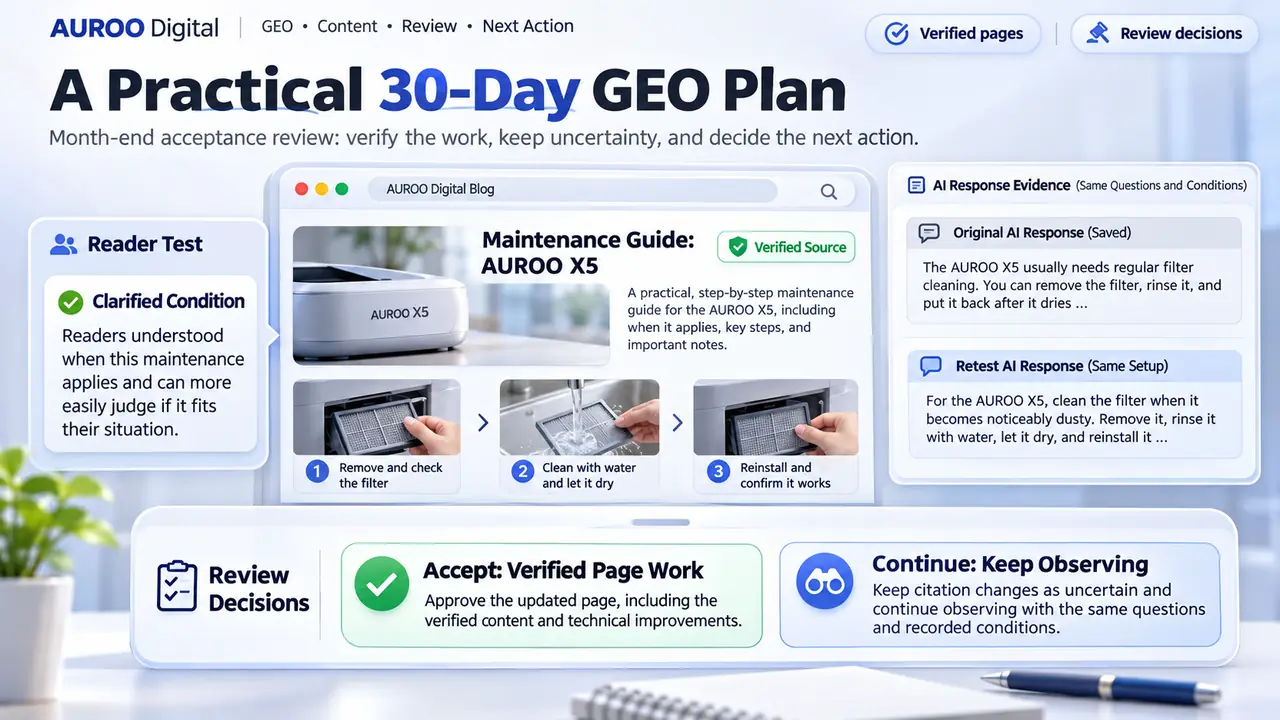
If different questions are selected each week, increased appearances may simply mean that week’s questions were more likely to trigger the brand. Comparing changes requires at least a fixed question set and records of platform, date, internet connectivity, and other conditions.
For important purchase or service decision questions, repeatedly record AI answers rather than presenting one change in recommendations as a stable trend.
Share of voice also needs a defined scope. A brand’s share of mentions across twenty selected questions describes only that sample, not the entire industry. Clear sample definitions may look less impressive than sweeping figures, but support decisions more effectively.
Define the calculation scope for every metric
For example, test a fixed set of 20 customer questions and save complete answers. If 6 answers mention the brand, record “the brand was mentioned in 6 of this test’s 20 samples.” This is not industry market share. For repeated tests, specify whether counting is by question or by answer.
Bing Webmaster Tools’ AI Performance report can show page citations within the experiences it covers. When using platform data, verify report coverage and metric definitions rather than treating one platform’s citations as all AI search performance.
Connect citation and business records through pages and time
Review AI citation records alongside business data using page addresses, question topics, and observation periods. For a buying guide, record the questions under which it was cited, then examine page visits, inquiry entry point use, and subsequent lead quality. Preserve each data source’s own measurement definitions.
For example, increased page citations and related inquiries initially establish only that both changed at the same time. Record concurrent promotions, advertising, or sales campaigns. Without traceable referral sources, do not attribute all incremental inquiries to AI citations.
A customer’s statement that they “discovered the brand through AI” can provide a source clue to cross-check against page and time records. Self-reported sources, identifiable website referrers, and final sales records may not match individually; preserve uncertain findings.
Use results to determine the next optimization
Split reviews into two tracks. One examines facts in answers: where the brand is absent, what is misunderstood, and which pages are frequently cited. The other examines business changes: where qualified inquiries originate, whether customers mention AI, and whether contacts fit the target audience.
When asking customers how they found you, include an uncertain option rather than forcing every change into GEO attribution.
If product information is repeatedly wrong for a question, prioritize checking public materials and sources. If brand appearances increase without suitable inquiry growth, investigate question selection and product fit rather than merely producing more content. Each review should identify the corresponding content or product issue.
A useful GEO report supports specific decisions: which question needs additional content, which information needs correction, and which change needs continued monitoring. Improved visibility can be an interim signal; business value still requires further evidence.
If AI visibility changes cannot be connected to business outcomes, explicitly identify missing evidence, such as insufficient source records, a short observation period, or concurrent marketing activity.
Turn monthly reports into the next task list
- Improved information accuracy: retain verified explanations while monitoring the corresponding questions for new misunderstandings.
- More citations but unchanged inquiries: check whether cited questions relate to business needs, then review page entry points and inquiry paths.
- More inquiries but unclear sources: retain customer source responses and visit records, continue gathering evidence, and defer GEO attribution.
Specify an owner, page, reason for change, and review date for every task. At the next review, first check whether previous issues were resolved before discussing increased investment. This returns evaluation to specific pages and customer needs rather than leaving reports focused indefinitely on rising counts.