GEO
A 30-Day GEO Plan: Baseline, Content and Review
Key takeaways
- Choose one business topic and complete a clearly scoped optimization in 30 days.
- Complete baseline records, content revisions, fact-checking, and retesting in sequence.
- Assess content and technical outcomes before deciding on the next investment.
A small team can use 30 days to document a baseline, improve one topic, check facts and run an initial reassessment. Choose questions related to a core service, assign owners and define page-level acceptance checks. This is a delivery and observation schedule, not a promise of citations or customers.
To apply this approach to your website or marketing project, explore AUROO Digital’s generative engine optimization services, with scope, deliverables and review methods agreed around your needs.
For AI generative search, this plan examines customer questions, content quality, and monitoring methods. Thirty days is a period for completing work and initial observation, not a deadline for citations or growth.
Confirm materials and collaboration before starting
This 30-day plan suits small teams with an existing website, verifiable product information, and basic technical support. If genuine customer questions or documentation are missing, collect questions and verify facts before rewriting pages rather than guessing as you write.
Week 1: Select a question and record the baseline
Find a recurring question in recent customer conversations, such as how to maintain a product category. Verify relevant materials, choose two or three related existing SEO pages, and save the originals. Define what this optimization should improve.
For example, adding maintenance conditions and operating steps can help readers identify their next action and may provide clearer information for relevant answers.
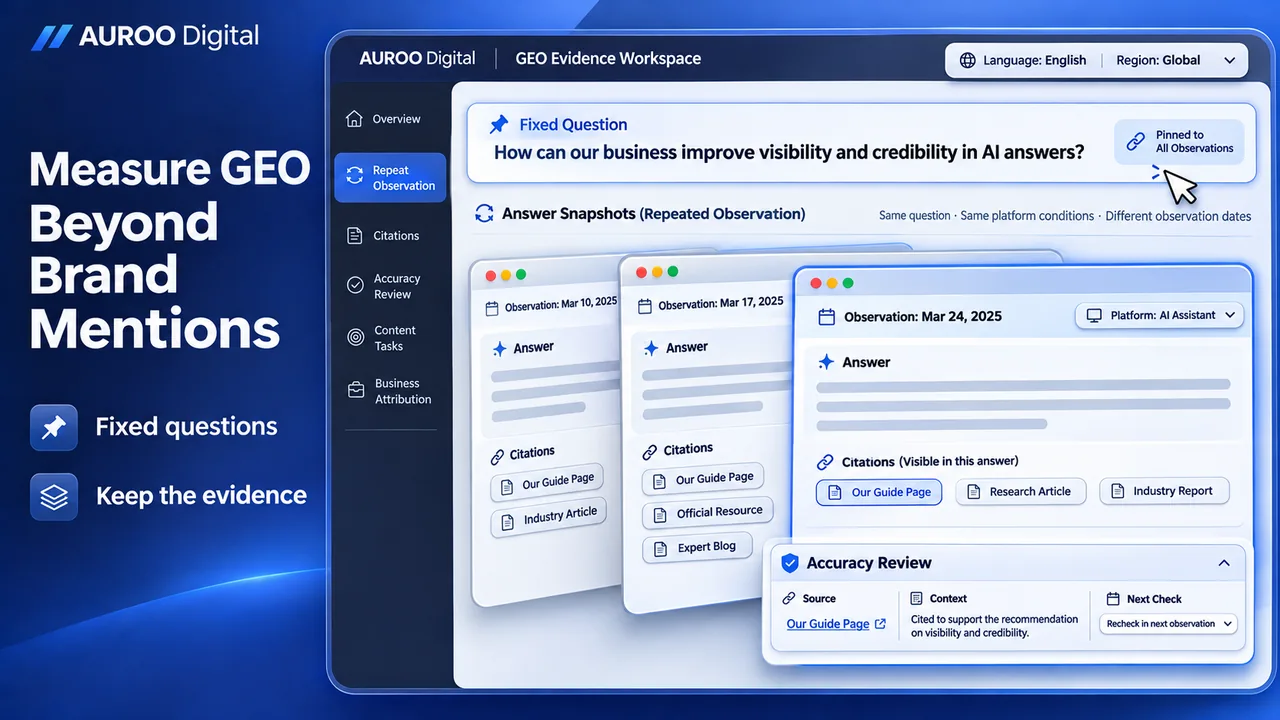
Week 1 baseline records should include original pages, fixed customer questions, the testing platform and connectivity status, full AI answers, and current related inquiries. Samples may be small, but every observation must link back to an original record.
Week 2: Rewrite related content
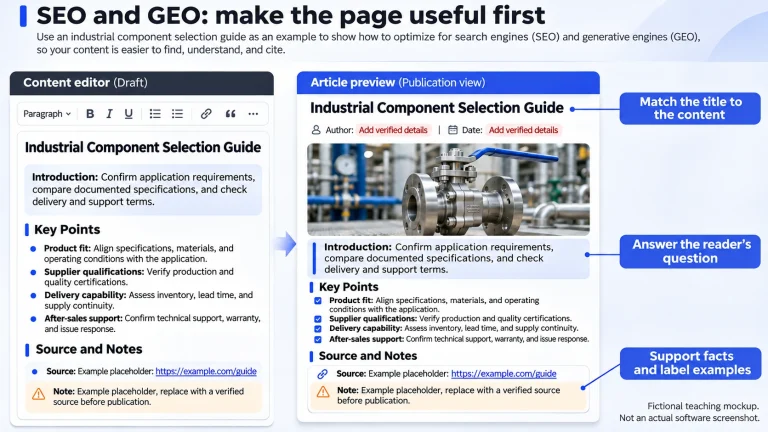
Start with the article closest to the central question. Give a decision method at the beginning, add steps and evidence in the body, and make key passages readable independently. Make only necessary supporting changes to related pages, such as updating product maintenance instructions and correcting outdated information.
In Week 2, change only pages involved in this maintenance topic and record modification dates. If other sections must change concurrently, log those changes too so later results are not all attributed to this GEO rewrite.
Week 3: Check facts and arrange reader testing
Ask someone unfamiliar with the product to find answers using the article and observe where they get stuck. For practical instructions, have someone familiar with the product verify accuracy. At the same time, ask technical staff to check access to key pages and retrieval of their body text, recording required fixes.
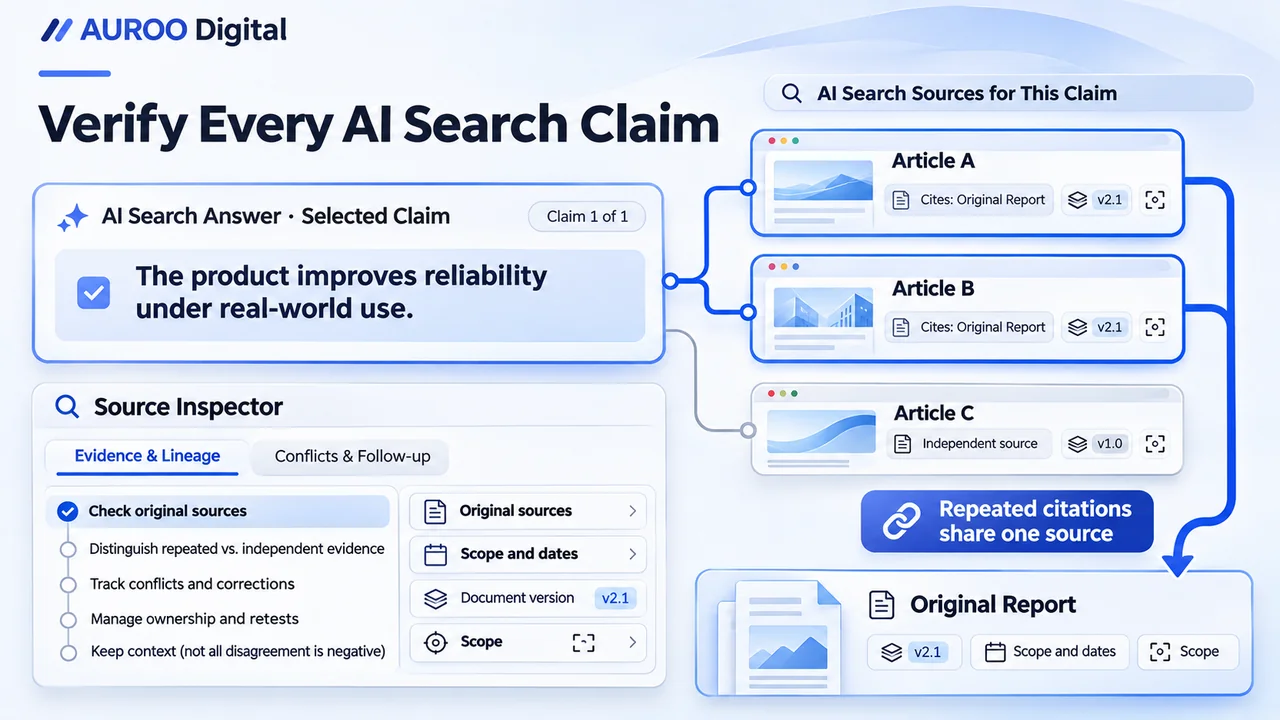
Before publication, confirm that promises, specifications, and citations match original materials.
There is no need to keep publishing this week. One specific reader question often reveals more gaps than several similar new articles. Save revised versions and dates so the experiment does not end with vague impressions alone.
Week 4: Retest and define follow-up tasks
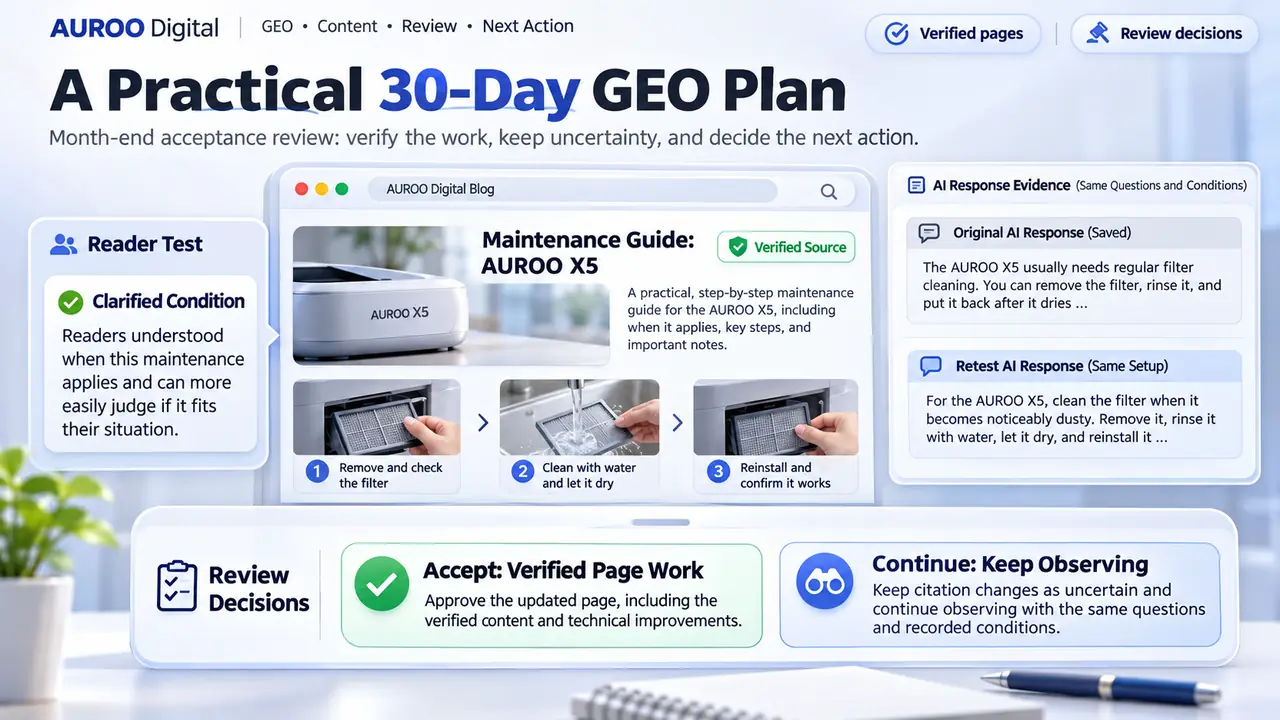
Retest using the customer questions originally recorded, documenting platform, date, visible model version, and connectivity status. Compare saved answers to check whether maintenance conditions are represented correctly, citation sources have changed, and related inquiries still reflect the same misunderstandings.
No observed change in AI mentions within 30 days does not establish that the content is ineffective. First check page retrieval and observation records, then decide whether to extend monitoring or revise explanations that remain unclear.
At month-end, focus the review on three questions:
- Which changes have supporting evidence and should be retained or applied to other pages?
- Which observations remain unexplained and need further monitoring?
- What is most worth testing next month, and are current resources sufficient?
Assess content and technical work in sequence
At month-end, first confirm evidence for key facts, then whether readers find answers, then whether page body text is retrievable, and finally compare AI answers and business records. If an earlier stage still has gaps, rework that task before expanding topic coverage.
One person may fill multiple roles in a small team, but identify the content owner, fact-checker, and technical collaborator in advance. For product operations, editors cannot verify functionality solely from AI-generated instructions.
- A question and baseline record: the topic, fixed questions, original pages, and initial AI answers can be found.
- A set of verified revised pages: subjects, conditions, steps, and source links are complete, and relevant body text is retrievable.
- A month-end decision record: completed improvements, uncertain changes, and issues for the next round are distinguished.
For example, if maintenance conditions are complete and test readers can find the next step but AI citations remain unchanged, accept the content revision and keep monitoring. If readers still misunderstand applicable models, rework the relevant section before expanding to more topics.
Completing the 30-day plan means establishing a repeatable process for collecting questions, revising, accepting, and reviewing work. Invest next in gaps identified by the review so GEO experience accumulates in real pages and working records.