GEO
SEO to GEO: Existing Content Optimization Checklist
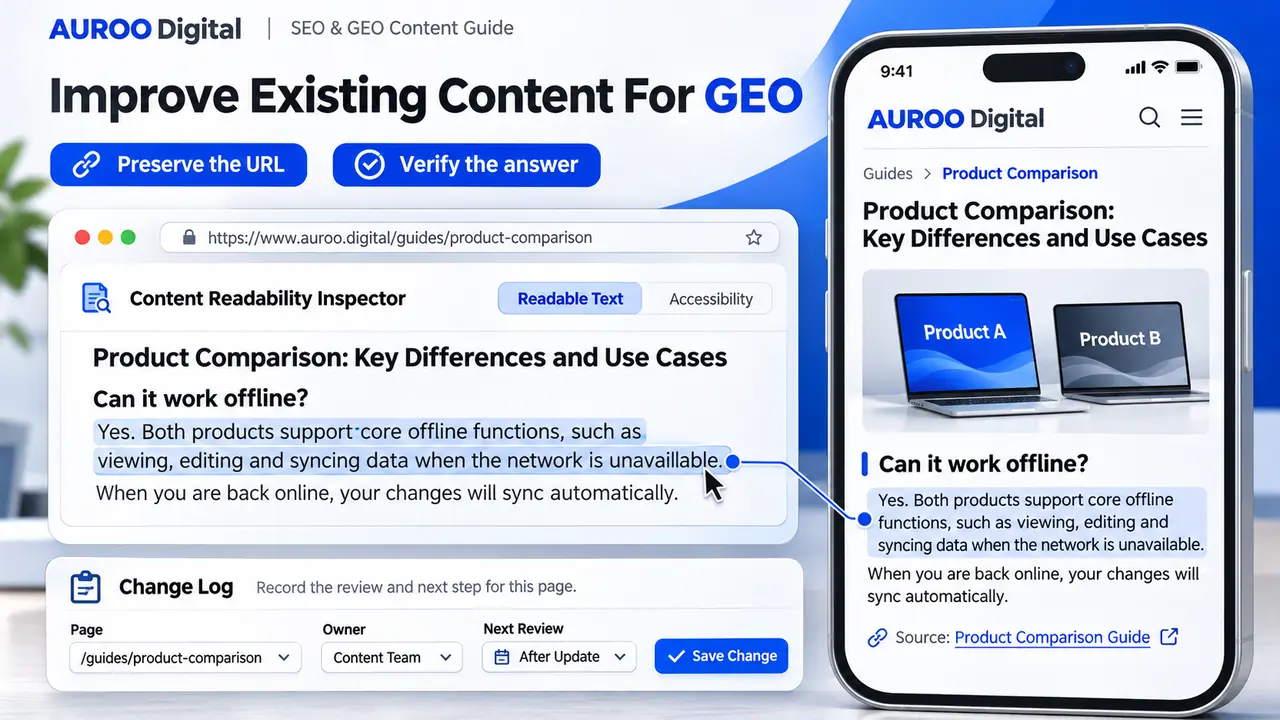
Key takeaways
- Preserve effective SEO assets and prioritize information gaps in existing pages.
- Allocate tasks as retain, revise, or supplement.
- Record changes and monitor search, AI answers, and qualified inquiries separately.
Adapt existing SEO content for GEO by retaining useful information and stable URLs, filling gaps in questions, conditions and evidence, and checking that the body content is accessible. Record baselines and specific changes. Review search clicks, AI answers and qualified enquiries separately instead of rewriting a site around one test.
To apply this approach to your website or marketing project, explore AUROO Digital’s generative engine optimization services, with scope, deliverables and review methods agreed around your needs.
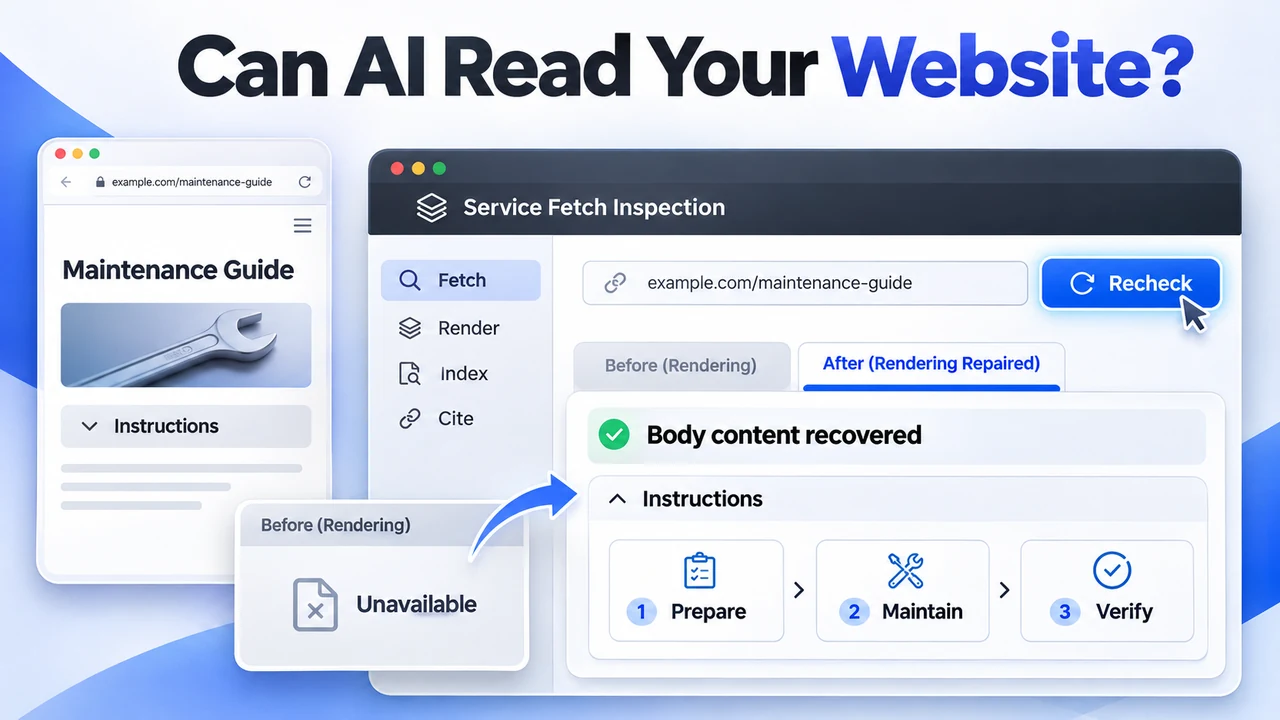
Normal website access, reliable facts, and clear answers remain the foundations of content. AI generative search calls for reassessing these assets rather than immediately rewriting the entire website.
Google’s official guidance states that SEO fundamentals still apply to AI features in Search. GEO improvements here focus on making existing pages more accessible and useful; this does not mean every AI platform uses the same retrieval and citation mechanisms.
Step 1: Select pages worth checking first
Consider business relevance, existing performance, and maintenance needs together. Pages receiving visits without helping decisions deserve attention; outdated product facts need prompt revision even with little traffic. Traffic alone should not set priorities.
Start with ten older articles directly related to the core business. Prioritize product introductions, buying guides, instructions, and frequently asked customer questions.
Accurate, complete existing content may need only factual updates or additional conditions. Publishing many similar pages repeatedly increases future maintenance work.
Step 2: Identify specific information gaps
Check each existing SEO article against four questions:
- Are the facts accurate and consistent with current products and services?
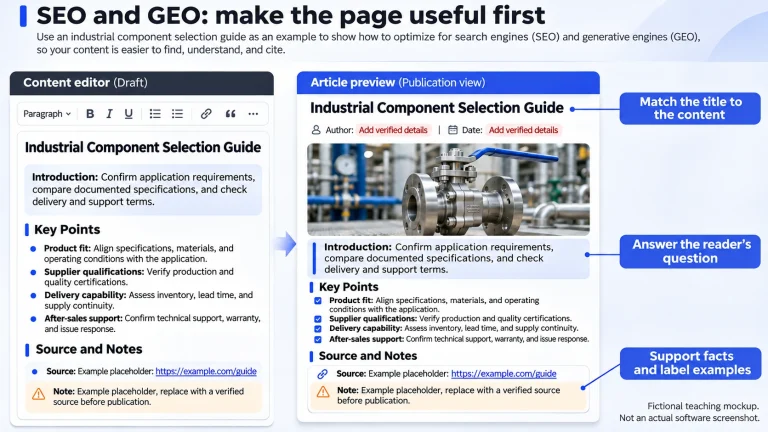
- Does the body actually answer the question in the title?
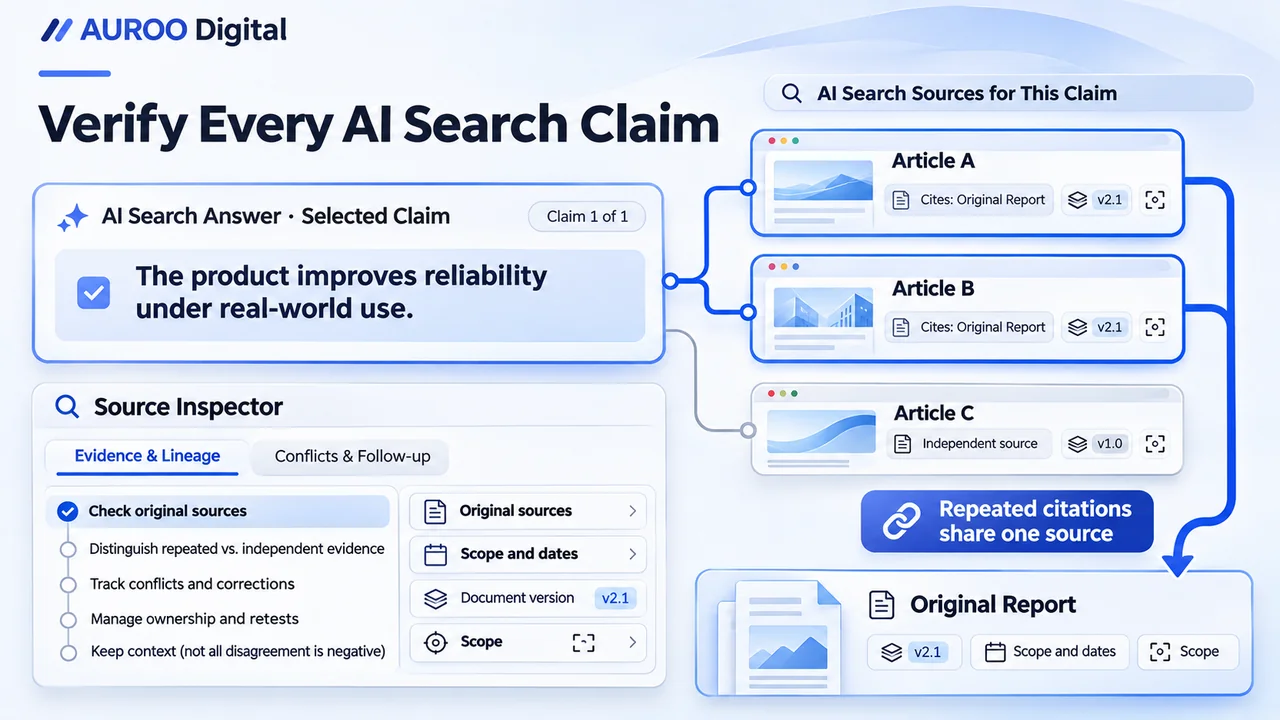
- Can important judgments and data be traced to reliable sources?
- Do readers know when the conclusion applies?
Describe gaps specifically. “Missing offline operating instructions” is easier to assign than “insufficient content quality.”
Step 3: Schedule retention, revision, and supplementation
Divide SEO and GEO content tasks into three categories based on the review:
- Retain: maintain key facts on accurate pages that fully answer the need.
- Revise: prioritize gaps in disorganized, poorly evidenced, or outdated pages.
- Supplement: create content for uncovered core questions after confirming demand.
If the title discusses buying decisions but the body mainly recounts company history, reorganize it. Adding an FAQ or changing the title cannot compensate for failing to answer the need.
For example, an older “How to choose an automatic feeder” article gets traffic but omits offline operating conditions. Retain useful product comparisons, add model-verified offline explanations, and link to the corresponding guide. Consider a complete rewrite if the body does not address buying decisions at all.
Step 4: Record changes and monitor results
Before revising an SEO page, save the original and record its URL, modification date, specific gap, and expected improvement. After launch, monitor search visits, qualified inquiries, and AI answer accuracy separately rather than combining different signals into a vague score.
Existing pages may still generate business value. Validate on a small scale before expanding to preserve useful content and reduce unsupported rewriting.
Use review results to decide retention or further revision
A content inventory should retain at least page address, customer question, existing gap, treatment, owner, and review date. “Readers can confirm which functions work offline” is a more assessable expected improvement than “improve content quality.”
For first-round acceptance, check whether the updated page accurately answers the target question, includes key conditions, and has working instruction links. Later monitor search visits, AI answers, and inquiry changes. If existing search performance changes substantially, investigate revision scope, timing, and concurrent factors; restore affected content and revalidate if necessary.
Once small-scale revisions are confirmed useful, address similar pages. An inventory–revision–acceptance–review cycle turns existing content into maintained assets rather than rewriting everything for each GEO plan.