Web Development
Google Lens Explained: Visual Search and Business Uses
Introduction
In 2026, as artificial intelligence permeates everyday life and business, the limitations of traditional text search are increasingly apparent. Information gathering no longer depends only on typed keywords and short queries. Visual interaction through searching what you see, searching as you photograph, and real-time intelligent analysis has become a central trend. Since its official launch in 2017, Google Lens, a benchmark in global AI visual search, has undergone repeated technological and functional upgrades, evolving from simple image recognition into an AI visual assistant combining visual recognition, real-time analysis, intelligent translation, contextual interaction, commercial matching, educational information, and multimodal interaction across a wide range of contexts.
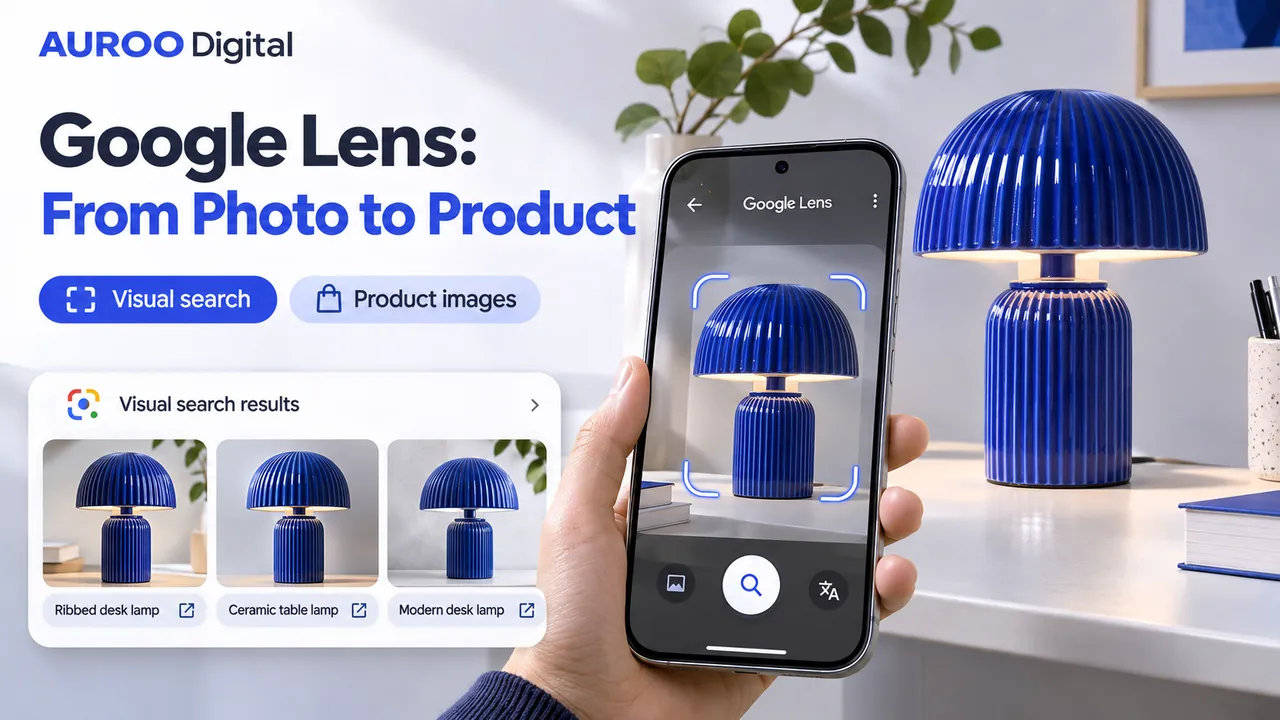
Unlike traditional engines matching text keywords, Google Lens removes the barrier of typing. Using phone cameras, images, and video frames as inputs, Google’s vast databases and advanced deep learning identify and analyze real-world objects, text, scenes, artworks, products, and organisms precisely. Users can photograph or upload a scene without typing to obtain information, solutions, similar material, purchasing channels, and further knowledge, reshaping interaction with both the internet and the physical world.
Google Lens is no longer a niche technology tool but a central hub in Google’s AI ecosystem, deeply integrated into Google Photos, Chrome, Google Assistant, Circle to Search, and other core functions across Android and iOS, with billions of monthly active users worldwide. Applications continue expanding from everyday identification, translation, homework help, and factual queries to cross-border product research, visual traffic acquisition, brand marketing, cultural tourism, education, industrial identification, and smart living. Its commercial and social value continues growing. For cross-border ecommerce, independent sellers, and overseas brands in particular, Lens visual search has become a new source of free incremental traffic alongside keyword search and social channels, and a central field for overseas digital marketing and visual SEO in 2026.
Most Chinese-language Google Lens coverage remains limited to basic features, lacking systematic analysis of its technology, applications, commercial value, visual search optimization, risks, and future trends. Drawing on 2026 developments, official Google technical documentation, implementation cases, and overseas marketing practices, this article examines its history, underlying technology, functions, consumer uses, business applications, ecommerce benefits, limitations, and future direction, with practical optimization techniques and common pitfalls. Its full-length, rigorous structure supports standard Word formatting and direct use for technology research, business operations, cross-border ecommerce training, academic reference, and industry learning.
1. Understanding Google Lens and its development
1.1 Core definition
Google Lens is an intelligent visual search and scene analysis tool developed by Google using convolutional neural networks, deep learning, multimodal AI, and extensive image databases . Its central aim is to turn the camera into a universal search engine, enabling users to search visible objects, analyze visible scenes, and understand visible text . In simple terms, it converts real-world visual information into searchable digital information, connecting physical and online information. It is among the most mature and widely adopted applications of multimodal AI.
Its central advantage over conventional image recognition is that it goes beyond identification to understanding, analysis, connections, and practical support . Ordinary tools merely match similar images; Lens combines scene context, user location, visual context, and database information to provide precise explanations, educational material, product links, translations, solutions, and related content, progressing from visual matching to intelligent decision support.
1.2 Development stages
The history of Google Lens reflects visual AI’s evolution from static matching to dynamic intelligence and multimodal interaction. Four main phases each expanded application boundaries and commercial value substantially.
Phase 1: Initial exploration (2017–2018) . Google Lens launched initially on Google’s flagship phones with basic object recognition, artwork matching, landmark queries, and text recognition. Accuracy was limited and applications narrow; it remained an experimental technology rather than a widely adopted product.
Phase 2: Broader functionality and adoption (2019–2021) . Initial upgrades connected mature Google deep learning models, significantly improving accuracy and adding text copying, real-time translation, plant and animal identification, and book and film matching. Availability expanded across platforms through Google Photos and Assistant, allowing ordinary Android and iOS users free access. Rapid user growth transformed a technology tool into a practical mass-market utility.
Phase 3: Commercial applications (2022–2024) . Integration with the vast Google Shopping database connected visual search to ecommerce transactions and established mature commercial traffic capabilities. Price comparisons, identical-product discovery, supply-chain tracing, and outfit matching joined improved contextual recognition for clothing, home goods, beauty, and outdoor products. Lens became an important incremental traffic channel for overseas ecommerce, and visual SEO emerged as a concept.
Phase 4: Comprehensive AI upgrade (2025–2026) . Google’s next-generation multimodal models enabled a shift from static image recognition to real-time video analysis, simultaneous recognition of multiple objects, AI summaries, and voice-linked interaction . It supports separate searches for multiple objects in one frame, live contextual questions, and dynamic fault analysis. Deeper Circle to Search and AR integration delivers an end-to-end combination of visual recognition, voice interaction, intelligent summaries, and real-time services, creating a comprehensive visual assistant.
2. Underlying Google Lens technology: the latest in 2026
Precise, intelligent visual analysis across contexts relies on Google’s advanced deep learning, databases containing tens of billions of images, and multimodal AI architecture. Rather than simple image comparison, its workflow is a complete cycle of image capture—feature decomposition—intelligent recognition—context analysis—match ranking—intelligent output , currently the world’s most mature visual search architecture.
2.1 Image preprocessing and feature decomposition
After capture or upload, preprocessing improves clarity, crops redundant areas, corrects lighting deviations, isolates the subject, and filters background interference. Using convolutional neural networks (CNNs) , it decomposes the image into extensive microdata on color, edges, outlines, texture, spatial structure, and light and shadow. Extracted visual features form a unique digital signature for precise matching. This distinguishes subtle differences between similar objects, improving accuracy and avoiding mistaken equivalence.
2.2 Multidimensional recognition and semantic understanding
Unlike conventional matching tools, Lens has contextual semantic understanding and can infer object properties and use from the scene. The same blue cup in a kitchen may be identified as kitchenware, prioritizing home products and tutorials; on an office desk, office supplies and purchasing links; in an artistic setting, design concepts and related creative products. Upgraded simultaneous recognition in 2026 also separates multiple objects in a photo or live video and provides independent results, overcoming single-object limitations.
2.3 Matching and ranking against extensive databases
Lens uses Google’s world-leading image index and the Google Shopping graph, containing over 4.5 billion product entries for high-speed comparison of visual features with online data. Results are not based on similarity alone but combine user location, device information, search habits, scene attributes, content authority, and user reviews for comprehensive ranking, prioritizing precise, authoritative, relevant information. Confidence thresholds govern output: high-confidence matches appear directly, while similarly confident alternatives are presented together to preserve breadth and accuracy.
2.4 Multimodal AI integration and intelligent output
The central 2026 upgrade concerns multimodal integration. After visual recognition, text models, voice models, and knowledge systems filter, summarize, and reinterpret results. Rather than merely listing links, they provide the needed answers, solutions, explanations, and buying advice directly. Users can also ask spoken questions after capturing an image, with real-time answers grounded in visual recognition, unifying seeing, identifying, asking, and answering.
3. Google Lens: a complete explanation of core features in 2026
After repeated iterations, Lens now offers six main feature groups: everyday utilities, educational information, shopping, text tools, intelligent interaction, and dynamic video analysis . These span personal life, study, work, business, travel, and culture. Most users use only 10% of its basic functionality without exploring its full value. This section explains the latest 2026 features and practical uses comprehensively.
3.1 Intelligent object and scene recognition: the foundation
Its most basic and widely used function identifies an extensive global range of plants, animals, landmarks, art, books, films, vehicles, equipment, household goods, and clothing. Plant identification provides species, growth habits, care methods, and distribution; animal recognition provides breed, behavior, and conservation status. Landmarks, paintings, and artifacts yield history, construction dates, artistic significance, opening hours, and ticket details. Books, film posters, and records produce descriptions, ratings, summaries, and purchase options. The 2026 upgrade improves identification of blurry, moving, and distant subjects, substantially increasing tolerance of imperfect inputs.
3.2 Text processing and translation across contexts
Lens offers leading OCR and multilingual translation, extracting text from images, posters, menus, documents, road signs, and handwriting for one-tap copying, pasting, translation, reading aloud, and search. Its key advantage over ordinary translation software is precise contextual translation , adapting specialist terminology to menus abroad, signs, foreign-language research, product specifications, and business documents. It supports real-time translation among over a hundred languages worldwide, with stable offline recognition and translation even without connectivity, making it central to cross-border travel, language study, and office work.
3.3 Intelligent homework and learning assistance
For education, Lens uses AI problem-solving to recognize photographed homework, questions, formulas, and diagrams and supply steps, reasoning, standard answers, and related exercises. It covers school mathematics, physics, chemistry, language learning, and foundational science and engineering questions. Beyond answers, it explains reasoning to support understanding. Photographing unfamiliar foreign words also provides meanings, pronunciation, usage, and examples for immersive real-world learning.
3.4 Shopping and visual price comparison: the ecommerce core
The function most valuable to cross-border merchants integrates Google Shopping’s product database to enable buying what you see and comparing as you photograph . Photograph products, clothes, accessories, or home decorations to find identical and similar items online, with merchant prices, specifications, materials, reviews, and purchase links for automatic price, source, and quality comparisons. For independent stores and cross-border brands, users can reach products without keyword searches, creating a new visual traffic stream. Outfit matching, interior style matching, and accessory compatibility also improve conversion efficiency substantially.
3.5 Live video analysis: a major 2026 addition
In 2026, Lens received a transformative upgrade beyond static images, supporting real-time video stream analysis . Capture moving scenes such as vehicle warning lights, abnormal equipment operation, kinetic art, or live streets, and it tracks changes and dynamic features, answering spoken questions with explanations and solutions. Filming a dashboard warning light and asking its cause can produce real-time fault categories, impact, remedies, and repair suggestions; filming an experiment can explain principles and key procedures, enabling intelligent interaction with dynamic scenes.
3.6 AR interaction and extended intelligent services
Deep AR integration overlays interactive information on real scenes. Recognized products can be previewed in place or as clothing; interiors can prompt furnishing, decoration, and renovation suggestions; food can yield ingredients, recipes, calories, and similar dishes. Connections with maps, reviews, and booking services display addresses, navigation, opening hours, reviews, and reservations for stores and attractions, completing the path from recognition to information, service, and action.
4. Google Lens in everyday life and society
Its value now spans daily life, education, tourism, office work, and research. Easy access, high accuracy, and free use have made it a universal global tool that improves efficiency and reshapes how people understand the world and find information.
4.1 Everyday convenience
Lens addresses information gaps and unfamiliar subjects. Photograph unfamiliar plants, flowers, pets, or insects to identify categories and attributes and avoid misconceptions. Look up unfamiliar goods, specialized equipment, and household items for purposes, instructions, selection criteria, and reviews. Translate foreign menus and unknown dishes instantly, checking ingredients and flavors to avoid dietary restrictions. At home, photograph appliance faults or messages to find causes and repair approaches inexpensively. Unlike text search, no typing is needed, making operation simple and efficient for all ages.
4.2 Immersive education
Lens enables learning from real scenes beyond books. Photograph mathematics, physics, and chemistry questions to find approaches, identify gaps, and explore related exercises. Translate and read foreign-language signs, posters, and books to build vocabulary in context. Outdoors, identify organisms, landforms, and buildings to connect scientific theory with real settings. In art studies, identify paintings, sculptures, and design works for background, creative intent, and style analysis. This visual learning is more intuitive, efficient, and memorable than traditional book learning.
4.3 Travel, culture, and city exploration
Cross-border travel and cultural exploration are frequent Lens uses, making it essential for overseas trips. Real-time translation of signs, menus, tickets, receipts, and announcements removes language barriers. Photograph landmarks, artifacts, and artworks in attractions, museums, and galleries for expert explanations, historical background, and cultural meaning without a human guide. Identify unfamiliar buildings, distinctive shops, and street installations for descriptions, opening information, and reviews, enriching independent exploration with little effort and high quality.
4.4 Office, business, and research support
Lens improves work efficiency by extracting text from images, paper documents, posters, and meeting boards for electronic storage, editing, and translation without manual entry. Recognizing business cards, logos, and samples retrieves company information, brand backgrounds, and product specifications for business decisions. Research uses include identifying specimens, laboratory equipment, industrial samples, and drawing details to obtain studies, industry specifications, and academic findings, supporting lightweight preliminary research.
5. Commercial value: digital marketing and cross-border ecommerce growth
For businesses, brands, and cross-border merchants, Lens goes beyond a consumer utility to become a traffic and marketing channel offering low cost, precise targeting, and compounding long-term returns . As visual search users grow and traditional keyword traffic opportunities plateau, Lens is a central source of incremental overseas marketing traffic in 2026, profoundly changing acquisition and conversion.
5.1 Visual search: a new free traffic opportunity
Cross-border acquisition traditionally depends on keyword SEO, paid ads, and social promotion amid intense competition and rising costs. Lens search behavior instead combines specific needs, clear intent, and high conversion potential . Searching photographed or screenshotted products expresses precise buying intent, yielding far more targeted traffic than broad keywords. Visual search is free organic traffic: once Lens indexes and recognizes product images, brands can receive ongoing relevant exposure and visitors, building a long-term compounding asset.
5.2 Reshaping ecommerce purchase decisions
Traditional ecommerce follows keyword search, product browsing, comparison, and purchase—a lengthy path with high attrition. Lens creates a simpler path of see and search, search and view, view and buy . Users who encounter appealing products in daily life, social media, or offline settings can photograph them and reach identical product pages or independent stores immediately, shortening decisions and reducing losses. For visually driven clothing, home goods, beauty, accessories, outdoor products, and small electronics, conversion greatly exceeds traditional keyword search.
5.3 Brand source tracing and infringement protection
Strong image tracing helps brands monitor counterfeit and imitation products online. Search logos and product photographs to identify unauthorized copies, pirated goods, and infringing promotions, providing precise evidence for rights enforcement and intellectual property protection. Widespread indexing of genuine products can also secure leading visual placements, suppress counterfeit exposure, protect reputation and market share, and support compliant long-term operations.
5.4 Market research and competitor analysis
Merchants can use Lens for lightweight research. Photograph popular overseas styles, influencer products, and successful designs to find similar products, price ranges, sales data, reviews, and supply-chain information, identifying trends, preferences, and gaps. Without complex research tools, validate product choices, benchmark competitors, and assess demand quickly, reducing selection mistakes and improving new-product success.
5.5 Visual SEO: an essential 2026 operating capability
As the weight of Lens traffic grows, visual SEO has become a core operational area for independent stores and cross-border shops. Unlike text SEO, it optimizes product images, contextual material, and visual content for recognition, indexing, and priority display. Strong optimization differentiates products among many similar images, captures leading visual results, and consistently attracts free relevant traffic, helping small and medium merchants overcome competition inexpensively.
6. Practical visual SEO optimization for ecommerce merchants
Many merchant images cannot be recognized, indexed, or displayed accurately by Lens, forfeiting substantial visual traffic. Based on Google’s latest 2026 indexing rules, the following actionable approach helps maximize organic Lens traffic.
First, use consistent high-resolution real-world material and strong visual features . Prioritize sharp product photographs, white-background main images, and contextual photography. Avoid blur, heavy filters, chaotic collages, and obstructive watermarks. Keep the subject clear, distinctive, and fully outlined without distracting backgrounds so AI can extract features, match and index accurately, and improve ranking weight.
Second, standardize image names and alt text . Give all product images precise English filenames aligned with core keywords. Alt text should accurately identify product name, category, main properties, and use cases, matching Google’s image search algorithms and strengthening image–text relationships for better recognition and ranking priority.
Third, create distinctive product visual identifiers . Preserve proprietary design, colors, and signature details without compromising aesthetics. Distinctive material is easier to index precisely, avoids generic visual sameness, and improves search uniqueness and ranking advantages.
Fourth, expand contextual visual materials . Upload more real-use, detail, outfit, and outcome images to broaden indexed dimensions. Multiple perspectives let Lens match products in different scenarios and greatly improve exposure probability.
Fifth, complete product entries through Google Shopping . Complete store information, product parameters, specifications, attributes, and precise categories to connect Lens with the product database. Users can then move from visual search directly to store links, turning exposure into traffic and traffic into orders.
7. Current limitations, risks, and industry controversies
Despite widespread adoption and commercialization, Lens still has technical limitations, privacy risks, information biases, and copyright controversies. Individual and commercial users should understand these weaknesses and avoid associated risks.
7.1 Recognition limitations
Complex scenes remain less accurate: overlapping objects, similar styles, obscure products, unusual organisms, and nonstandard artworks can produce mismatches and errors. Dynamic video analysis also has latency and needs greater stability for fast motion and complex movement. Database coverage is limited for some minority languages, regional cultures, and specialist fields, yielding narrow and imprecise results.
7.2 Privacy and data security
Lens requires collecting, storing, and analyzing captured images, creating privacy risks. Private settings, paper documents, confidential receipts, and identity documents may be indexed and analyzed, with poor data governance potentially exposing personal information. Some third-party integrations also misuse Lens interfaces to collect visual data without permission, increasing risks that concern users and regulators worldwide.
7.3 Copyright and source attribution controversies
Visual matching uses online image data, and some material is indexed, searched, and displayed without creators’ authorization, producing many copyright disputes. Designers’, photographers’, and original brands’ work can be discovered, copied, and reproduced through Lens, making rights difficult to protect. False attribution and incorrect sources in some results can also mislead users and cause misunderstandings and commercial disputes.
7.4 Bias and misleading information
Lens relies on public online information and cannot fully distinguish false, outdated, or one-sided material. Educational content, specifications, and industry information can lag or be inaccurate, while AI summaries may contain reasoning and interpretation errors. Uncritical acceptance can cause mistaken decisions or understanding. Research, business decisions, and specialist learning particularly require human verification rather than complete reliance on results.
8. Google Lens trends and industry effects, 2026–2028
Continuing Google AI development and ecosystem integration will transform Lens from a visual tool into a comprehensive multimodal intelligent visual hub , reshaping search, digital marketing, interaction, and operations. Four central trends will emerge over the next three years.
8.1 Deeper multimodal integration and fully intelligent interaction
Lens will combine vision, text, voice, AR, and video to move beyond identification toward an intelligent capture, question, analysis, generation, interaction, and execution workflow. It will not only recognize existing objects but generate plans from scenes, predict effects, and simulate scenarios, evolving from information retrieval into decision support and solution generation as an accessible personal AI assistant.
8.2 A mature commercial visual ecosystem reshaping overseas traffic
Visual search’s traffic share will continue rising and gradually overtake traditional keywords as a central overseas ecommerce source. Lens visual SEO will become required learning for merchants and independent stores, creating a standardized visual marketing industry. Brand competition will shift from keywords to visual materials, recognizability, and contextual relevance, making visual content a core ecommerce capability.
8.3 Widespread commercial AR and immersive purchasing
Commercial AR will let users try on products, preview effects, coordinate settings, and place virtual items through Lens. This will fully address online shopping’s experiential weaknesses, substantially increasing conversions, reducing returns and exchanges, reshaping purchase experiences, and driving immersive ecommerce across channels.
8.4 More precise privacy compliance and improved technology and oversight
As global privacy regulation tightens, Lens will improve collection, storage, and usage rules, refine permissions, and allow users to disable indexing and delete visual histories for compliant operation. Improved attribution technology will distinguish originals from reproductions and strengthen copyright labels and tracing, easing disputes and supporting orderly industry development.
9. Pitfalls in personal use and business deployment
The following recurring mistakes reflect technical limitations, risks, and commercial rules, helping individuals and merchants avoid problems and use Lens effectively.
For individual users : avoid searching private scenes, identity documents, confidential files, and private receipts to prevent indexing and exposure. Treat specialist homework, research, and medical equipment interpretations as references requiring human verification rather than unquestioned answers. Compare results for obscure, blurry, or similar objects rather than trusting one match.
For commercial users : do not steal original visuals, risking copyright penalties; avoid repetitive, poor-quality, or blurry images that fail indexing or rank poorly; do not neglect visual SEO and miss free incremental traffic; verify Lens-based market research and competitor analysis against multiple data sources; and monitor visual infringement promptly to protect intellectual property and commercial rights.
Conclusion
The emergence and development of Lens marks AI’s transition from text intelligence to visual intelligence, fundamentally reshaping information gathering, understanding, and purchase decisions. From recognition, translation, knowledge queries, and learning support to traffic acquisition, visual marketing, research, and brand protection, its value spans personal life and commercial operations, making it indispensable digital-era AI infrastructure.
As comprehensive AI and the visual economy expand in 2026 and traditional text search opportunities decline, visual retrieval, real-world interaction, and immersive experiences are central digital trends. Individuals can improve daily life, study, and work with Lens. For cross-border merchants, overseas brands, and digital marketers, visual SEO and visual traffic provide an opportunity to overcome competition, reduce acquisition costs, build lasting assets, and reach new audiences.
Although technical limits, privacy risks, and copyright disputes remain, continued AI progress, stronger oversight, and maturing commerce will improve these weaknesses. Lens will become more than a standalone tool: a comprehensive visual hub connecting physical and digital worlds, supporting daily life, commercial development, and innovation while leading another transformation in visual search and omnichannel ecommerce.