GEO
Verify Third-Party AI Search Information: Sources and Updates
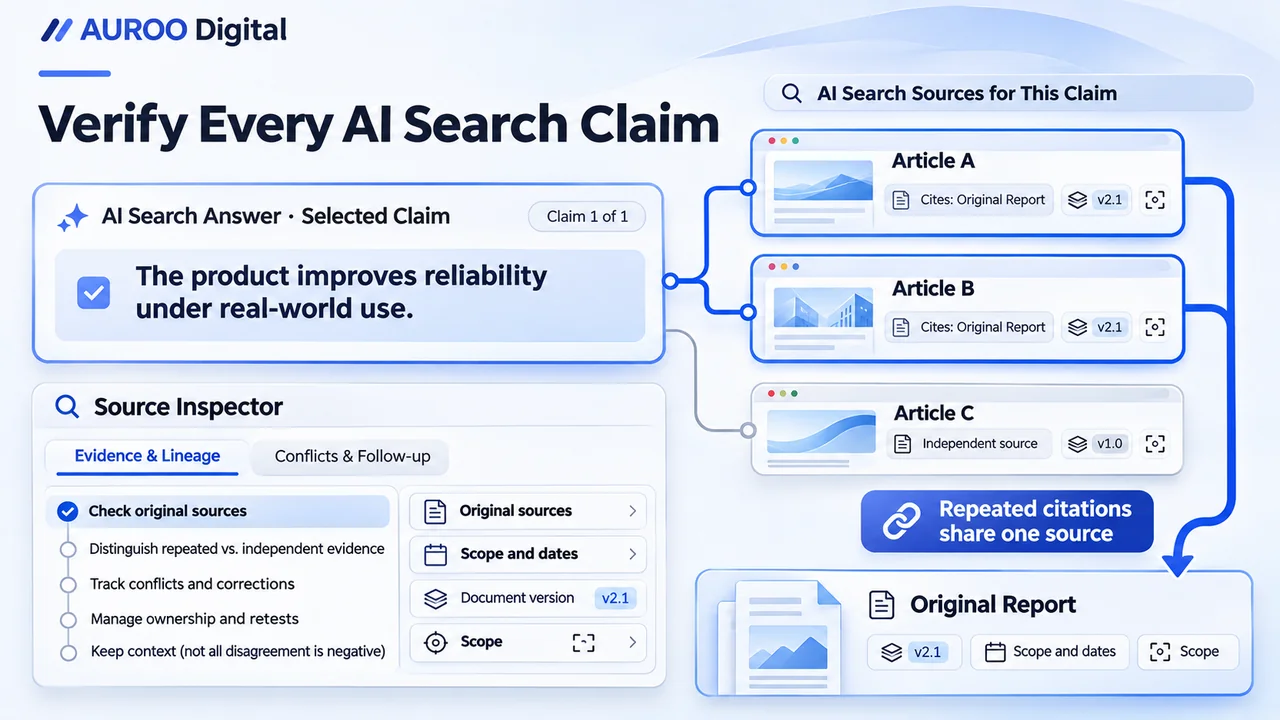
Key takeaways
- Break AI answers into specific claims that can be checked individually.
- Trace original sources and verify dates, versions, and scope.
- Distinguish factual errors, experience feedback, and subjective opinions, then follow up appropriately.
Verify third-party information in AI search by identifying specific claims, tracing original sources and checking dates, scope and facts. Investigate conflicts and record the evidence, owner and review date. Ensure your own brand information is accurate before publishing updates or requesting corrections.
To apply this approach to your website or marketing project, explore AUROO Digital’s generative engine optimization services, with scope, deliverables and review methods agreed around your needs.
For GEO content teams, third-party verification concerns both supporting evidence and accurate brand representation. Using product and service information as examples, this article explains how to identify sources, handle conflicts, and follow up on corrections.
Break AI answers into verifiable claims first
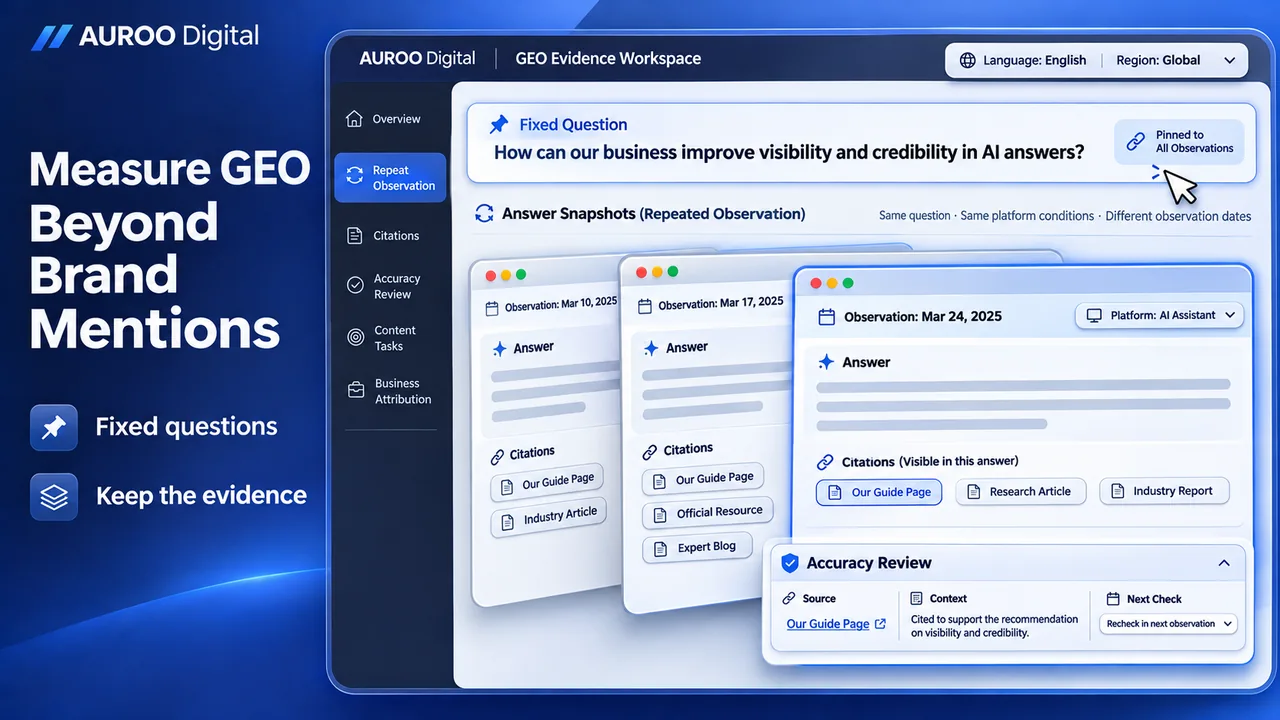
Save the question, full answer, test time, and visible citation links, then mark claims needing verification, such as repair coverage, functionality, comparisons, or statistics. A citation link does not prove support for the claim; check the source’s actual content.
Consider clothing repair services. A report explaining how a brand provides repairs, which products are covered, and service conditions gives people interested in long-term use useful decision material. By contrast, an unsupported “trustworthy” label does little to help comparison even when repeated frequently.
Record the specific facts and evidence in third-party introductions. Frequency of mention, media prominence, or confident wording alone does not establish reliability.
For comparisons and recommendations in AI answers, check whether the original text specifies comparison subjects, assessment conditions, and usage limitations. Multiple pages repeating one report represent repeated distribution of a single source, not independent evidence.
Choose verification evidence by claim type
Check product features and service terms against official documentation for the relevant version; trace research findings to the original report’s methods and sample; retain specific usage contexts for user experiences. Official websites, media reports, and customer reviews answer different questions; no single source type replaces all evidence.
Brand information optimization also involves consistency. Conflicting company names, product models, service scopes, or after-sales policies across channels make understanding harder. Organizing these basic facts is often more practical than rushing to expand publicity.
Consistency does not mean copying identical descriptions onto every platform; it means key facts can be cross-checked.
Check source timing and establish tracking records
Check publication dates alongside the product version, service region, and policy effective date discussed. A recently updated page does not mean every fact was refreshed; differences across regions or models are not necessarily factual conflicts.
If a source is undated, inaccessible, or lacks identifiable text supporting the claim, mark it for verification rather than continuing to use it as a definite conclusion.
For external brand materials AI search may cite, establish an information register containing at least:
- Source and date: the publishing platform and publication or update date.
- Claim to verify: the answer’s specific assertion and whether the original text supports it.
- Verification result: whether facts, timing, and scope match, and what remains unconfirmed.
For user reviews, distinguish verifiable facts from personal impressions. One experience cannot establish a conclusion for all users. Obtain necessary permission before publicly using customer feedback and retain the actual usage conditions.
External mention records can further distinguish factual errors, product experience feedback, and subjective opinions. Factual errors need verification and correction; experience feedback belongs with relevant teams for analysis; subjective opinions should not simply be classified as positive or negative.
Classifying external records as factual errors, experience feedback, and subjective opinions better reveals gaps between brand promises and actual service.
When external sources conflict, check facts first
Suppose the official site has updated repair coverage, an old report still describes the earlier policy, and an AI answer cites that report. Save the answer and source, verify when the old and new policies took effect, then provide the publisher with checkable correction materials. Do not treat every inconsistency as a negative review.
Correction requests should identify the precise error, correct fact, and evidence. Keep a clear link to the current policy on the official site and explain the old policy’s applicable period if needed. Whether the external page changes and when it is retrieved again require continued monitoring.
If feedback points to a genuine service issue, have the business team address it before updating explanations. Changed promotional wording without improved service will not stop customers raising the same problems.
Track outcomes in the same record
Add the responsible owner, actions taken, and next check date to the external information register. After correction, check whether the original page changed, then monitor whether AI answers to the same customer questions still use the old wording.
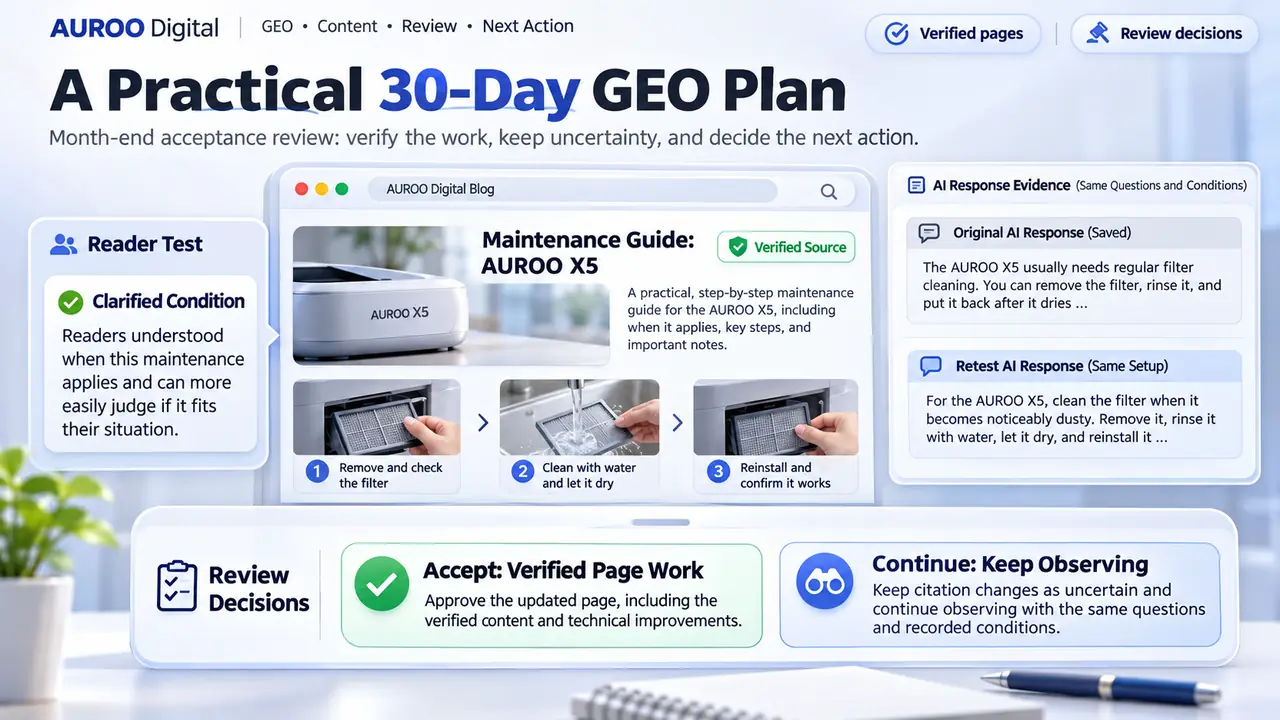
Completed third-party verification should leave a record of the claim, source, verification conclusion, and action outcome. Retain confirmed information, pursue correction of factual errors, and keep unconfirmed claims flagged. The GEO team should retest the original questions and document unresolved source conflicts.