SEO
A New Website’s First Six Months of Baidu SEO
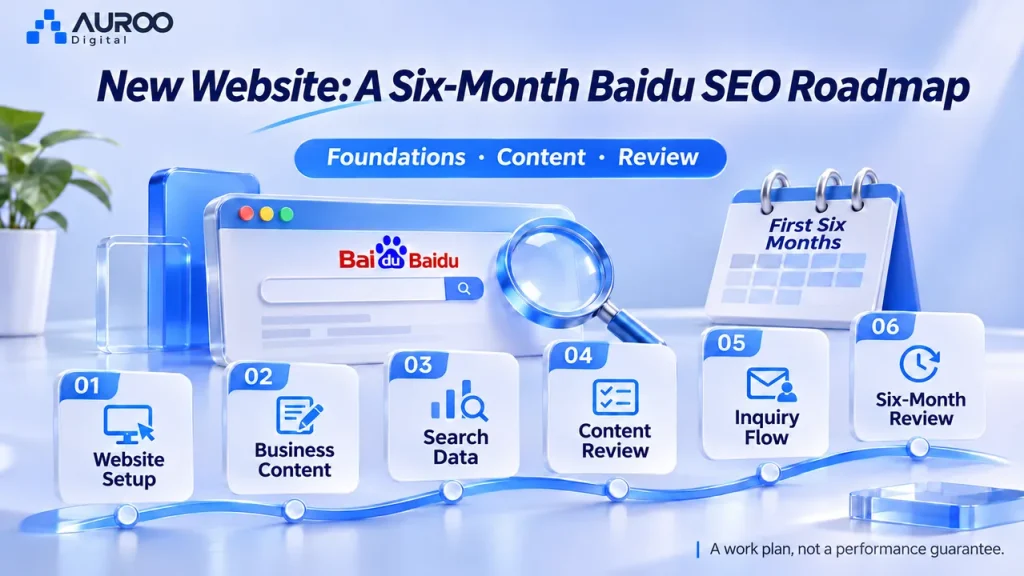
A new site needs to be easy to find, understand and use. It can then test which topics attract relevant visits and qualified enquiries. Six months is a useful planning and review period. It isn’t a timeline Baidu promises, and sites don’t need to wait for one month to end before starting the next set of tasks.
This plan is for corporate sites designed to generate enquiries. Ecommerce sites also need checks for products, stock and orders. Some stages overlap. Core business pages, analytics and enquiry forms should work at launch, with later months devoted to refining them.
1. Define the business and plan the pages before launch
Identify your main products or services, target regions, ideal customers, and the action you want them to take. A quote request, demo booking and direct purchase each call for a different page and next step. Collect common sales questions and buying criteria, group them by topic, and map them to the home page, service pages, product pages, applications or educational content. One good page can cover several ways of asking the same question.
Give each priority page one main question, a list of necessary facts, a reviewer and a clear next step. Use navigation and relevant internal links so readers can move from an article to the appropriate business page. Publish the information customers need to decide before expanding your news or blog output.
2. Month one: check the basics and start a log
Verify access to Baidu Search Resource Platform. Check that the domain, HTTPS setup and primary URLs are consistent. Test priority pages, redirects, robots settings and any page-level indexing controls. Make sure restrictions meant for staging haven’t reached the live site. Check navigation, internal links to live pages, and whether the main content loads.
Test the home page, priority pages, contact options and forms on both mobile and desktop. Submit a test enquiry and confirm it reaches the recipient or lead system. Set up analytics to record organic traffic source, landing page and important actions. Mark internal tests so they don’t get counted as customer activity.
Submit the live URLs that are ready using an available Baidu submission method, and record the dates. Submission doesn’t guarantee indexing. Put the priority URLs, issues found, analytics checks and follow-up dates in the first report. Fix any broken priority page or enquiry route first.
3. Month two: improve business content and discovery paths
Fill in product specifications, suitable uses, service areas, delivery conditions and what buyers need to request a quote. Suppose an industrial dust collection supplier has published ten articles but hasn’t explained which dust types and operating conditions its equipment can handle. Improve the product and application pages before adding general articles. A person familiar with the equipment should verify the specifications.
Check that priority pages have clear internal paths, and identify broken links, duplicate URLs and near-duplicate pages. Log any crawling, indexing or error information available from Baidu. Where submitted pages show little activity, check access, discovery, crawling and relevance to the query. Repeated submissions on their own won’t solve these issues.
4. Month three: use early data to test demand
Track branded and non-branded queries separately. Branded terms often reflect existing demand for your company, while non-branded terms can show what brings new readers to the site. See which pages earn impressions for each topic, whether their search titles and snippets are accurate, and whether they answer the query. If impressions are high and clicks low, consider listing position and the results layout as well as the title.
A new site may have little query or traffic data. Continue technical checks and use sales interviews, customer questions and actual search results to understand demand. A lack of data doesn’t establish that content has failed. Keep the observation window, sample size and edits in the log, and give small fluctuations time before making widespread changes.
5. Month four: add depth and reduce duplication
Expand topics related to your business that you can answer with reliable information. A guide to welding fume extraction, for instance, can explain how the number of workstations and operating conditions affect the inputs needed for an estimate. It can also say when a professional design review is needed. Give the reader something they can use to make a decision.
Answer different phrasings of the same question on one page. Consider a separate page when the underlying need changes. Assign an owner to keep each page current and keep sources for important numbers, standards and policies. Record updates, supporting evidence, new internal links and what the team will measure.
6. Month five: improve the enquiry route and review lead quality
Use visitor paths and practical tests to check mobile readability, form length, phone links and service-area information. Shorten forms while keeping what the business needs to qualify and follow up. A specialist equipment supplier, for example, can collect a brief enquiry first and let sales ask for technical details afterward.
Separate button clicks, successfully received enquiries and sales-qualified leads. Fix lost enquiries, out-of-area leads and poorly matched requests first. Change one main part of the process at a time and log the date so you can interpret what happens afterward.
7. Month six: review results and decide where to invest next
Compare similar periods by priority topic. Include organic visits, enquiries and qualified leads, and mark holidays, campaigns or site changes. Improve topics already bringing relevant traffic and business value. For pages with traffic but few enquiries, check visitor intent and the enquiry route. For pages with persistently low visibility, revisit crawling, content and the competitive search results.
Extend the observation window or change the test if data is thin. The six-month mark on its own doesn’t determine whether the site has succeeded. Specify priority pages, hypotheses, ownership, budget and the next review date. AUROO Digital can use this plan to discuss white-hat implementation with clients. The final scope follows the agreed proposal.
If you’re launching a site or planning what to tackle after launch, contact AUROO Digital to discuss priority pages, initial checks and review milestones.
References
Baidu Search Resource Platform — Getting started and optimisation guide