SEO
B2B SEO Keyword Mapping: Turn Search Intent into Useful Pages
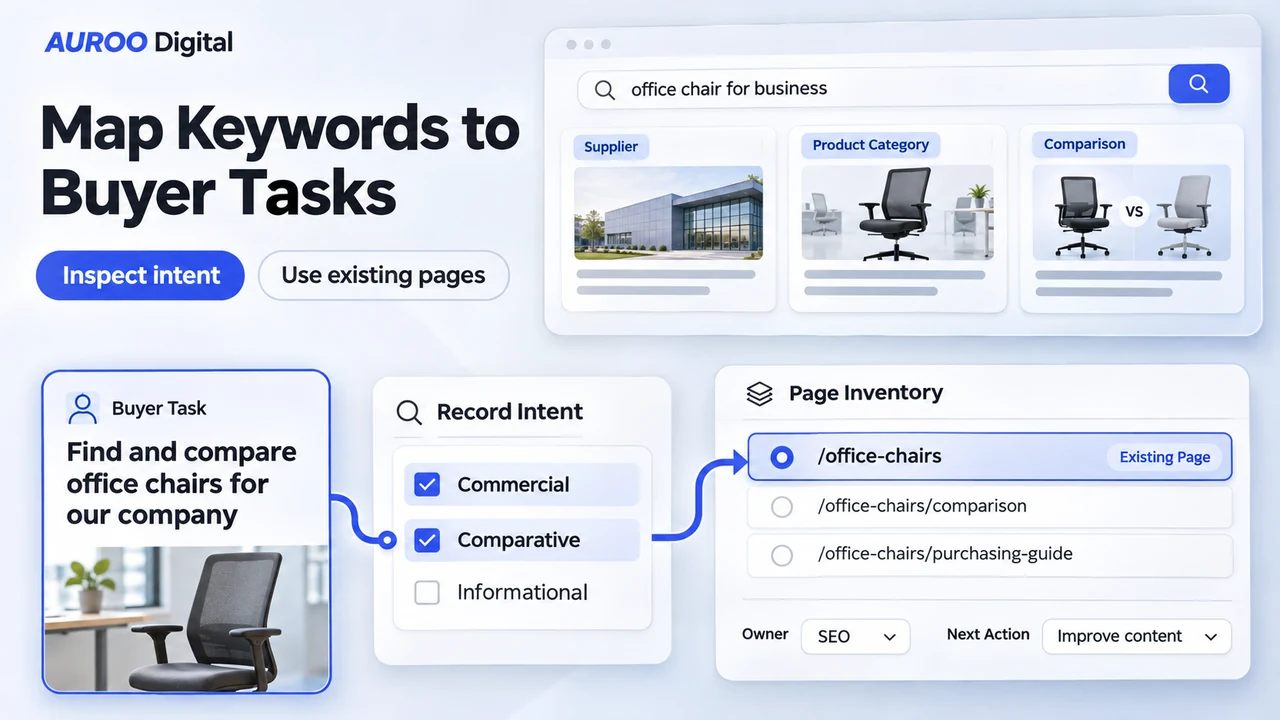
After keyword research, the practical question is which page should answer each need. Publishing an article for every variation can create repetitive content while leaving purchasing questions unanswered. A B2B keyword map connects buyer needs with page responsibilities and the next useful action.
1. Define the market and business scope
Add country, language, product line, buyer type and delivery scope to the research sheet. Exclude needs the business cannot serve. A factory selling custom bulk orders should not prioritize a retail term simply because it has greater search volume. Sales conversations, inquiry emails and product catalogs provide useful research inputs. Remove personal information before sharing customer wording with the content team.
2. Group by need, then inspect search results
Use provisional groups such as understanding a problem, comparing options, choosing a supplier and using a product. Check current search results in the target market to see whether product pages, categories, services, tutorials or comparisons dominate. Words such as “best” and “supplier” are clues rather than rules. When the results mix page types, record that uncertainty instead of forcing the keyword into a rigid funnel category.
3. Match the need to your existing inventory
List each relevant URL, its current purpose, missing information, inquiry route and owner. Improve an appropriate page before deciding to create another. One page can address several expressions of the same need. Separate pages when the buyer’s task or product scope actually differs. Ranking changes between two pages are not automatically harmful; first investigate overlap, the queries involved and the experience visitors receive.
4. Build a map the team can execute
This is an illustrative research example, not a validated ranking opportunity. An office-chair exporter might map manufacturer searches to a supplier-capability page, a specific series to a category or product page, and material comparisons to a buying guide. Give each row a need cluster, sample terms, target URL, page type, information gaps, conversion action, owner and status. Validate real wording and demand in the chosen market before commissioning pages.
5. Prioritize business value and useful links
Weigh relevance, existing page quality, commercial value, fulfillment capability and production effort together. Start where a page can resolve a concrete purchasing question. Link a comparison guide to relevant ranges, and link product pages to specification explanations and an inquiry route. Descriptive link text should tell readers what comes next. A content cluster is useful when the relationships help customers, not simply because many pages link to one another.
6. Review clusters and qualified inquiries
Establish a baseline, then track Search Console impressions and clicks, landing-page visits, qualified inquiries and sales feedback for each cluster. Compare appropriate periods and note seasonality, advertising and brand activity. More impressions with weak clicks may call for a review of intent and search presentation. More clicks without useful inquiries may indicate poor fit, missing information or a broken conversion path. Keep low-volume observations separate from confident conclusions.
Implementation checklist
- Define a market and buyer for every cluster.
- Review existing URLs before adding pages.
- Assign an owner, information gap and conversion action.
- Connect supporting content with relevant commercial pages.
- Review qualified inquiries and sales quality.
Frequently asked questions
Does one page need one keyword?
No. A complete page can answer several expressions of the same purchasing need. Define the page around a customer task.
Are low-volume terms worth targeting?
Consider relevance, inquiry value and production cost. Estimated volume is neither traffic you will necessarily receive nor a measure of sales value.
Sources checked on November 5, 2026. The practical workflow and fictional examples are AUROO Digital editorial guidance.