GEO
How to Write Clear Answers for AI Search Users
Key takeaways
- Answer the main question at the beginning while stating key conditions.
- Place the reasoning, operating steps, and source links clearly.
- Use reader testing and subsequent inquiries to check comprehensibility.
Open an article titled “How often should a pet fountain filter be replaced?” and you may first encounter pet ownership trends, then the importance of drinking water, with replacement instructions several screens later. The article may contain plenty of information, but demands excessive patience for a specific answer.
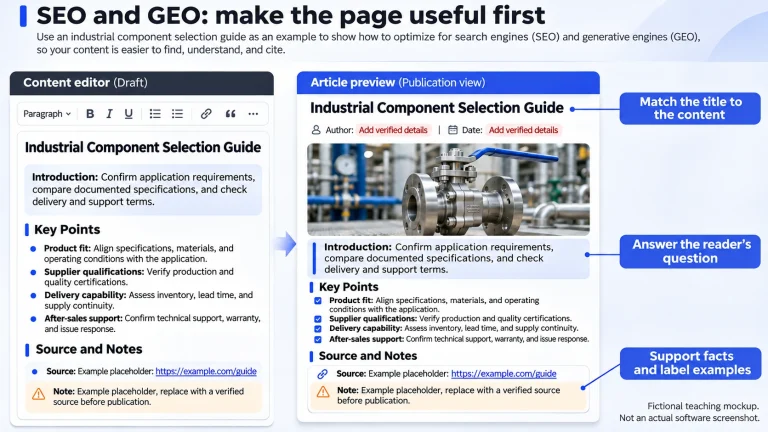
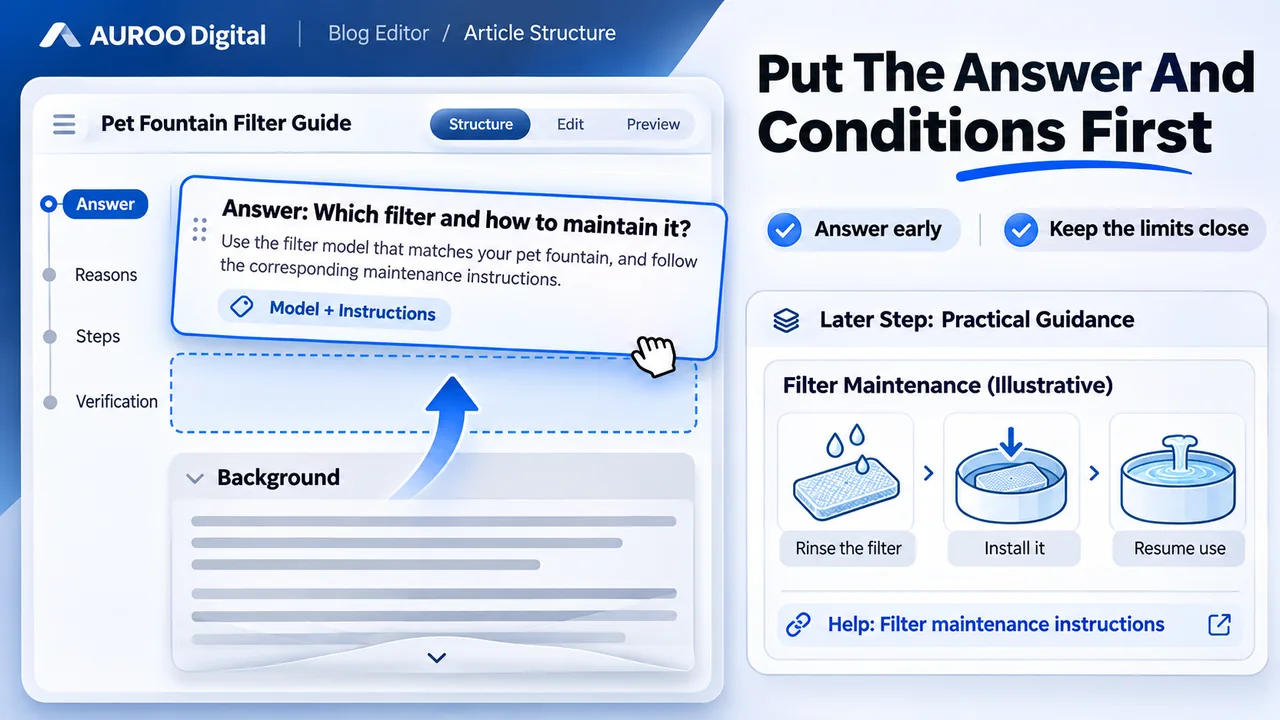
Clear answers for AI search users start with three actions: identify the reader’s decision, provide an actionable way to judge at the beginning, and place key conditions and source links nearby. Explain reasons and practical details afterward so readers can go deeper as needed.
Give the answer and its conditions first
In generative search content optimization, placing key answers first reduces the effort of finding information and concentrates the core explanation for AI retrieval and citation. However, answering directly can be misunderstood as requiring a brief, definite conclusion.
For filter replacement, a universal interval may be memorable but inapplicable if it ignores model, water quality, usage frequency, and manufacturer instructions.
Begin product maintenance articles with an actionable decision method. For replacement intervals, ask readers to check the relevant model’s instructions, then explain how water quality and usage affect maintenance. Conditions that change the conclusion should be in the same section as the answer.
Follow with explanations and operating steps
After the decision method, a filter maintenance guide should explain why model, water quality, and usage frequency affect maintenance, then provide corresponding inspection steps and after-sales contact links. Readers can find their next action first and explore reasons when needed.
Replace generic openings with a specific explanation
“Replace filters regularly so pets can drink clean water” expresses an intention without telling readers what to do. A replacement guide could instead begin with this decision explanation:
“Base pet fountain filter replacement on the instructions for the relevant model. First confirm the filter model and manufacturer’s maintenance requirements, then inspect actual usage according to those instructions. If you cannot confirm compatibility or the cause of an anomaly, contact the manufacturer’s after-sales team.”
This example provides a reference, decision basis, and help pathway without inventing a universal number of days. Before publication, link to actual model documentation and retain explicit conditions in the manufacturer’s requirements.
Check the opening with three questions
After rewriting, check whether the opening accomplishes these tasks:
- Answer the question: can readers quickly find the answer promised by the title?
- State conditions: which models, scenarios, or usage conditions does the conclusion cover?
- Identify the next step: do readers know what to inspect or where to find detailed instructions?
Adjust paragraph order accordingly and remove unrelated industry background. Then ask someone unfamiliar with the product to read it and confirm they can accurately restate the conclusion and identify the next action.
If test readers know what to do but misunderstand the conditions, the wording still needs adjustment. Leading with conclusions should enable faster, more accurate understanding. Content teams should optimize the path to the answer rather than merely shorten articles.
Use reader feedback after publication to check discoverability
After previewing the article on mobile, ask an unfamiliar test reader to inspect the first screen and headings and explain what is answered, what limitations apply, and where to go next. Move conditions or reference links forward if the basis is hard to find; complete the action path if the conclusion is understood but the next step is unclear.
A mobile first screen may not fit the complete explanation. Prioritize the main judgment and conditions that change it, place detailed steps under clear headings, and use specific link names for easy location. After launch, record repeated inquiries to see whether answers remain difficult to find or easy to misunderstand.
GEO article acceptance should mean readers understand accurately and can act. Short paragraphs, many keywords, or occasional AI citations alone are insufficient.