GEO
Evidence-Led AI Search Content: Sources and Verification
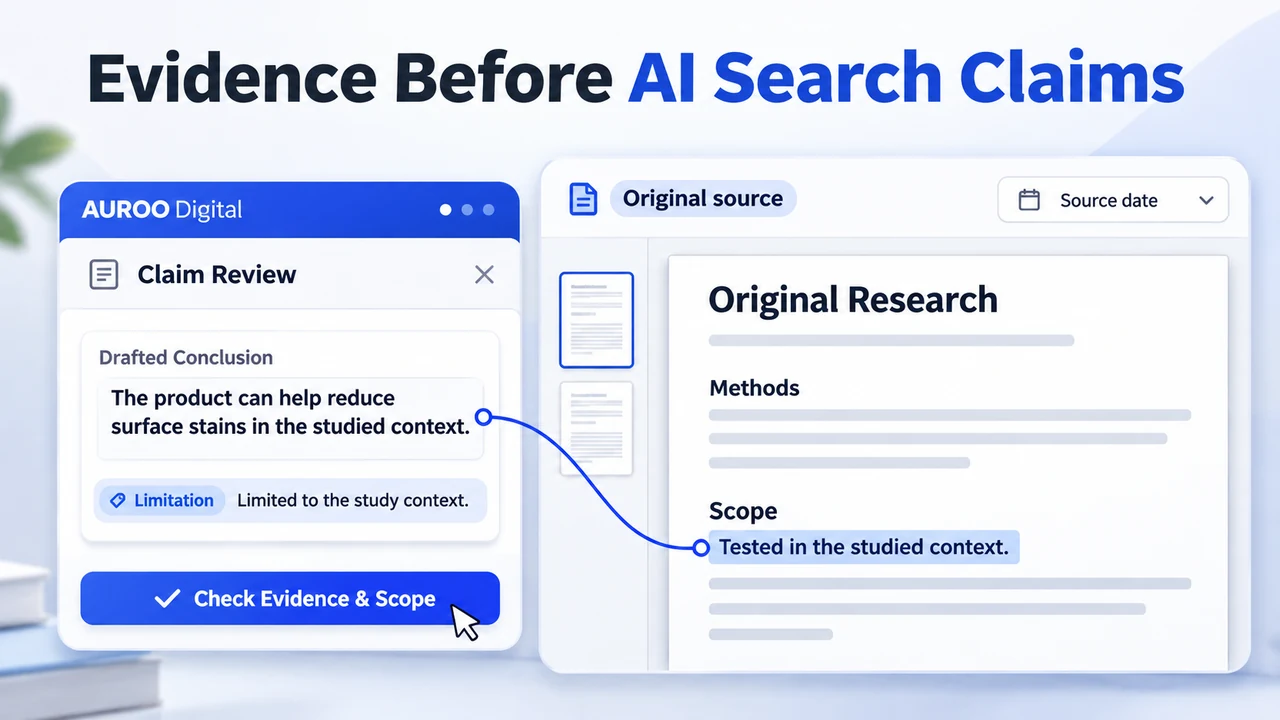
Key takeaways
- Connect each key claim to suitable original materials.
- Check samples, methods, timing, and scope.
- Build reviewable business evidence and update related conclusions promptly.
Build evidence-led AI search content by separating conclusions into verifiable claims and matching them with product documentation, original data or reliable research. Record the source, date, scope and limitations. A single case does not prove a universal outcome; revisit conclusions when supporting sources change.
To apply the approach to your website or marketing project, explore AUROO Digital’s generative engine optimization services, with scope, deliverables and review methods agreed around your needs.
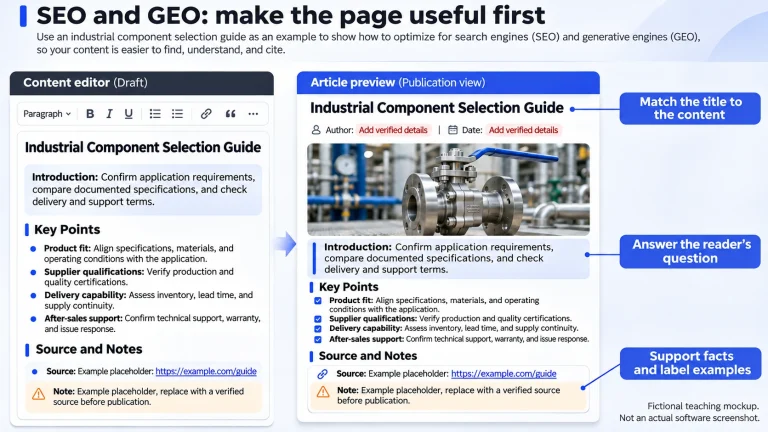
Reliable evidence for AI search content requires connecting each key claim to appropriate materials. Check product functions against manufacturer documentation, industry judgments against research scope, and operating advice against applicable conditions. Both SEO and GEO editors must preserve these connections.
Determine what conclusions the data supports
Adding a percentage does not automatically improve credibility. Precise figures without samples and sources can be more misleading than experience-based descriptions. Before citing research, confirm its subjects, methods, timing, and scope.
Results from one market or platform cannot automatically become rules for every business.
Businesses often have their best opportunities to build distinctive value in daily operations. Changes in after-sales questions, maintenance records across models, and common customer misconceptions can all provide useful material—provided they are verified, permitted for disclosure, and not inflated from local observations into industry-wide conclusions.
For example, organizing a month’s inquiries about one product can reveal which steps users understand least. This supports improving instructions but cannot establish every user’s preferences. Narrower, more precise conclusions can make content more substantial.
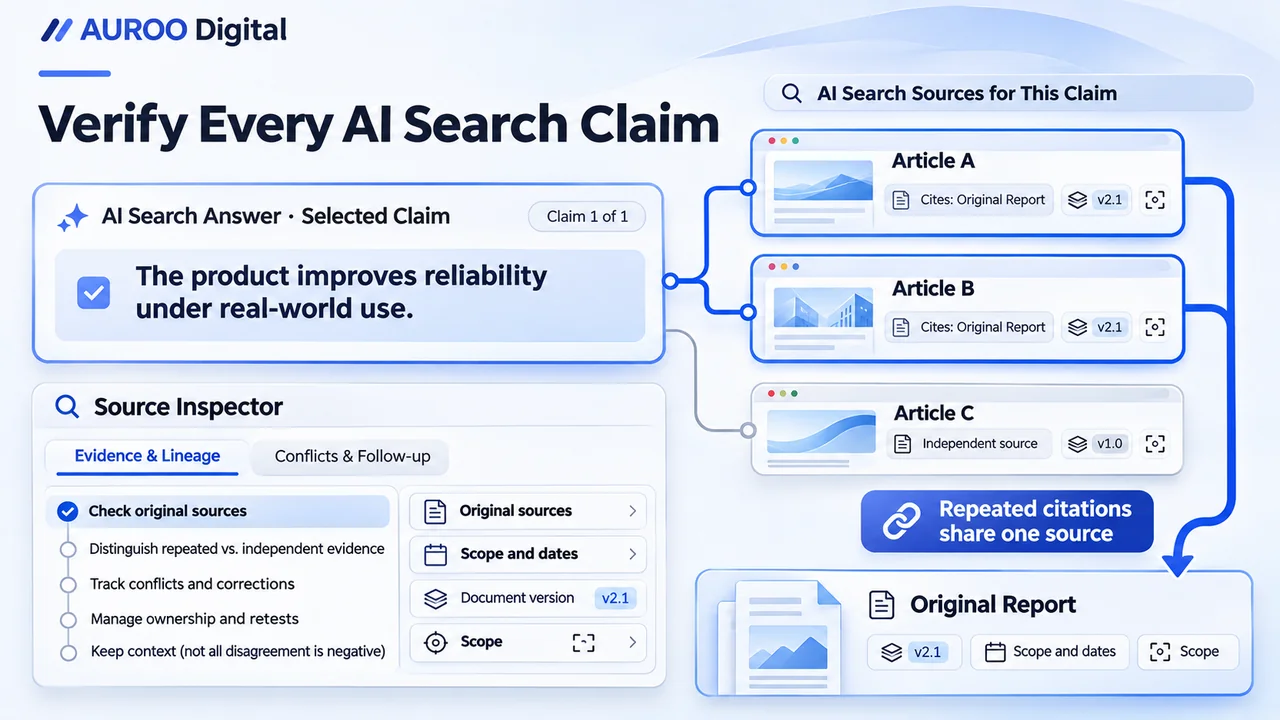
Prioritize original publishers rather than stopping at secondhand articles. AI summaries can identify questions to investigate, but open original materials before formal citation to verify conclusions, dates, and limitations. Remove claims without original support or explicitly reduce their certainty.
Build original materials from business operations
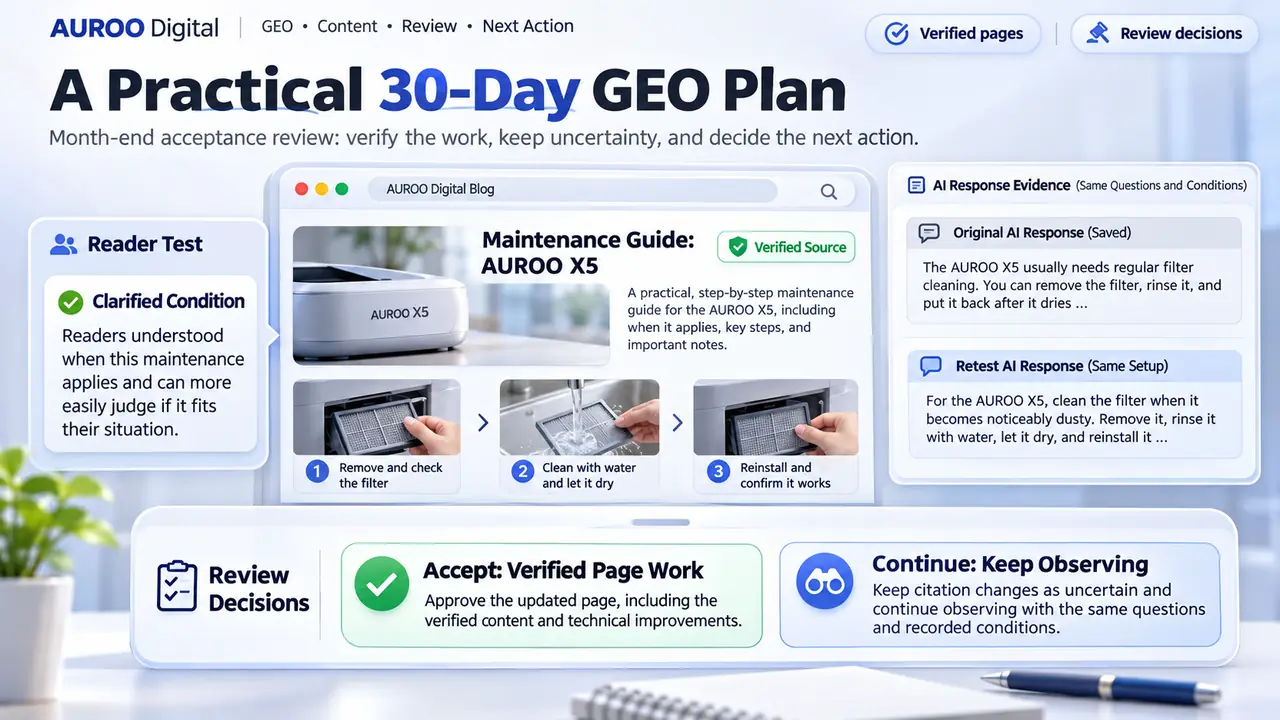
To explain whether a product is easy to clean, design a repeatable internal test: specify the model, disassembly and assembly steps, participants, and timing rules, preserve process records, and describe the testing environment. Even comparing two cleaning methods for the same product may provide more concrete information than generic praise.
Report results faithfully rather than changing standards mid-test to obtain a desired conclusion.
Select evidence according to its purpose
Use cited materials according to what they can actually demonstrate:
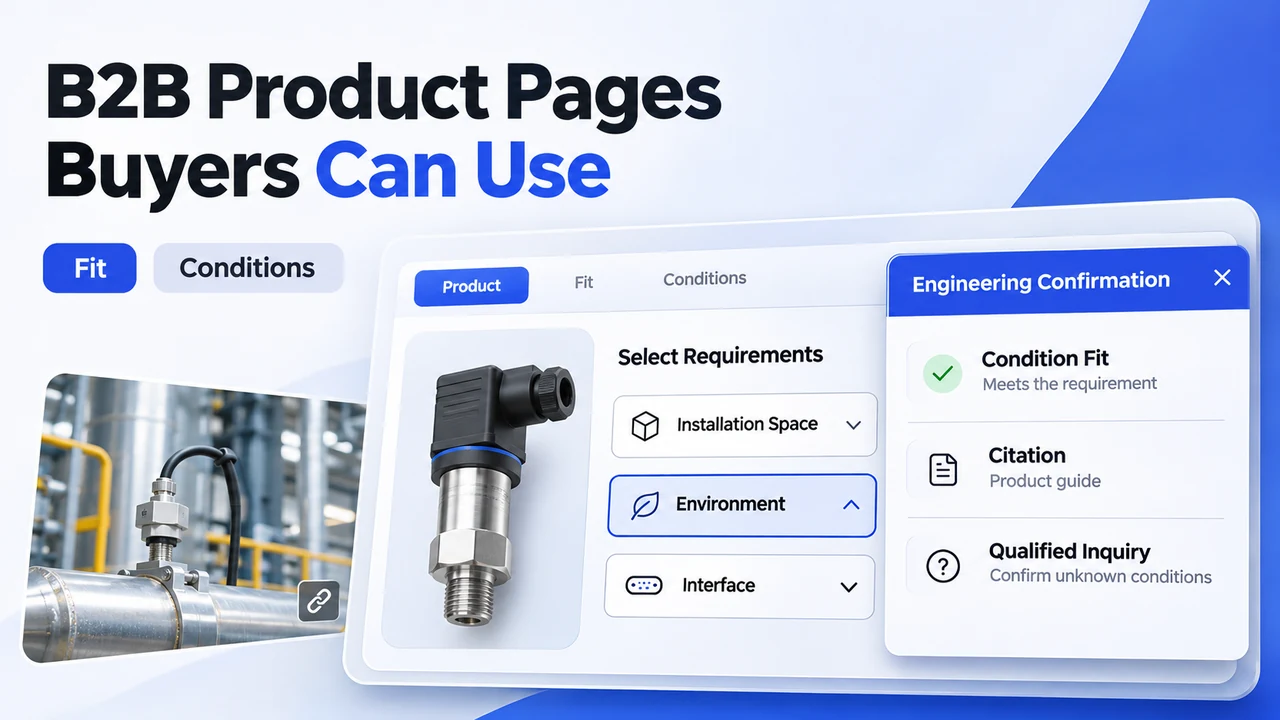
- Manufacturer documentation: verify product functions, usage requirements, and applicability.
- Research reports: support findings within specified samples, methods, and timeframes.
- User feedback: describe genuine experiences and questions requiring further investigation.
Manufacturer documentation, research reports, and user feedback have different scopes and are not interchangeable. One positive review cannot demonstrate general product performance; market research cannot replace a functional test of a particular product. Suitable evidence matters more than citation quantity.
Keep evidence for future checks
Before publication, distinguish facts, explanations, and advice individually. Direct facts must be checkable against sources, editorial inferences need stated grounds, and advice must retain applicable conditions. If evidence is insufficient, obtain more information or narrow the conclusion rather than merely listing sources at the end.
Retain original materials for key conclusions and assign responsibility for updates. If AI cites old data or misunderstands product capabilities, the team can locate original definitions and check whether the website and external materials need coordinated revision.
Organize evidence into records editors can use directly
A useful evidence record shows the relationship between conclusions, sources, and limitations. For an internal cleaning test, retain at least:
- Test subjects: product model, version, and cleaning methods compared.
- Execution conditions: operators, timing start and end rules, tools, and repetitions.
- Original materials: individual trial records, process photographs or videos, and the person responsible for verification.
- Usage boundaries: the judgments supported and the audiences or situations not yet tested.
If an internal test measured only disassembly and assembly time, the article can describe only that duration under those conditions. It does not demonstrate lower overall maintenance costs, much less greater long-term durability. Narrow claims about unverified benefits or perform additional validation.
Review cited conclusions when source materials change
After product revisions, service rule changes, or research updates, find pages citing the materials and revise affected conclusions. Preserve the reason in publication records so customer service and sales can align their explanations.
If data questioned by readers cannot be reproduced from records, stop using the claim and investigate its source. Evidence development means recording business facts, drawing limited conclusions, and revising them in response to challenges and new materials. Citation counts cannot replace this verification work.