SEO
A Baidu SEO Project Risk Checklist for Agencies
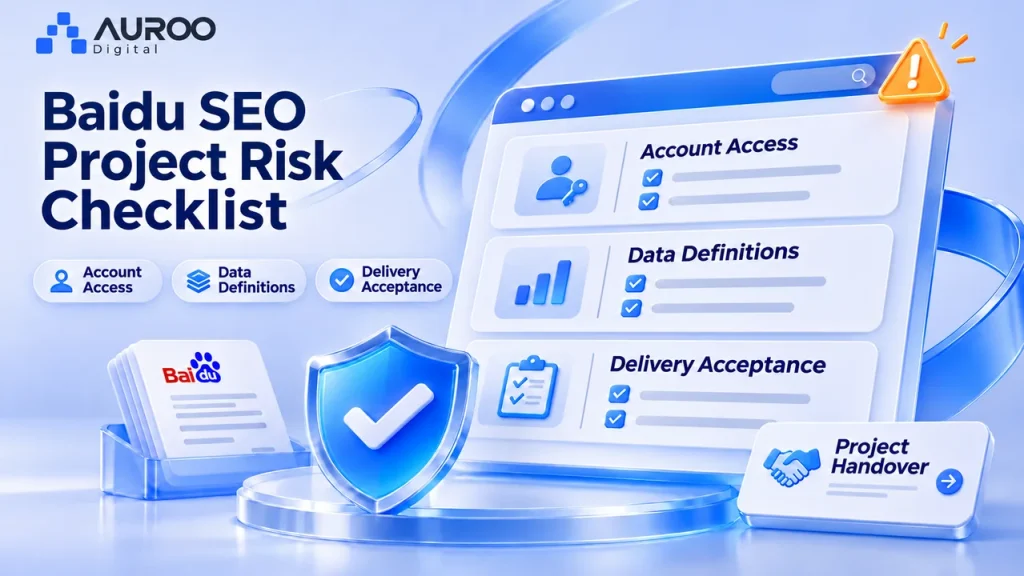
Ranking changes are only one source of risk in a Baidu SEO project. Unclear account access, late product information, unreviewed site changes and different definitions of a qualified lead can all make the investment difficult to evaluate. The client and agency should agree on risks before starting and keep a record of how each issue is handled.
A useful risk log describes the issue, what triggers it, what it could affect, who owns it, how it will be addressed and what will prove it is resolved. Use the following checklist for corporate websites and adapt it to the business and the agreed scope.
1. Unclear goals and scope
A proposal that says rankings or traffic will improve without naming priority products, pages or deliverables is hard to verify. Technical advice, content writing, development and conversion work may come from different teams. Check which items the quote actually covers.
Agree on priority products, regions, customers and milestones. Specify who inspects, writes, edits, publishes and reports. Discuss how additional pages, an unexpected redesign or extra development will affect cost and timing. Record the impact and confirm any scope change before revising the plan.
2. Unclear account ownership and access
Put a named administrator in charge of the domain, server, website, Baidu Search Resource Platform, analytics and lead system. The client should retain control of key assets, and the agency should get the access needed for its work. Use separate permissions rather than relying on shared primary accounts or passwords that never change.
At kickoff, record the owner, permission level and how to revoke access for each account. Use read-only access when it is enough. Remove access when people leave the project and confirm the client can continue to manage the site at handover.
3. Inconsistent baseline and lead definitions
Historical screenshots don’t fully explain sources, pages or measurement methods. Save whatever baseline data is available and document the gaps. Separate branded from non-branded queries, organic search from other channels, and raw enquiries from qualified leads. Keep figures with different definitions out of the same comparison.
Write down business and geographic criteria, how to remove duplicates, how to handle tests and spam, and who in sales will qualify leads. Mark unknown sources as unknown. If historical data is incomplete, explain what can and cannot be evaluated, and avoid inventing a baseline or promising growth on that basis.
4. Missing reviews and delays between teams
The SEO team may be unable to verify every product specification or confirm service policies on the client’s behalf. Late product data, image permissions or development resources can delay content as well as technical work.
Name the people who provide materials, review specialist claims, make changes and approve launch. Agree on feedback deadlines. Hold back content that lacks evidence and record the effect on the schedule. Keep approval records for changes involving prices, credentials, technical promises and customer case studies.
5. A redesign or technical change breaks old entry points
Before changing the domain, directory structure, template or plugins, identify the pages that could be affected. Save the old URL list and flag pages with visits, enquiries or important external links. Map each URL that needs to move to a suitable replacement. A blanket redirect to the home page makes it difficult for readers to find what they came for.
Where URLs change, check the 301 redirects and submit eligible mappings through Baidu’s site migration tool. The tool is for URL changes. Routine edits to content don’t require it. Make a backup and confirm how to restore it. After launch, check redirects, status codes, navigation, mobile pages and forms. Fix or roll back problems with essential business functions according to the plan.
6. Unreliable content, assets or external placement
Bulk content can contain mixed-up specifications, invented examples, unlicensed images, and claims with no traceable source. Review work from subcontractors as well as in-house work. Verify important facts, usage rights and commercial relationships before publishing, and retain the evidence or approval.
For external publishing, record the platform, article URL, content and purpose. A paid placement alone doesn’t establish that a link is useful. Avoid artificial clicks, spam links and mass scraping. When the same factual error appears repeatedly, review the affected batch and correct or withdraw it as needed.
7. Enquiries get lost between submission and follow-up
A click on a form button doesn’t mean the business received an enquiry. Test on mobile and desktop, and make sure forms, phone links and notifications work. Test again after changes to the lead system, recipients or website, and mark tests as such.
Collect only what you need for the work and keep customer contact details out of public reports. Agree on who can see leads, who follows up and how to report why a lead didn’t qualify. When traffic rises and results stay flat, check separately for poorly matched traffic, broken features and slow follow-up.
8. No plan for incidents or handover
A ranking dip, an inaccessible product page and an enquiry delivery failure call for different response times. Record when the issue began, which pages it affects, what changed recently and what the team found. Restore essential functions first. Record uncertainty and avoid attributing an unexplained issue to a search algorithm.
At handover, check the delivered pages, source files, permissions, change logs, reports, outstanding issues and account access. Record the status and suggested next action for unfinished development and items still being monitored. The client should have what it needs to maintain the site or change teams.
9. How to use the checklist
Confirm each risk and owner at kickoff. Review their status monthly and recheck relevant items before major changes. An entry can contain seven fields: description, trigger, impact, owner, action, deadline and verification result. AUROO Digital can use this to plan white-hat SEO with your team. Responsibilities and response times follow the agreed scope.
If you’re starting a Baidu SEO project, contact AUROO Digital to clarify account access, data, development dependencies and how you’ll accept the work.
References
Baidu Search Resource Platform — Site migration tool
Baidu Search Resource Platform — Getting started and optimisation guide