SEO
How to Assess Content Quality for Baidu SEO Across Industries
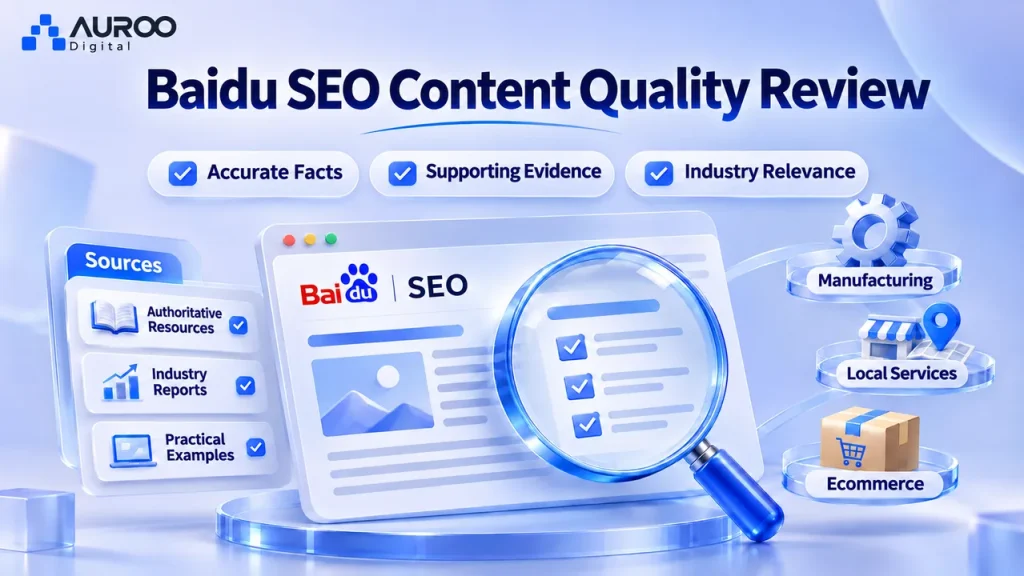
When reviewing content for Baidu SEO, look beyond the word count, keyword frequency or author bio. Check whether the page answers the reader’s question accurately, supports its main claims and helps the reader make a decision. On a corporate site, it must also reflect what the company can actually deliver. A polished overview won’t fill a gap in product information.
Baidu publishes its own guidance on content and page quality. E-E-A-T comes from Google and stands for experience, expertise, authoritativeness and trustworthiness. It can help editors review a page, though it shouldn’t be presented as a Baidu ranking rule. Google says E-E-A-T itself isn’t a specific ranking factor. Keep each platform’s public guidance separate from your internal editorial checklist.
1. Start with Baidu’s published guidance
Baidu’s guidance covers the credibility of content producers, the browsing experience, and the depth and expertise shown by the content. For a corporate site, check who publishes the page, whether it answers the main question, whether important details are accurate, and whether readers can use the page easily. These are checks you can run, with no published ranking weights to assign to them.
Different pages do different jobs. An explainer helps someone understand a problem. A product page gives specifications and conditions of use. A service page explains coverage and how to get started. Include material that helps with that decision. Baidu’s related guidance also emphasises substance over padding a page with text or images.
2. Use E-E-A-T to check the evidence
Experience asks whether the author has done or observed the work. Site notes, a usage record or test photos can help, provided they specify the date, conditions and scope. One experience supports only what was observed under those conditions.
Expertise asks whether the author or reviewer understands the hard parts. A person who knows the equipment should verify industrial specifications. Complex professional judgements need appropriate evidence. A name in the byline tells readers little without a relevant role, experience or review process.
Authoritativeness concerns how well the author, organisation or source is recognised in the relevant field. Original standards and official references make facts easier to check. One link won’t make the whole article authoritative. Describe credentials, awards and partnerships only as far as the evidence supports them.
Trustworthiness is about whether the facts, sources and wording agree. Readers should know who published the piece, when it was updated, where the conclusion applies, and whether there is a commercial relationship. Comparisons and tests need methods and limitations. Flag uncertainty when the evidence is incomplete.
3. Add information the reader can use
Content can add value without inventing something new. It can turn scattered specifications into selection criteria, explain a common mistake or show when a recommendation stops applying. Ask whether the reader can now make a decision or avoid an extra step.
Consider a guide to choosing cold-room doors. A list of materials and insulation properties might leave the buyer unsure what to buy. Explain which dimensions to measure, how traffic frequency affects the choice, what installation clearance to check, and which details to submit for a quote. This is a hypothetical example. Someone familiar with the product and site conditions should confirm any specific technical recommendation.
4. Prioritise different evidence by industry
For manufacturing and B2B, verify models, units, specifications, use conditions and test methods. Case examples should explain the problem, solution and limitations. Check permissions for customer names, photos and project data. Avoid extending the results of one model or project to the entire range.
For local services, make the service area, opening or booking times, fees and restrictions easy to find. A home appliance repair page can explain where technicians travel, the inspection charge, which models they cover and when a separate quote is needed. A list of city names gives customers little to go on.
For ecommerce and reviews, state the specification version, sample source, comparison conditions and commercial relationship. If a coffee grinder review claims more consistent grounds, describe the samples, settings, test method and limits of the result. Disclose supplied samples, paid collaboration or affiliate commissions.
For medical, legal and financial topics that can affect important decisions, have an appropriate professional verify key claims. State the sources, date, jurisdiction and conditions. General information can’t establish a conclusion for a reader’s individual situation. Direct people with specific professional questions to an appropriate service.
5. Set a review process from research to updates
Start with the reader’s question and what they need to do on the page. Gather product details, common customer questions and reliable sources. During review, check model numbers, sources for figures and whether examples are real or clearly hypothetical. Check that the title reflects the content. Keep a record of the reviewer and material changes.
Before publishing, check headings, image descriptions, mobile layout and the enquiry route. Use reader questions, business changes and page performance to guide future updates. A short-term ranking change doesn’t establish whether one editing decision helped, and it can’t reveal a platform’s scoring formula.
6. How AUROO Digital approaches content optimisation
AUROO Digital’s white-hat SEO starts with business questions and the pages already available. We identify missing facts, sources and information that readers need to navigate the site and make decisions. We check that the content reflects actual experience and usable information. The project scope sets out who supplies material and who reviews the claims that need specialist knowledge.
If your site has plenty of articles but buyers still lack the information needed to choose or enquire, contact AUROO Digital to discuss improving priority pages.
References
Baidu Search — Quality Content Guidelines
Baidu Search — Quality Content Guidelines FAQ
Google Search Central — Creating helpful, reliable, people-first content