Ecommerce Growth
Ecommerce Conversion Rate Optimization: Diagnose Traffic Without Sales
Advertising brings visitors, but orders are not keeping up. It is tempting to change button colors, add a discount or redesign the whole store. Yet customers may simply be unable to understand shipping costs or complete their address.
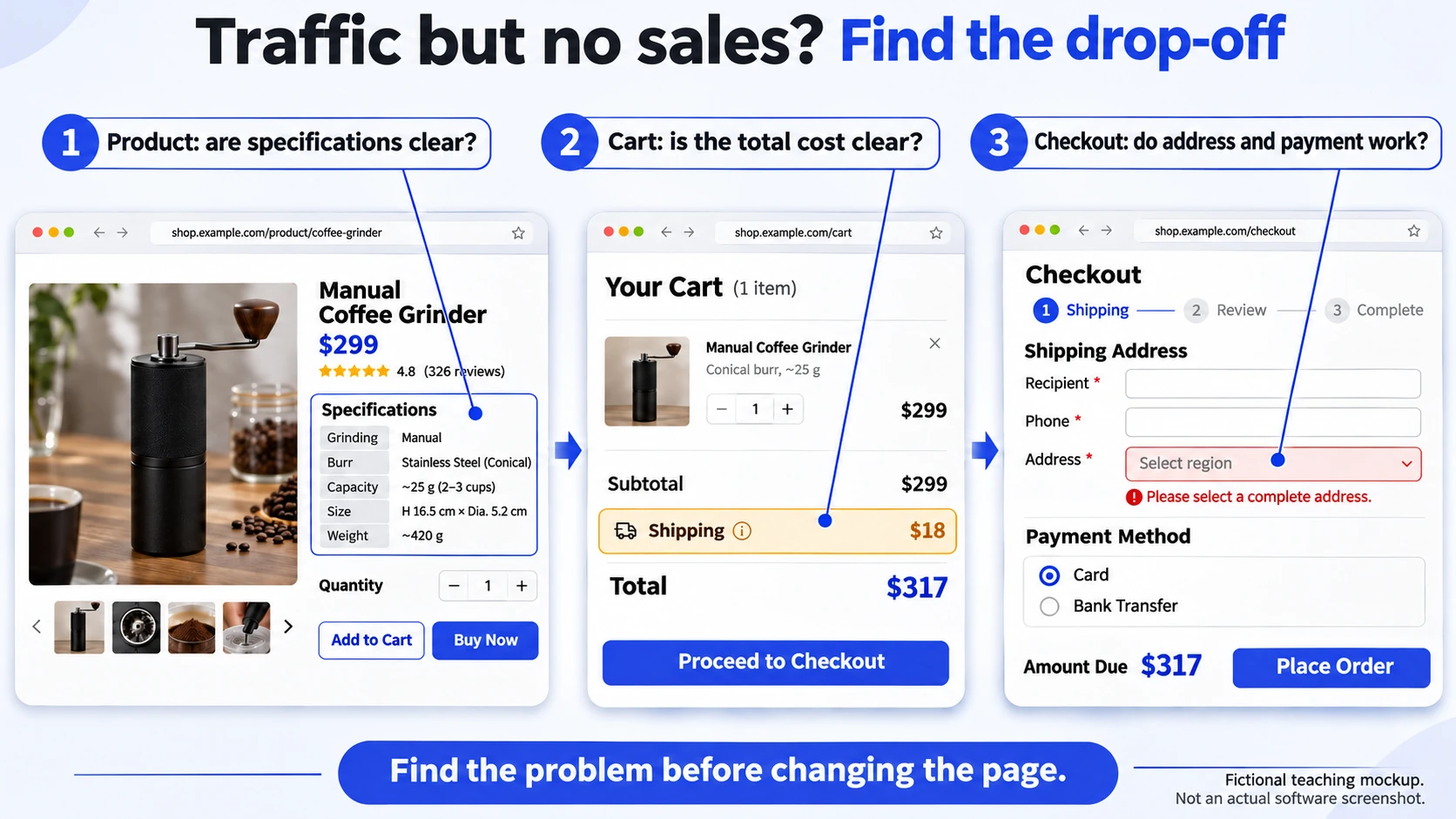
Ecommerce conversion rate optimization starts by finding where people stop: product view, add to cart, checkout or payment. Locate the obstacle before choosing a design change.
Walk through a purchase before commissioning a redesign
Imagine mobile product browsing works, but customers drop out during checkout. Have a tester enter an address, select delivery and attempt payment. If shipping costs appear only at the final step, improve that explanation and observe payment completion and related support questions. Keep product imagery and discounts stable while evaluating the change.
This is a hypothetical example. Addressing one evidenced obstacle at a time makes the result easier to interpret and helps you decide whether to continue, revise or restore the earlier version.
Product views without add-to-cart activity
Beyond selling points, buyers may need dimensions, materials, compatibility, restrictions and delivery conditions. Expensive products need comparison evidence; complex products need clearer selection guidance. Add recurring support questions to the page and use photographs to show relevant details. Important information should also be available as readable text.
Checkout exits: inspect costs and conditions
Explain delivery coverage, how charges are calculated and the relevant return conditions at a useful stage. For cross-border orders, make tax responsibilities clear for the market concerned. Distinguish an estimated delivery date from a guarantee. Do not present an unconfirmed date as a firm promise.
Arrange measurement before changing the page
Record product views, cart additions, checkout starts and successful payments separately. Define whether your conversion rate uses users or sessions, and identify internal tests and duplicate orders. Review device, channel, country and new-versus-returning customer segments: an overall average can hide a payment problem in one market.
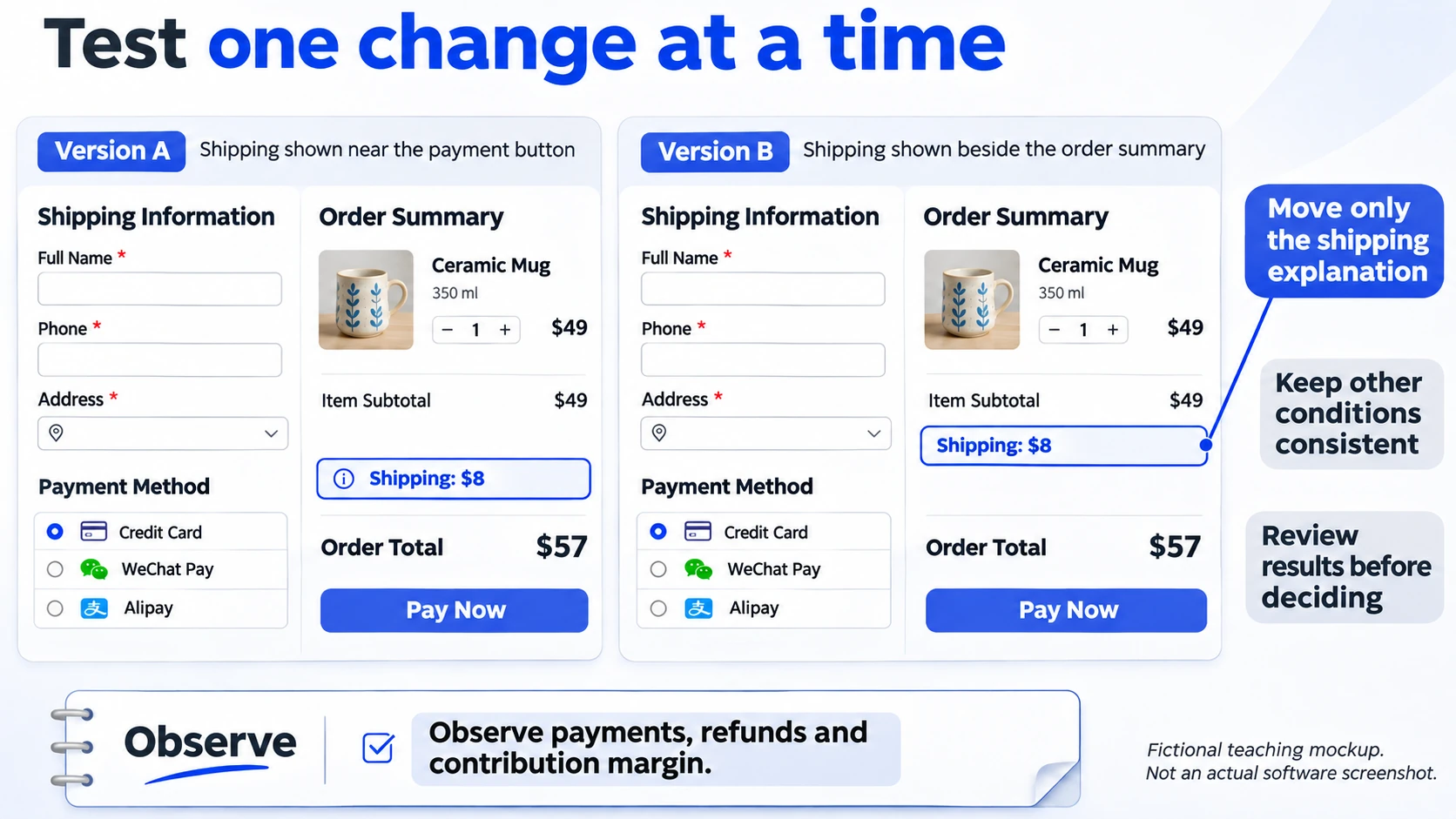
For a shipping-information test, keep the product and traffic conditions as comparable as possible and vary only the explanation’s location. Define the primary measure beforehand and monitor contribution margin, refunds and support demand as well. Higher order completion can still come with more costly returns.
Record the purpose, page version, traffic conditions and result of each change. Google’s helpful content self-assessment can help you check whether information answers the reader’s question. It is not a conversion-growth guarantee.
Avoid changing everything at once
- Copying a competitor’s redesign. Their audience, product and traffic may differ. Investigate your own purchase journey first.
- Changing images, prices, buttons and shipping copy together. Fix clear faults promptly, but keep experiments focused enough to interpret.
- Reporting only order rate. Include discounts, refunds, fulfillment and support costs when assessing the outcome.
Our view is that a phone and a complete test purchase are often a better first step than a new visual style. Check when shipping appears, whether the address form works and what happens after payment fails.
A larger discount is not automatically a better solution either. If extra orders depend on heavy subsidies and bring more returns, the higher conversion rate may have little commercial value.
Find one repeatable problem, fix it and review the result before choosing the next change. To discuss a store audit, contact AUROO Digital.